
giant Bolivian sage
Also known as: Sacred Incan sage
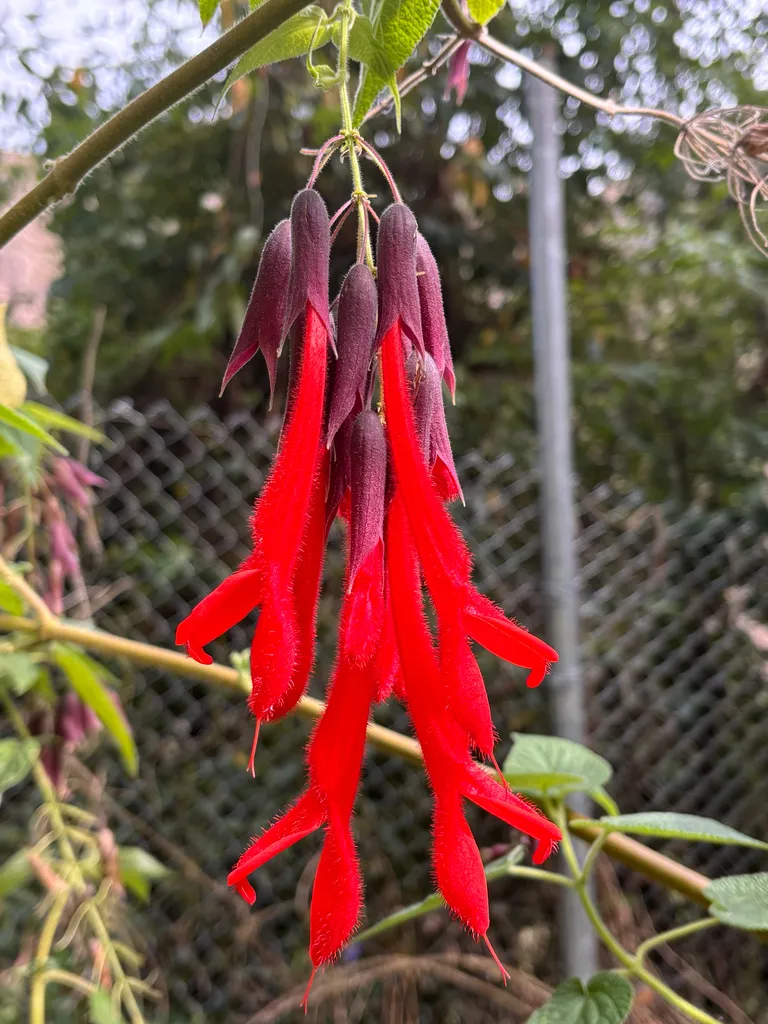
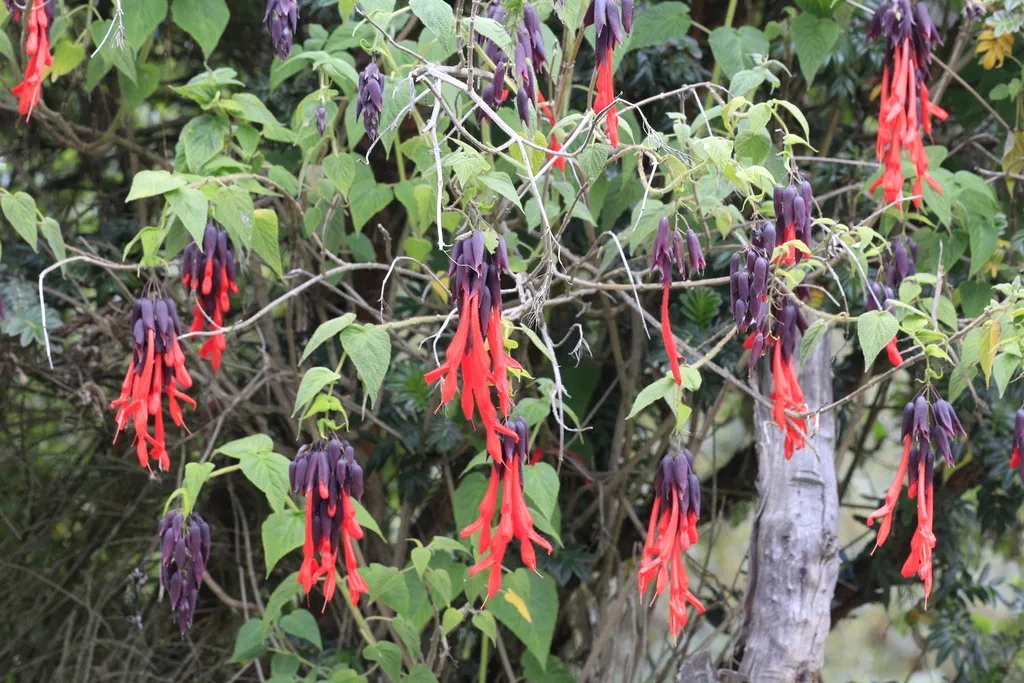
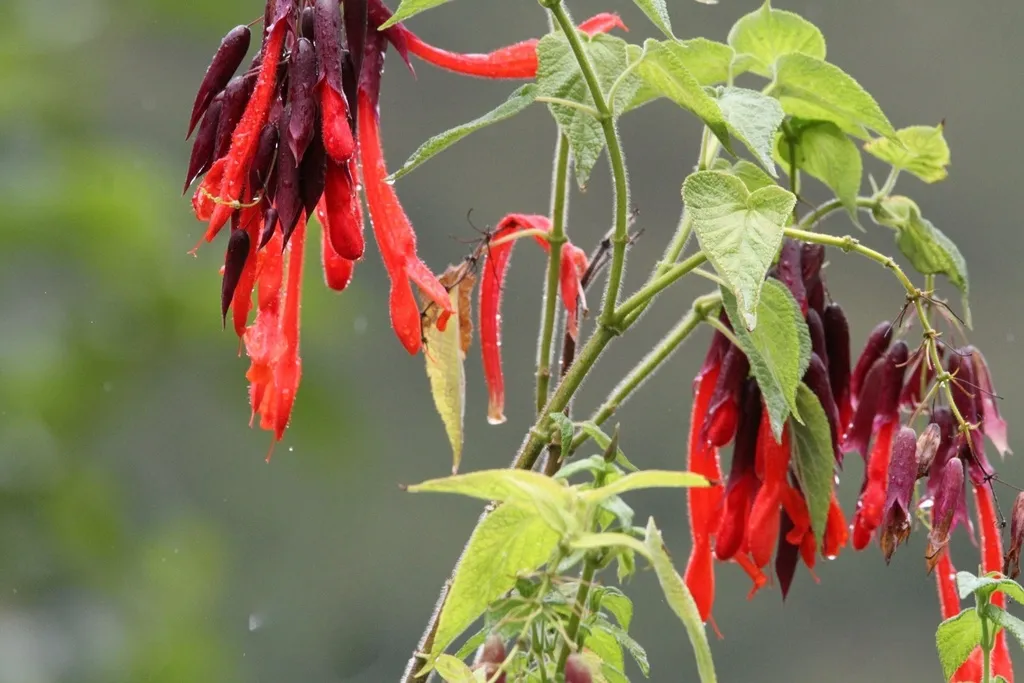
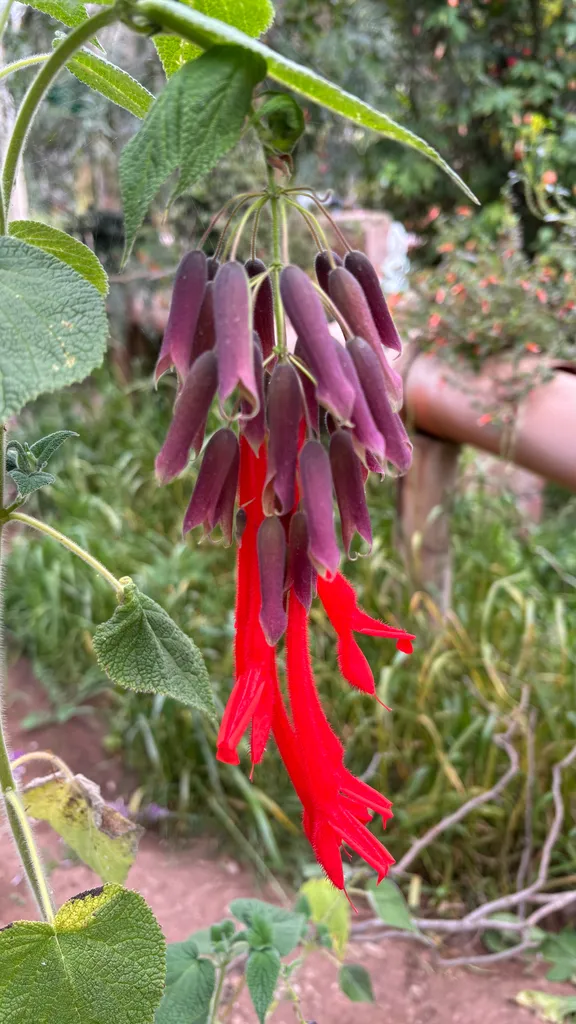
S. dombeyi is a multi-stemmed, woody-based, frost-tender perennial plant with long, slender scrambling stems up to 2.5m tall and heart-shaped leaves. Clusters of long, pendulous, bright red, hairy flowers up to 9cm long emerge from dark purple calcyes and are borne from summer into autumn and
Scientific classification
- Species
- giant Bolivian sage (Salvia dombeyi)
- Genus
- Salvia
- Family
- Lamiaceae
- Order
- Lamiales
- Class
- Magnoliopsida
- Phylum
- Tracheophyta
- Information to be completed
- Toxicity
- Herbaceous Perennial · Conservatory Greenhouse
- Plant type
- 1.5-2.5 metres
- Height
- 1-1.5 metres
- Spread
- Semi evergreen
- Foliage
- Bushy
- Habit
- Spring · Summer · Autumn
- Season of interest
- Full sun · Partial shade
- Sunlight
- Information to be completed
- Ideal temperature









giant Bolivian sage pictures
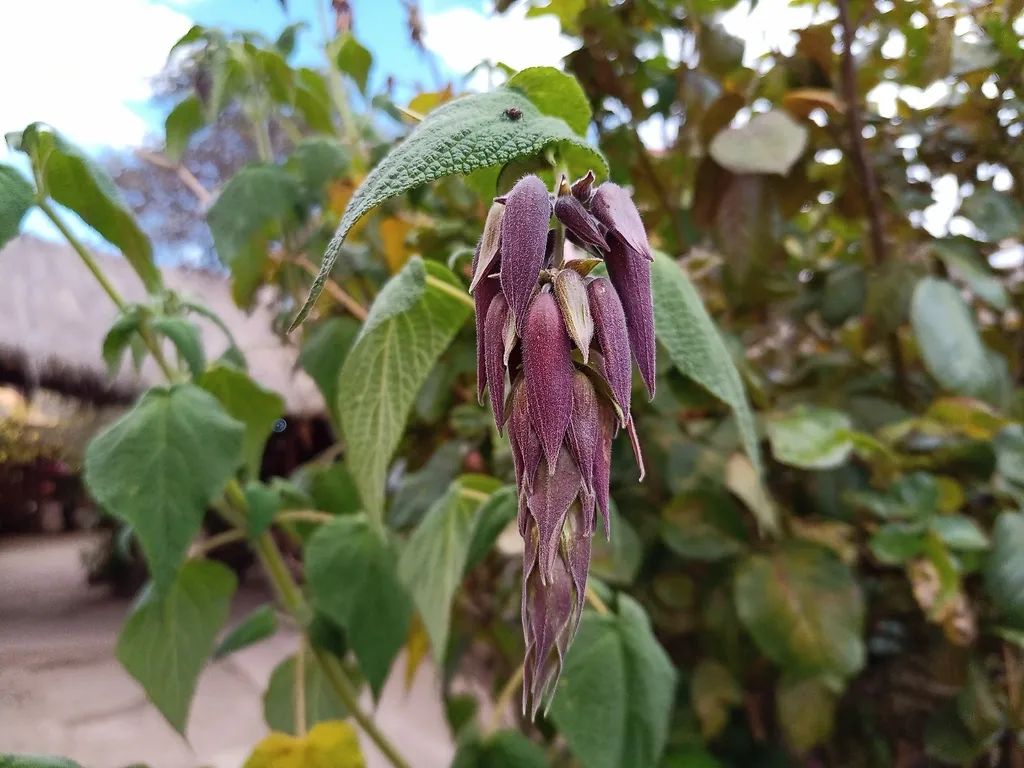
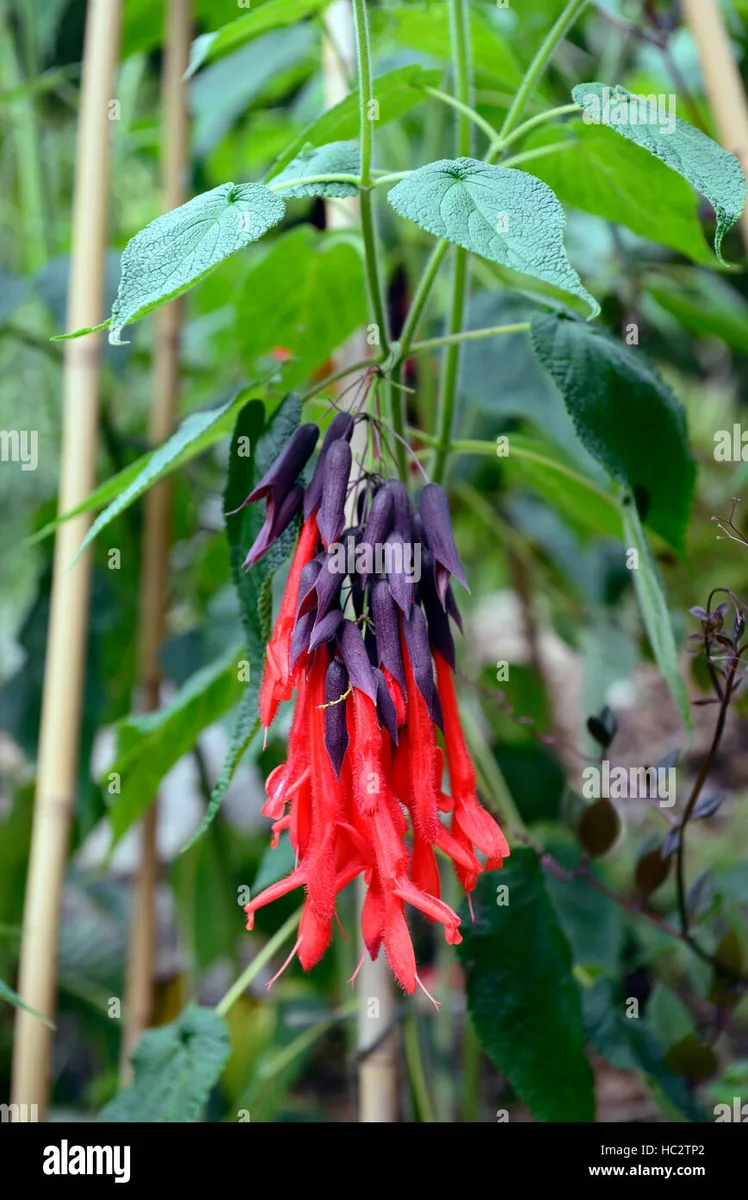
Distribution of giant Bolivian sage
Distribution map
- Native
- Introduced
- Cultivated
Source:WCVP v16 · Royal Botanic Gardens, Kew · CC BY 3.0 · Boundaries:WGSRPD / TDWG
giant Bolivian sage care guide
- Moderate regular watering, allowing brief slight drying between soakings
- Watering
- Full sun · Partial shade
- Sunlight

Watering
Moderate regular watering, allowing brief slight drying between soakings
Fertilizing
 Fertilizing
Balanced perennial feed every four weeks from spring through summer
Pruning
 Pruning
Prune lightly as needed to remove unwanted shoots and keep the shrub in shape. Prune in mid- to late spring.
Propagation
 Propagation
Propagate from softwood cuttings or semi-ripe cuttings
Growing
 Growing
Grow under glass in loam-less or loam-based potting compost in full light with shade from hot sun. Grow outdoors in moderately fertile, moist but well-drained soil in full sun or dappled shade in a frost-free border. Protect from excessive winter wet. Climbing stems benefit from support provided by other plants or a trellis
Common pests and diseases
Diseases
May be susceptible to honey fungus (rarely), powdery mildews, verticillium wilt and foot and root rots
Pests
May be susceptible to slugs, snails and capsid bug, aphids, glasshouse red spider mite and glasshouse whitefly
Explore the plant health library →




