
lavender-leaved sage
Also known as: Information to be completed
S. lavandulifolia is a compact subshrub or woody-based perennial, to 60cm tall and wide, with narrow, grey-green, downy leaves and, in summer, spike-like racemes of violet-blue flowers
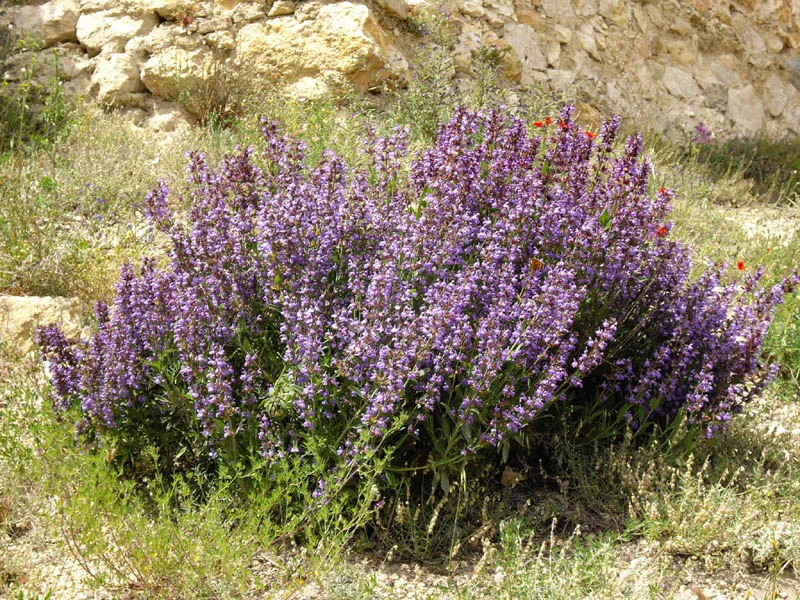
Scientific classification
- Species
- lavender-leaved sage (Salvia lavandulifolia)
- Genus
- Salvia
- Family
- Lamiaceae
- Order
- Lamiales
- Class
- Magnoliopsida
- Phylum
- Tracheophyta
- Information to be completed
- Toxicity
- Shrubs · Herbaceous Perennial
- Plant type
- 0.5-1 metres
- Height
- 0.5-1 metres
- Spread
- Evergreen
- Foliage
- Bushy
- Habit
- Spring · Summer · Autumn · Winter
- Season of interest
- Full sun
- Sunlight
- Information to be completed
- Ideal temperature









lavender-leaved sage pictures
Distribution of lavender-leaved sage
Distribution map
- Native
- Introduced
- Cultivated
Source:WCVP v16 · Royal Botanic Gardens, Kew · CC BY 3.0 · Boundaries:WGSRPD / TDWG
lavender-leaved sage care guide
- Moderate regular watering, allowing brief slight drying between soakings
- Watering
- Full sun
- Sunlight

Watering
Moderate regular watering, allowing brief slight drying between soakings
Fertilizing
 Fertilizing
Balanced perennial feed every four weeks from spring through summer
Pruning
 Pruning
Prune lightly as needed to remove unwanted shoots and keep the shrub in shape. Prune in mid- to late spring.
Propagation
 Propagation
Propagate by softwood cuttings or semi-ripe cuttings
Growing
 Growing
Grow in light, moderately fertile, well-drained soil. Needs a sheltered position but usually overwinters if given full sun and good drainage. Drought tolerant
Common pests and diseases
Diseases
May be susceptible to honey fungus (rarely), powdery mildews, verticillium wilt and foot and root rots
Pests
Generally pest-free
Explore the plant health library →




