
white cedar 'Brabant'
Also known as: Information to be completed
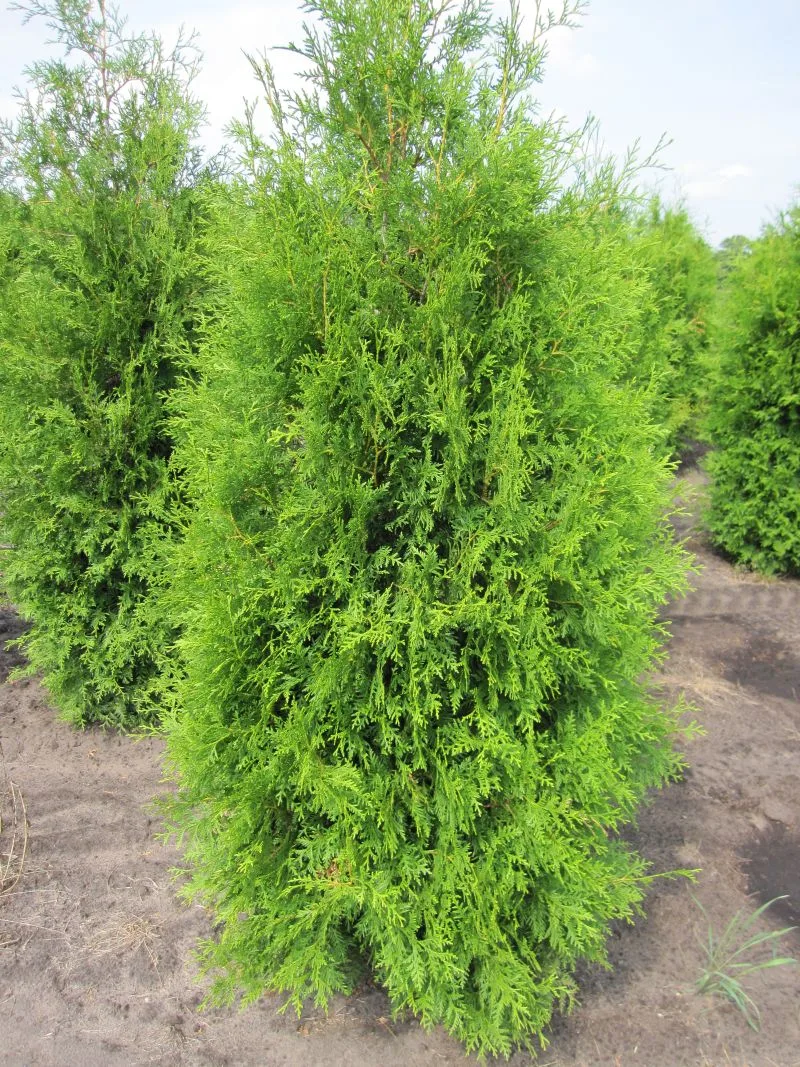
An evergreen conifer with reddish-brown bark and a conical shape that can also form a dense hedge. Has yellowish-green foliage that turns slightly bronze in autumn but in gerneral maintains the same colour all year round, light brown scaly cones and insignificant flowers in spring. Fast growing and shade tolerant.
Scientific classification
- Species
- white cedar 'Brabant' (Thuja occidentalis 'Brabant')
- Genus
- Thuja
- Family
- Cupressaceae
- Order
- Cupressales
- Class
- Pinopsida
- Phylum
- Pinophyta
- Harmful if eaten, skin allergen. Wear gloves and other protective equipment when handling]
- Toxicity
- Conifers
- Plant type
- 4-8 metres
- Height
- 2.5-4 metres
- Spread
- Evergreen
- Foliage
- Columnar upright
- Habit
- Spring · Summer · Autumn · Winter
- Season of interest
- Full sun · Partial shade
- Sunlight
- Information to be completed
- Ideal temperature









white cedar 'Brabant' pictures
Distribution of white cedar 'Brabant'
Distribution map
- Native
- Introduced
- Cultivated
Source:WCVP v16 · Royal Botanic Gardens, Kew · CC BY 3.0 · Boundaries:WGSRPD / TDWG
Toxicity
Harmful if eaten, skin allergen. Wear gloves and other protective equipment when handling]
white cedar 'Brabant' care guide
- Moderate regular watering, avoid prolonged drought or waterlogging
- Watering
- Full sun · Partial shade
- Sunlight

Watering
Moderate regular watering, avoid prolonged drought or waterlogging
Fertilizing
 Fertilizing
Balanced feed in spring and light repeat in growth season
Pruning
 Pruning
Prune to maintain shape.
Propagation
 Propagation
Propage by semi-hardwood cuttings.
Growing
 Growing
Grows well in fertile well-drained soil, avoid waterlogging.
Common pests and diseases
Diseases
May be susceptible to honey fungus and other fungal diseases, particularly thuja blight and Coryneum canker (see conifers: brown patches)
Pests
May be susceptible to scale insects and cypress aphid.
Explore the plant health library →




