
mother-in-law's tongue 'Craigii'
Also known as: Information to be completed
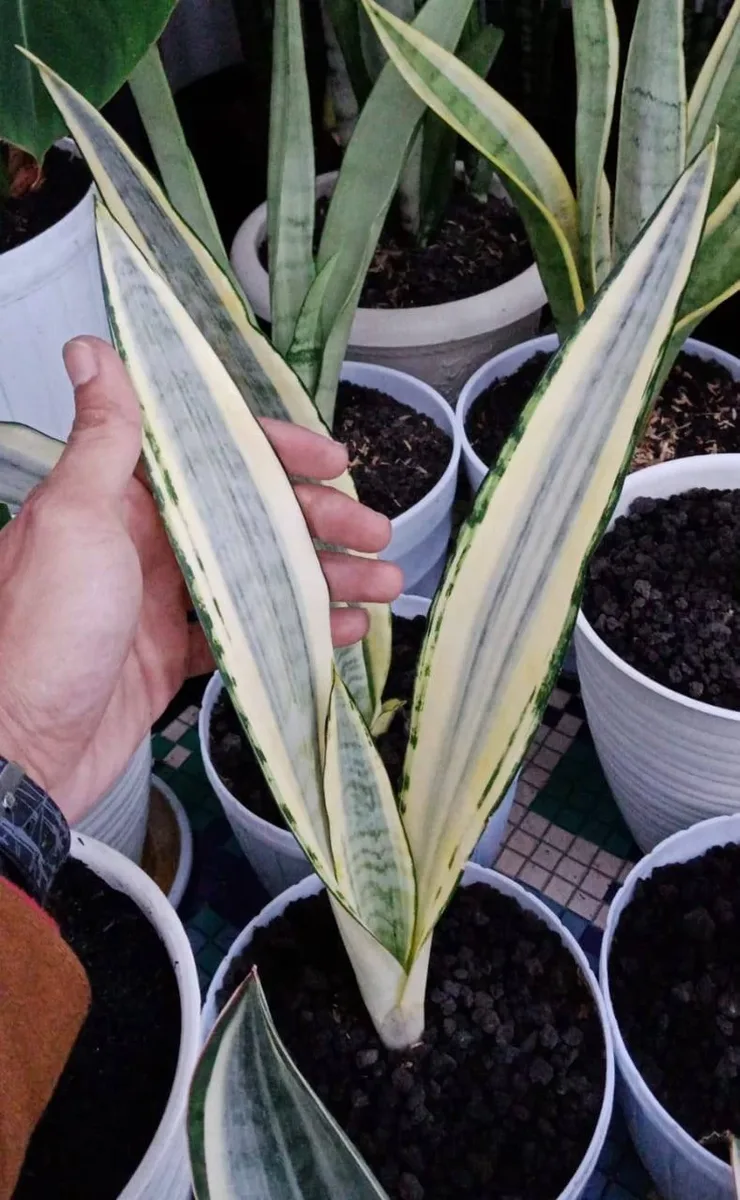
An erect, rhizomatous perennial to 1.2m, with pointed, lance-shaped, stiffly fleshy grey-green leaves with bold, yellow, vertical stripes. Mature plants may occasionally produce spikes of spidery, greenish flowers
Scientific classification
- Species
- mother-in-law's tongue 'Craigii' (Sansevieria trifasciata 'Craigii')
- Genus
- Sansevieria
- Family
- Asparagaceae
- Order
- Asparagales
- Class
- Liliopsida
- Phylum
- Tracheophyta
- Harmful if eaten. Wear gloves and other protective equipment when handling
- Toxicity
- Houseplants
- Plant type
- 1-1.5 metres
- Height
- 0.1-0.5 metres
- Spread
- Evergreen
- Foliage
- Columnar upright
- Habit
- Spring · Summer · Autumn · Winter
- Season of interest
- Full shade · Full sun · Partial shade
- Sunlight
- Information to be completed
- Ideal temperature









mother-in-law's tongue 'Craigii' pictures
Distribution of mother-in-law's tongue 'Craigii'
Distribution map
- Native
- Introduced
- Cultivated
Source:WCVP v16 · Royal Botanic Gardens, Kew · CC BY 3.0 · Boundaries:WGSRPD / TDWG
Toxicity
Harmful if eaten. Wear gloves and other protective equipment when handling
mother-in-law's tongue 'Craigii' care guide
- Moderate regular watering, allowing brief slight drying between soakings
- Watering
- Full shade · Full sun · Partial shade
- Sunlight

Watering
Moderate regular watering, allowing brief slight drying between soakings
Fertilizing
 Fertilizing
Balanced perennial feed every four weeks from spring through summer
Pruning
 Pruning
No pruning required
Propagation
 Propagation
Propagate by division in spring. Root leaf sections with bottom heat from spring to autumn. Offspring from varieagted cultivars will lack variegation if raised from leaf cuttings
Growing
 Growing
Under glass, grow in 2 parts loam-based potting compost and 1 part grit. Although tolerant of shade, growth is best in bright indirect light. In growth, water moderately and apply a half-strength balanced liquid fertiliser monthly; water sparingly in winter. Pot on only when pot bound. Leaf growth may stop if leaf tips are damaged. See houseplant cultivation
Common pests and diseases
Diseases
Generally disease-free
Pests
Generally pest-free
Explore the plant health library →




