
willow-leaf sweet box
Also known as: Information to be completed
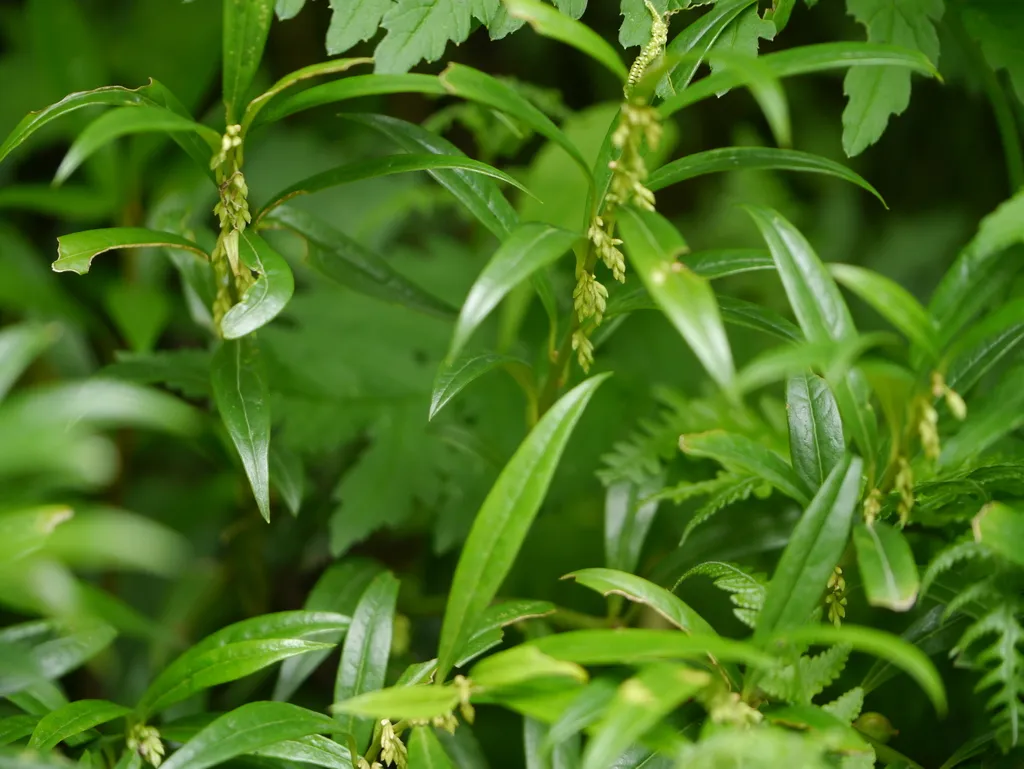
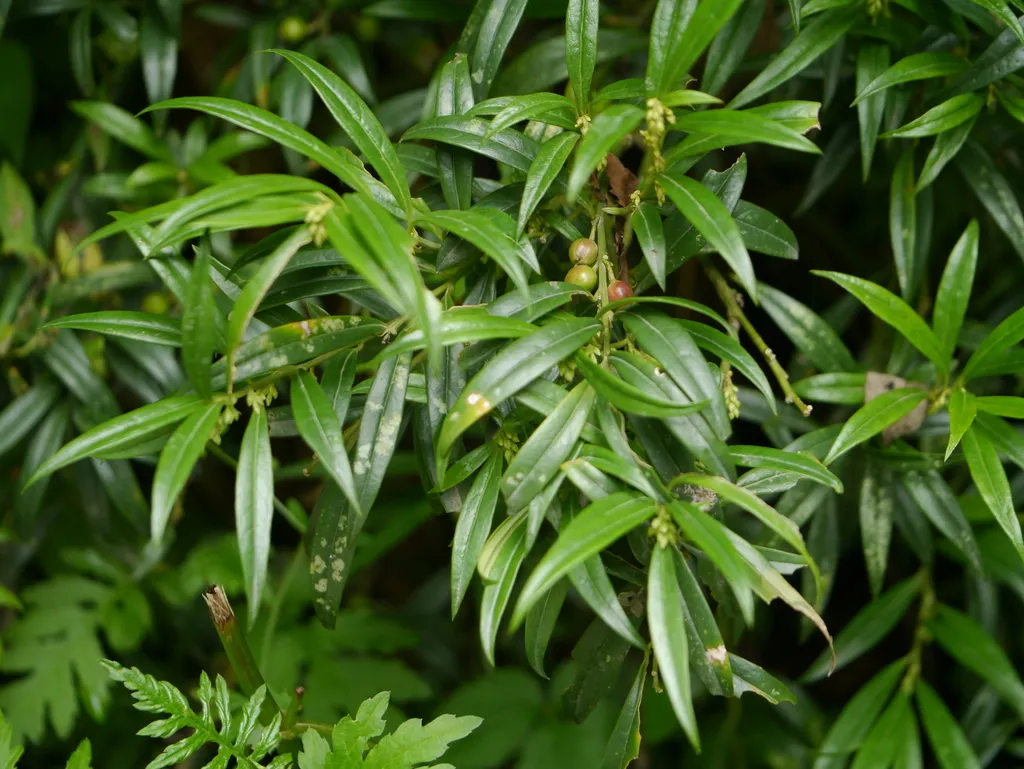
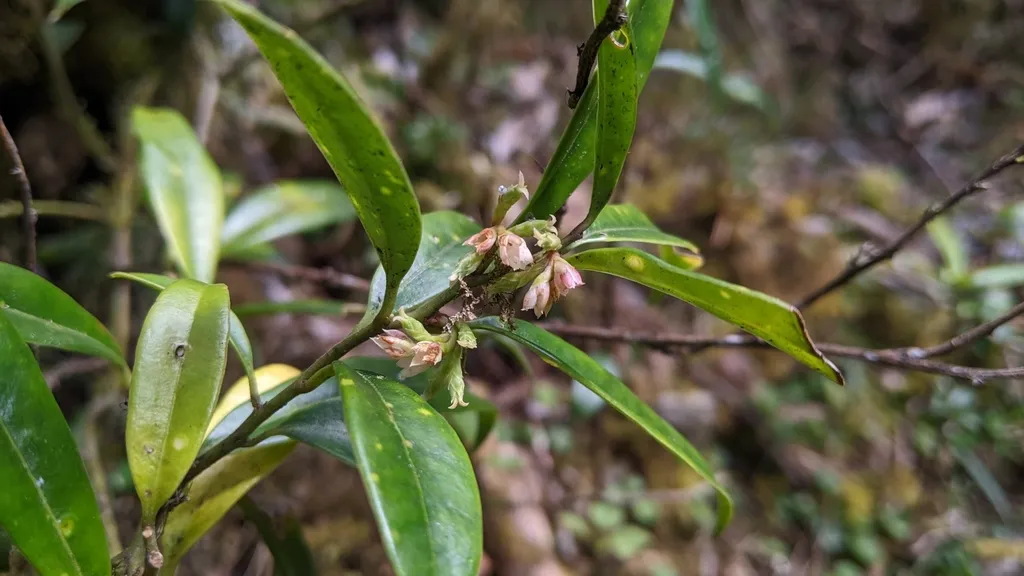
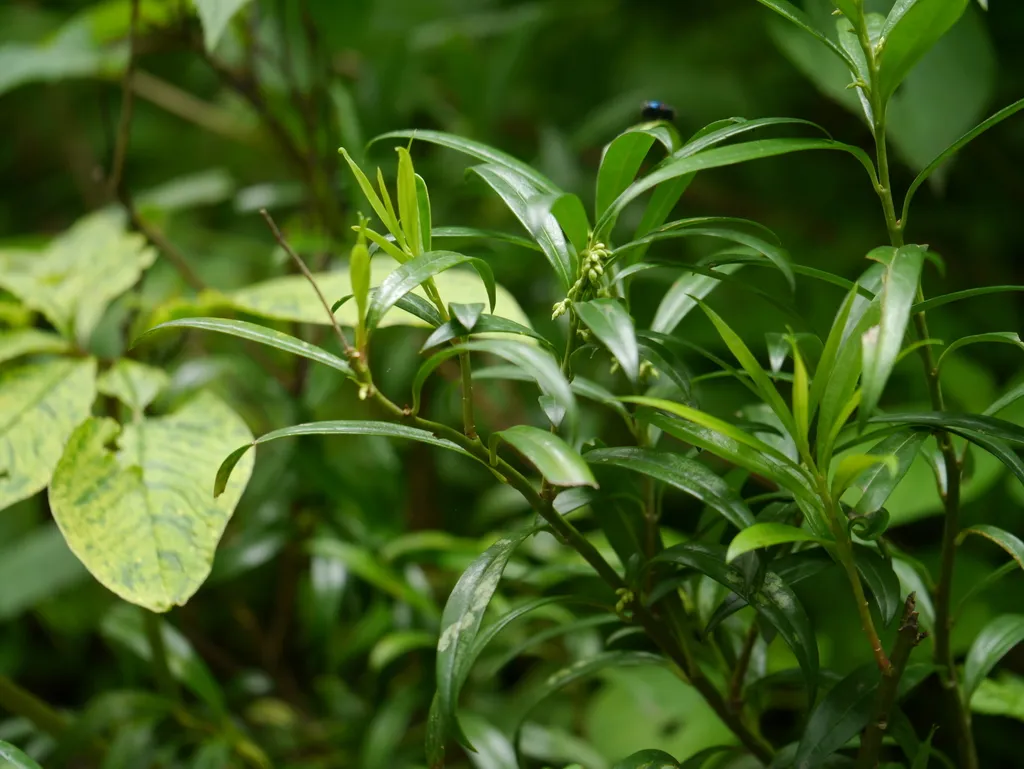
S. saligna is a compact, suckering, evergreen shrub, to 1m tall, with tapering, lance-shaped, glossy leaves, up to 13cm long, held on erect then arching stems. Tiny greenish-white, slightly-scented flowers in winter are followed by purple berries
Scientific classification
- Species
- willow-leaf sweet box (Sarcococca saligna)
- Genus
- Sarcococca
- Family
- Buxaceae
- Fruit are ornamental - not to be eaten. Wear gloves and other protective equipment when handling
- Toxicity
- Shrubs
- Plant type
- 0.5-1 metres
- Height
- 0.5-1 metres
- Spread
- Evergreen
- Foliage
- Bushy
- Habit
- Spring · Summer · Autumn · Winter
- Season of interest
- Full sun · Partial shade
- Sunlight
- Information to be completed
- Ideal temperature









willow-leaf sweet box pictures
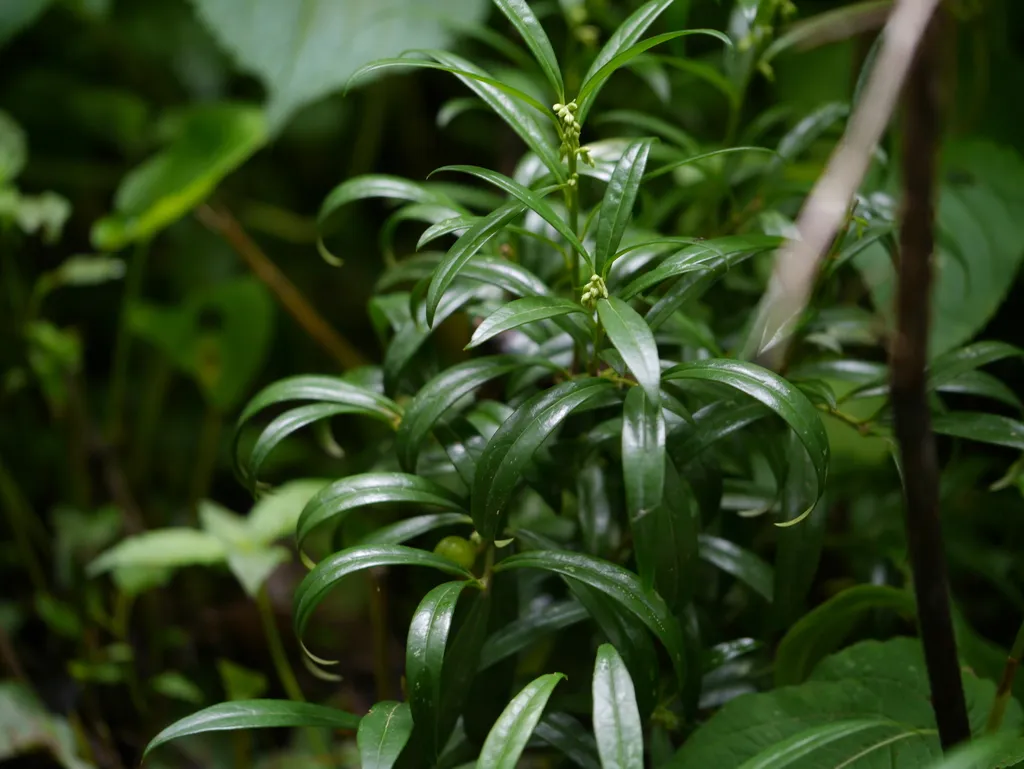
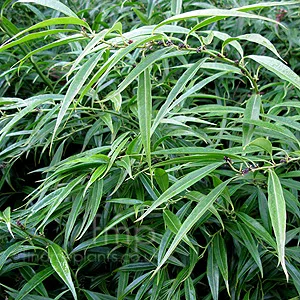
Distribution of willow-leaf sweet box
Distribution map
Western Himalaya
Information to be completed
Culture
Information to be completed
Toxicity
Fruit are ornamental - not to be eaten. Wear gloves and other protective equipment when handling
Quick identification of willow-leaf sweet box
Information to be completed
willow-leaf sweet box care guide
- Moderate regular watering, deep soak only during prolonged hot spells
- Watering
- Full sun · Partial shade
- Sunlight
- Information to be completed
- Ideal temperature

Watering
Moderate regular watering, deep soak only during prolonged hot spells
Fertilizing
 Fertilizing
Balanced evergreen shrub feed applied once per early spring yearly
Pruning
 Pruning
Usually little pruning is needed. Lightly shape if necessary, removing dead, damaged or diseased shoots. Prune after flowering.
Propagation
 Propagation
Propagate by semi-hardwood cuttings in late summer or propagate by seed sown in containers outdoors in autumn or spring
Growing
 Growing
Grow in moderately fertile, moist but well-drained, humus-rich soil in shade. Full sun may be tolerated when planted in damp soil. Also tolerant of atmospheric pollution, dry shade and neglect
People also ask
Information to be completed
Common pests and diseases
Diseases
May be susceptible to honey fungus
Pests
Generally pest-free
Explore the plant health library →




