
chard 'Charlotte'
Also known as: Information to be completed
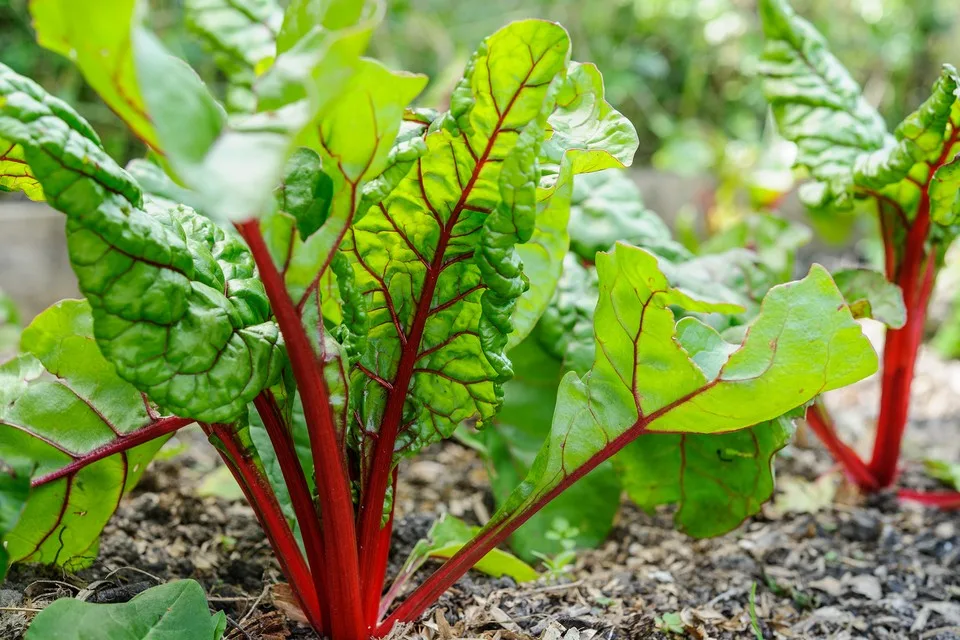
A highly ornamental chard with dark green foliage with dark red veining and long, dark red stalks which is why it is sometimes referred to as 'rhubarb chard'. Shows very good resistance to bolting and good for growing in pots and ornamental borders. Sow March-May, plant out May to September. Young leaves can be harvested for salads within around 8 weeks
Scientific classification
- Species
- chard 'Charlotte' (Beta vulgaris var. flavescens 'Charlotte' [subsp. cicla])
- Genus
- Beta
- Family
- Amaranthaceae
- Order
- Caryophyllales
- Class
- Magnoliopsida
- Phylum
- Tracheophyta
- Information to be completed
- Toxicity
- Annual Biennial
- Plant type
- 0.1-0.5 metres
- Height
- 0.1-0.5 metres
- Spread
- Deciduous
- Foliage
- Clump forming
- Habit
- Spring · Summer · Autumn · Winter
- Season of interest
- Full sun · Partial shade
- Sunlight
- Information to be completed
- Ideal temperature









chard 'Charlotte' pictures
chard 'Charlotte' care guide
- Keep soil consistently moist for steady leafy growth without drought stress
- Watering
- Full sun · Partial shade
- Sunlight

Watering
Keep soil consistently moist for steady leafy growth without drought stress
Fertilizing
 Fertilizing
Nitrogen-rich vegetable feed every two to three weeks in active growth
Pruning
 Pruning
No pruning required. Remove outer leaves when large enough
Propagation
 Propagation
Propagate by seed. See sowing vegetable seeds
Growing
 Growing
Grow in fertile soil in full sun or partial shade. Add compost or well-rotted manure in the autumn and keep watered in dry conditions. See chard cultivation for further advice
Common pests and diseases
Diseases
May be susceptible to grey mould, lettuce downy mildew, mosaic virus and ring spot
Pests
May be susceptible to birds, cutworms, lettuce root maggot, root aphid, root knot eelworm and slugs and snails
Explore the plant health library →




