
baneberry 'White Pearl'
Also known as: Information to be completed
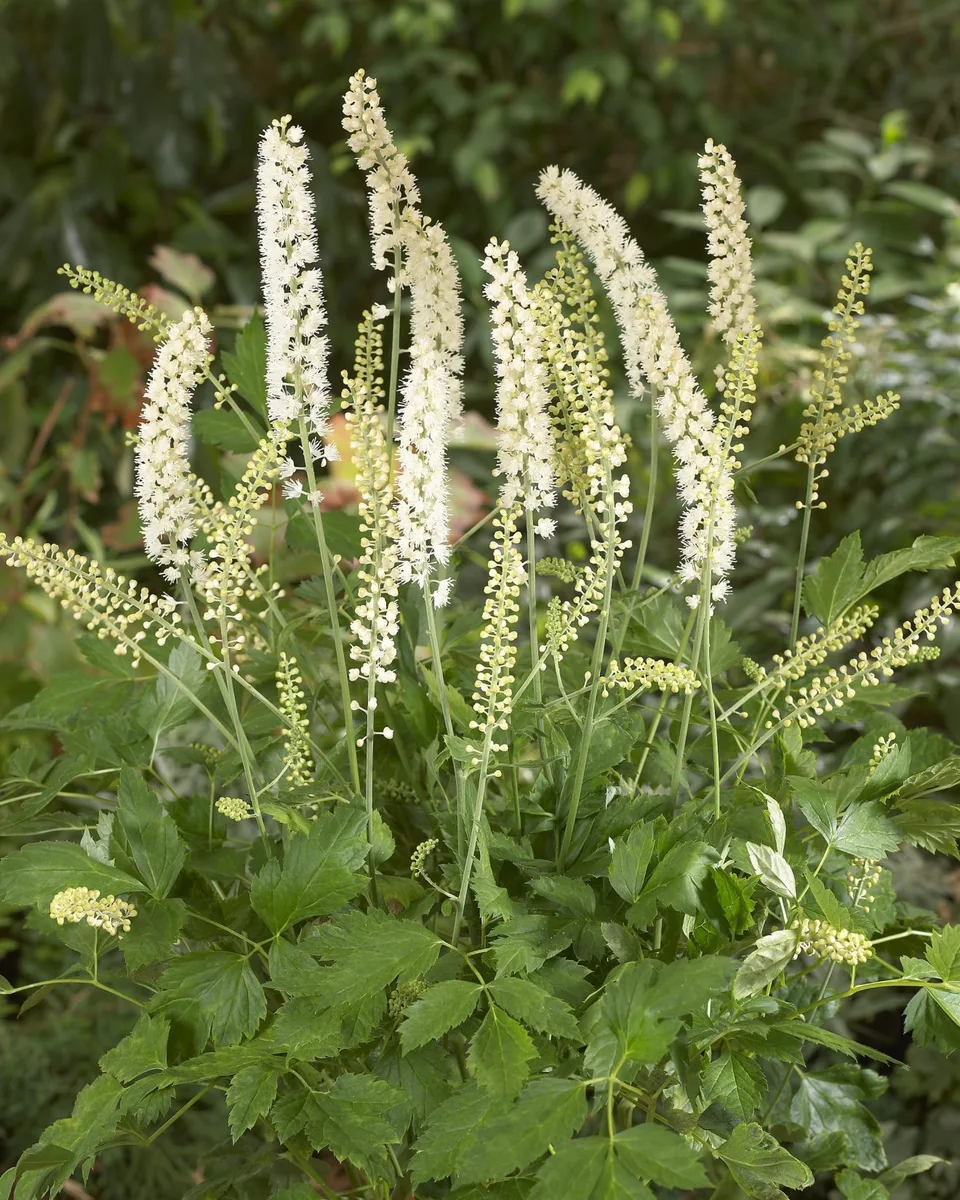
A tall cultivar with pale green stems, leaves and flower buds. Narrow spires of slightly fragrant white flowers appear in late summer-autumn
Scientific classification
- Species
- baneberry 'White Pearl' (Actaea matsumurae 'White Pearl')
- Genus
- Actaea
- Family
- Ranunculaceae
- Order
- Ranunculales
- Class
- Magnoliopsida
- Phylum
- Magnoliophyta
- Harmful if eaten. Wear gloves and other protective equipment when handling
- Toxicity
- Herbaceous Perennial
- Plant type
- 1-1.5 metres
- Height
- 0.5-1 metres
- Spread
- Deciduous
- Foliage
- Columnar upright
- Habit
- Spring · Summer · Autumn
- Season of interest
- Partial shade
- Sunlight
- Information to be completed
- Ideal temperature









baneberry 'White Pearl' pictures
Distribution of baneberry 'White Pearl'
Distribution map
- Native
- Introduced
- Cultivated
Source:WCVP v16 · Royal Botanic Gardens, Kew · CC BY 3.0 · Boundaries:WGSRPD / TDWG
Toxicity
Harmful if eaten. Wear gloves and other protective equipment when handling
baneberry 'White Pearl' care guide
- Maintain evenly moist shade soil, never let root ball fully dry out
- Watering
- Partial shade
- Sunlight

Watering
Maintain evenly moist shade soil, never let root ball fully dry out
Fertilizing
 Fertilizing
Diluted woodland perennial feed every three weeks spring to autumn
Pruning
 Pruning
Cut back after flowering or fruiting
Propagation
 Propagation
Propagate by seed sown in pots in a cold frame in autumn or by division in early spring
Growing
 Growing
Best grown in cool, moist, reasonably fertile soil in partial shade but will tolerate most soils if enriched with organic matter
Common pests and diseases
Diseases
Generally disease-free
Pests
Generally pest-free
Explore the plant health library →




