
Canna 'Australia'
Also known as: Information to be completed
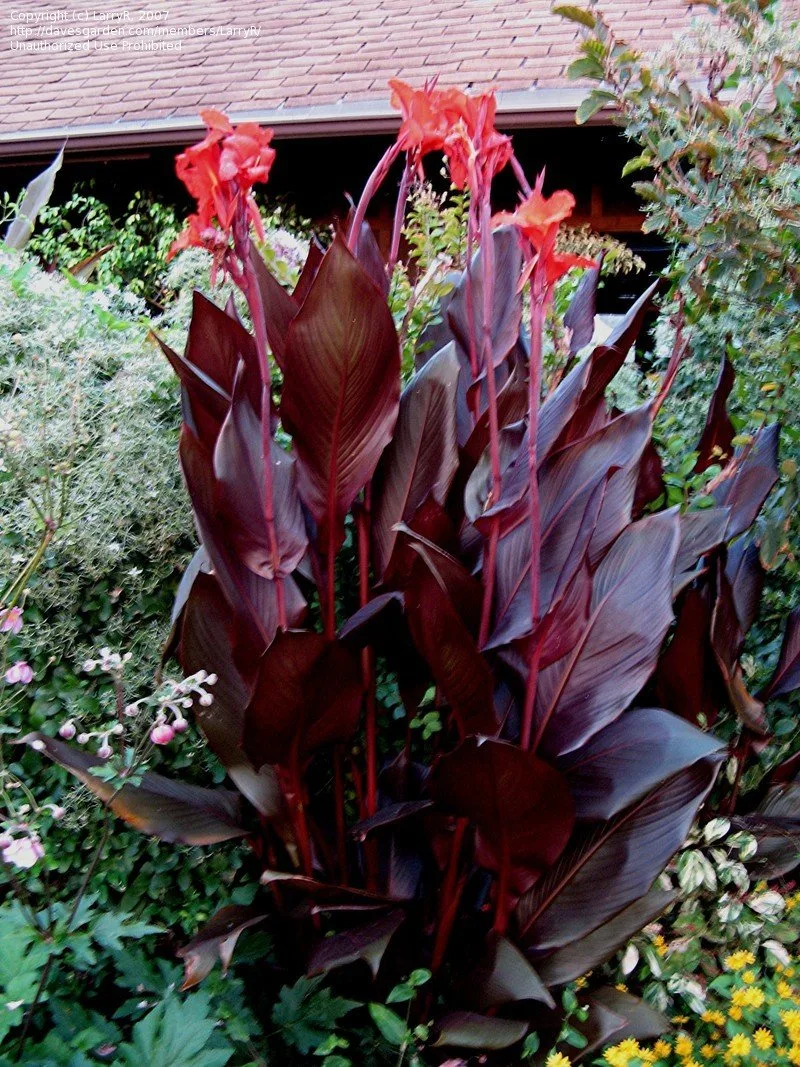
Stately, clump-forming perennial to 2m tall, with very large, glossy, dark burnished bronze leaves, and spikes of showy, dark orange-red flowers from midsummer to autumn. A good plant for a tropical border
Scientific classification
- Species
- Canna 'Australia' (Canna 'Australia')
- Genus
- Canna
- Family
- Cannaceae
- Information to be completed
- Toxicity
- Herbaceous Perennial · Conservatory Greenhouse
- Plant type
- 1.5-2.5 metres
- Height
- 0.5-1 metres
- Spread
- Deciduous
- Foliage
- Clump forming
- Habit
- Spring · Summer · Autumn
- Season of interest
- Full sun
- Sunlight
- Information to be completed
- Ideal temperature









Canna 'Australia' pictures
Distribution of Canna 'Australia'
Distribution map
Information to be completed
Information to be completed
Culture
Information to be completed
Toxicity
Information to be completed
Quick identification of Canna 'Australia'
Information to be completed
Canna 'Australia' care guide
- Moderate regular watering, avoid prolonged drought and stagnant waterlogging
- Watering
- Full sun
- Sunlight
- Information to be completed
- Ideal temperature

Watering
Moderate regular watering, avoid prolonged drought and stagnant waterlogging
Fertilizing
 Fertilizing
Balanced perennial feed every four weeks spring through summer growth
Pruning
 Pruning
No pruning necessary
Propagation
 Propagation
Propagate by division of rhizomes in spring
Growing
 Growing
Grow in a sheltered site with full sun and water freely in dry spells; apply a balanced liquid feed monthly. In cold regions, this cultivar is best kept growing in winter in a warm, frost-free greenhouse or conservatory. In areas that are frost-free, leave in situ and protect with a deep dry mulch. See canna cultivation for further information
People also ask
Information to be completed
Common pests and diseases
Diseases
May be susceptible to Canna viruses
Pests
May be susceptible to glasshouse red spider mite, aphids, slugs and snails
Explore the plant health library →




