
Eucalyptus elliptica
Also known as: Information to be completed
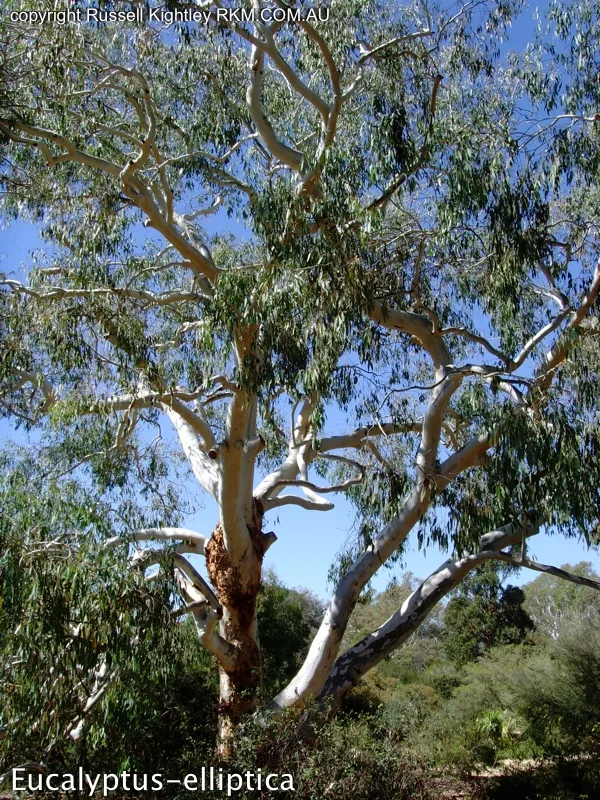
A medium-sized, highly ornamental, evergreen tree reaching a height of 20m (66ft) when mature. Has beautiful white bark with tints of pink and gold. The new shoots are pink becoming blue-green with age. Juvenile foliage is blue green with a reddish edge and petiole and is ovate to elliptical in shape. Mature foliage is sickle-shaped and blue-green to green. The foliage is striongly aromatic. Flowers are white and attractive to bees
Scientific classification
- Species
- Eucalyptus elliptica (Eucalyptus elliptica)
- Genus
- Eucalyptus
- Family
- Myrtaceae
- Information to be completed
- Toxicity
- Trees
- Plant type
- Higher than 12 metres
- Height
- 4-8 metres
- Spread
- Evergreen
- Foliage
- Information to be completed
- Habit
- Autumn · Winter · Spring · Summer
- Season of interest
- Full sun
- Sunlight
- Information to be completed
- Ideal temperature









Eucalyptus elliptica pictures
Distribution of Eucalyptus elliptica
Distribution map
Information to be completed
Information to be completed
Culture
Information to be completed
Toxicity
Information to be completed
Quick identification of Eucalyptus elliptica
Information to be completed
Eucalyptus elliptica care guide
- Moderate watering rate, soil may dry lightly between irrigation rounds
- Watering
- Full sun
- Sunlight
- Information to be completed
- Ideal temperature

Watering
Moderate watering rate, soil may dry lightly between irrigation rounds
Fertilizing
 Fertilizing
Fast-growing eucalyptus feed once annually early spring growth
Pruning
 Pruning
Little pruning is needed. Remove diseased, damaged, crowded or crossing shoots and unwanted growth. Timing depends on the plant: generally late winter or early spring; plants prone to bleeding and deciduous magnolias need different timing, and deciduous azaleas and lilacs are pruned after flowering.
Propagation
 Propagation
Propagate by seed at 13-18°C in spring and summer
Growing
 Growing
Grows well in most garden soils that are moisture-retentive but well drained and in full sun. Dislikes very dry soil, even when established
People also ask
Information to be completed
Common pests and diseases
Diseases
May be susceptible to silver leaf, oedema and honey fungus
Pests
May be susceptible to eucalyptus gall wasp and eucalyptus sucker
Explore the plant health library →




