
Erysimum cheiri 'Ruby Gem'
Also known as: Information to be completed
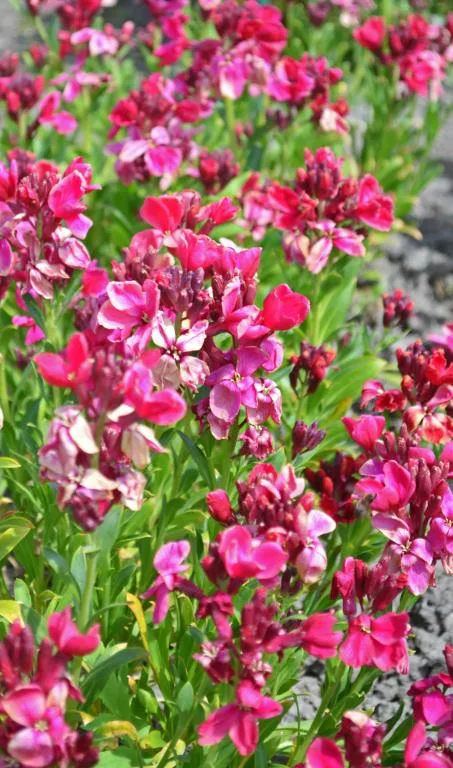
An evergreen short-lived perennial usually grown as a biennial, with a bushy, upright habit and narrow, dark green leaves. Clusters of fragrant flowers, opening fiery red and maturing to deep crimson, are produced at the tips of the stems from spring into summer
Scientific classification
- Species
- Erysimum cheiri 'Ruby Gem' (Erysimum cheiri 'Ruby Gem')
- Genus
- Erysimum
- Family
- Brassicaceae
- Information to be completed
- Toxicity
- Herbaceous Perennial · Annual Biennial
- Plant type
- 0.1-0.5 metres
- Height
- 0.1-0.5 metres
- Spread
- Evergreen
- Foliage
- Bushy · Columnar upright
- Habit
- Spring · Summer · Autumn · Winter
- Season of interest
- Full sun
- Sunlight
- Information to be completed
- Ideal temperature









Erysimum cheiri 'Ruby Gem' pictures
Distribution of Erysimum cheiri 'Ruby Gem'
Distribution map
Information to be completed
Information to be completed
Culture
Information to be completed
Toxicity
Information to be completed
Quick identification of Erysimum cheiri 'Ruby Gem'
Information to be completed
Erysimum cheiri 'Ruby Gem' care guide
- Moderate regular watering, avoid prolonged drought and stagnant waterlogging
- Watering
- Full sun
- Sunlight
- Information to be completed
- Ideal temperature

Watering
Moderate regular watering, avoid prolonged drought and stagnant waterlogging
Fertilizing
 Fertilizing
Balanced perennial feed every four weeks spring through summer growth
Pruning
 Pruning
Trim after flowering to prevent plants becoming leggy
Propagation
 Propagation
Propagate by seed or by softwood cuttings in spring or summer
Growing
 Growing
Grow in a sunny position in poor to moderately fertile, well-drained, neutral to alkaline soil. Usually grown as a biennial, plant out at the end of summer for flowers the following year
People also ask
Information to be completed
Common pests and diseases
Diseases
May be susceptible to downy mildews, club root, leaf spot, root rot and virus diseases
Pests
May be susceptible to slugs, snails, cabbage root fly and flea beetles
Explore the plant health library →




