
white willow 'Golden Ness'
Also known as: Information to be completed
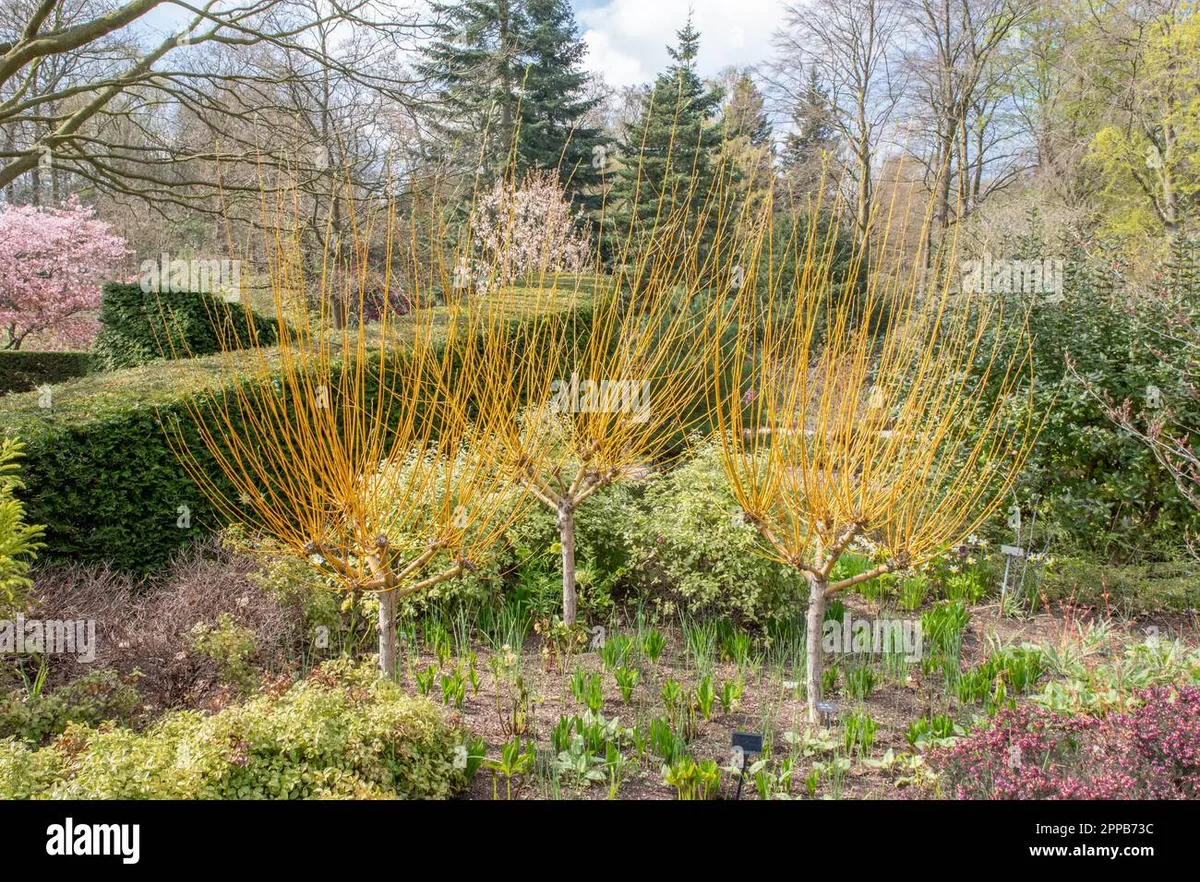
A golden-stemmed cultivar of a vigorous species that can be kept in check by coppicing. Coppicing reduces it to shrub of 2m in height and has the added bonus of producing more colourful stems for winter display
Scientific classification
- Species
- white willow 'Golden Ness' (Salix alba 'Golden Ness')
- Genus
- Salix
- Family
- Salicaceae
- Order
- Malpighiales
- Class
- Magnoliopsida
- Phylum
- Tracheophyta
- Information to be completed
- Toxicity
- Shrubs · Trees
- Plant type
- 8-12 metres
- Height
- 4-8 metres
- Spread
- Deciduous
- Foliage
- Bushy
- Habit
- Spring · Summer · Autumn · Winter
- Season of interest
- Full sun · Partial shade
- Sunlight
- Information to be completed
- Ideal temperature









white willow 'Golden Ness' pictures
white willow 'Golden Ness' care guide
- Moderate regular watering, allowing brief slight drying between soakings
- Watering
- Full sun · Partial shade
- Sunlight

Watering
Moderate regular watering, allowing brief slight drying between soakings
Fertilizing
 Fertilizing
Balanced perennial feed every four weeks from spring through summer
Pruning
 Pruning
For colourful stems or large foliage, prune hard to a low framework. Let young plants establish for one to two years first. Prune in late winter or spring, before or as new growth starts.
Propagation
 Propagation
Propagate by semi-ripe cuttings in summer or hardwood cuttings in winter
Growing
 Growing
Suitable for damp places especially. Position to highlight winter sun on stems
Common pests and diseases
Diseases
May be susceptible to willow anthracnose, scab, canker, honey fungus and rust
Pests
May be susceptible to aphids, caterpillars, leaf beetles, sawflies, willow scale
Explore the plant health library →




