
Geranium sanguineum 'Apfelblüte'
Also known as: Information to be completed
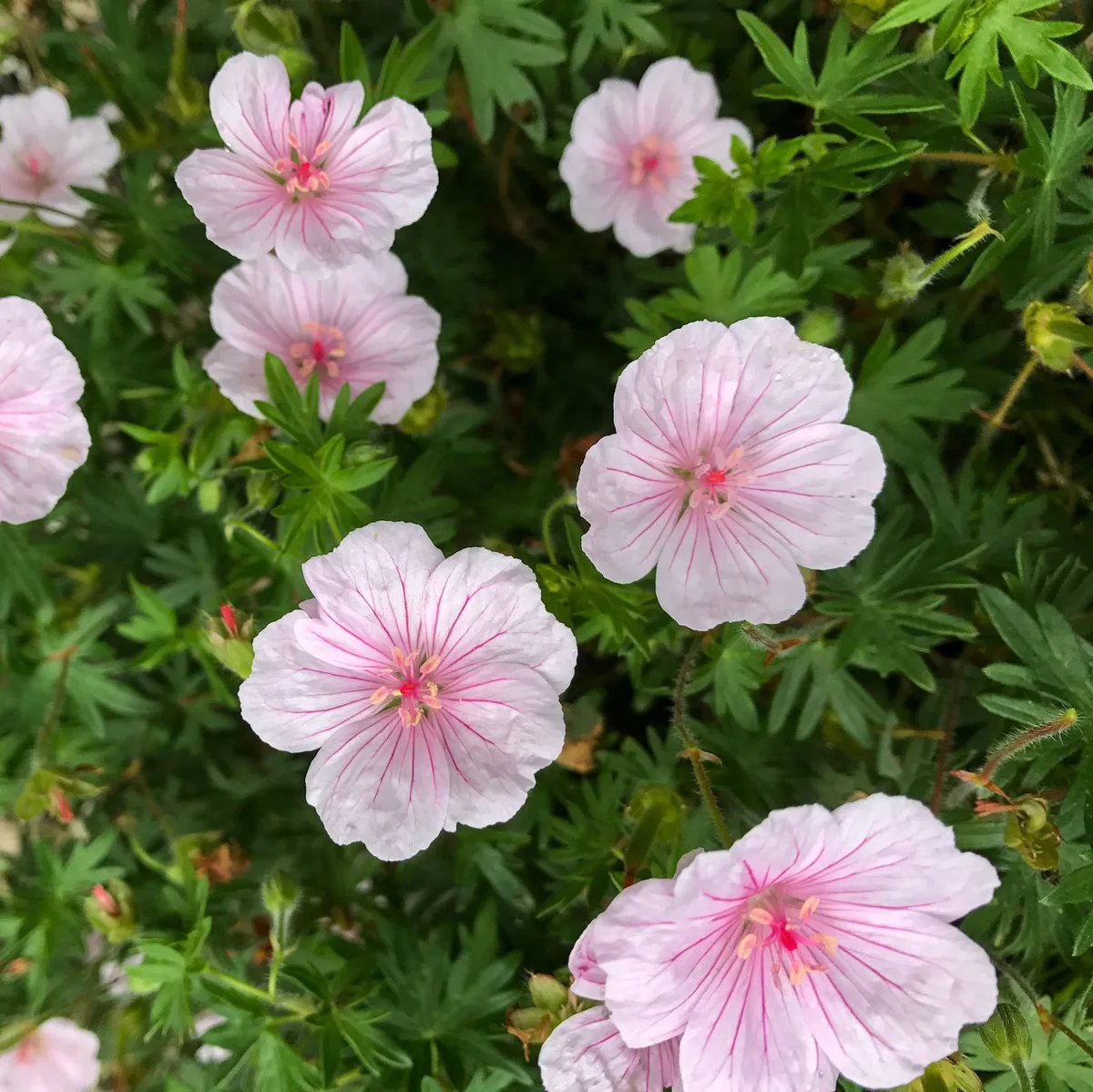
A low-growing, mound-forming, herbaceous perennial with green, deeply divided, lobed foliage turning shades of red in autumn, on stems to 25cm (10in) high and 30cm (12in) across. From late spring to summer, saucer shaped pale-pink flowers with slightly darker veins appear in profusion above the foliage.
Scientific classification
- Species
- Geranium sanguineum 'Apfelblüte' (Geranium sanguineum 'Apfelblüte')
- Genus
- Geranium
- Family
- Geraniaceae
- Order
- Geraniales
- Class
- Magnoliopsida
- Phylum
- Tracheophyta
- Information to be completed
- Toxicity
- Herbaceous Perennial
- Plant type
- 0.1-0.5 metres
- Height
- 0.1-0.5 metres
- Spread
- Deciduous
- Foliage
- Clump forming · Matforming
- Habit
- Autumn · Spring · Summer
- Season of interest
- Full sun · Partial shade
- Sunlight
- Information to be completed
- Ideal temperature









Geranium sanguineum 'Apfelblüte' pictures
Distribution of Geranium sanguineum 'Apfelblüte'
Distribution map
- Native
- Introduced
- Cultivated
Source:WCVP v16 · Royal Botanic Gardens, Kew · CC BY 3.0 · Boundaries:WGSRPD / TDWG
Geranium sanguineum 'Apfelblüte' care guide
- Moderate watering, allow slight drying between soakings
- Watering
- Full sun · Partial shade
- Sunlight

Watering
Moderate watering, allow slight drying between soakings
Fertilizing
 Fertilizing
Light balanced feed in spring and midsummer
Pruning
 Pruning
Remove spent flowered stems and old leaves to encourage the production of fresh leaves and flowers. Remove old dead foliage in spring before growth commences
Propagation
 Propagation
Propagate by division in spring, or take basal cuttings in early to mid-spring and root with bottom heat.
Growing
 Growing
Grow in any moderately fertile soil apart from waterlogged soils. Good for using in rock gardens or as groundcover. For best growth and flowering, plant in full sun or partial shade.
Common pests and diseases
Diseases
May be susceptible to Powdery mildews, downy mildews and a virus
Pests
May be susceptible to vine weevil, geranium sawfly, slugs and snails
Explore the plant health library →




