
black-eyed Susan [Gloriosa Daisies]
Also known as: Information to be completed
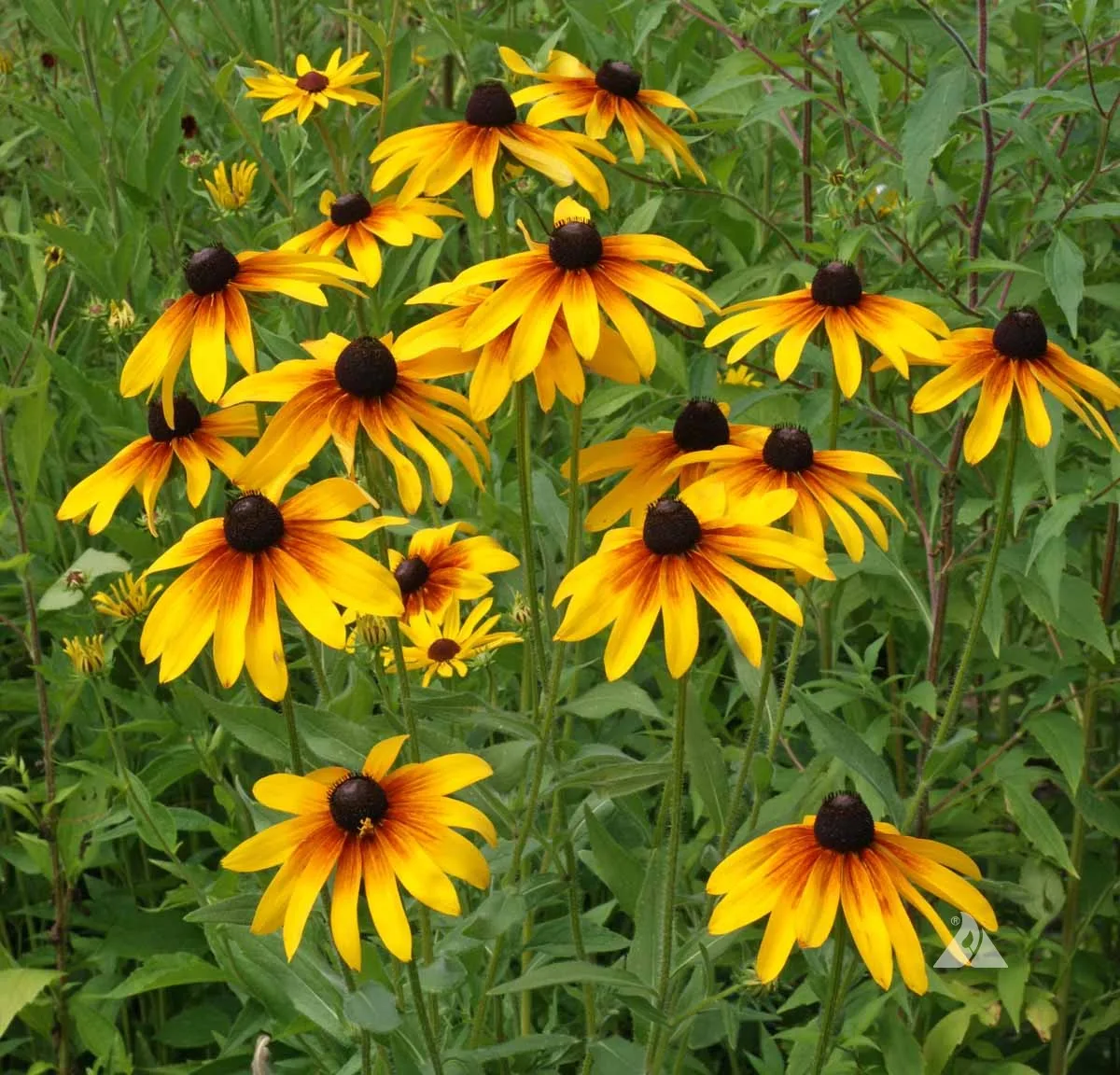
A mix of biennial or short-lived perennials usually grown as annuals, to around 70cm high, with oval-shaped, bristly green leaves. Daisy-like single or bi-coloured flowers, in shades of yellow, orange, red and brown, are borne on leafy, upright stems from late summer into autumn
Scientific classification
- Species
- black-eyed Susan [Gloriosa Daisies] (Rudbeckia hirta Gloriosa Daisies)
- Genus
- Rudbeckia
- Family
- Asteraceae
- Order
- Asterales
- Class
- Magnoliopsida
- Phylum
- Magnoliophyta
- Information to be completed
- Toxicity
- Herbaceous Perennial · Annual Biennial
- Plant type
- 0.5-1 metres
- Height
- 0.1-0.5 metres
- Spread
- Deciduous
- Foliage
- Bushy · Columnar upright
- Habit
- Spring · Summer · Autumn
- Season of interest
- Full sun · Partial shade
- Sunlight
- Information to be completed
- Ideal temperature









black-eyed Susan [Gloriosa Daisies] pictures
black-eyed Susan [Gloriosa Daisies] care guide
- Moderate regular watering, allow slight drying between waterings
- Watering
- Full sun · Partial shade
- Sunlight

Watering
Moderate regular watering, allow slight drying between waterings
Fertilizing
 Fertilizing
Light balanced feed in spring and during bloom
Pruning
 Pruning
Deadhead to remove spent flowers
Propagation
 Propagation
Propagate by seed sown with gentle heat in spring. Light is needed for germination. Harden off before planting out
Growing
 Growing
Best grown as a half-hardy annual. Grows well in moderately fertile, preferably heavy but well-drained soil in full sun or partial shade. See rudbeckia cultivation for more detailed advice
Common pests and diseases
Diseases
May be susceptible to powdery mildews, especially on dry soils
Pests
May be susceptible to aphids, to leaf and bud eelworms, and to slugs on young growth
Explore the plant health library →




