
Aubrieta glabrescens
Also known as: Information to be completed
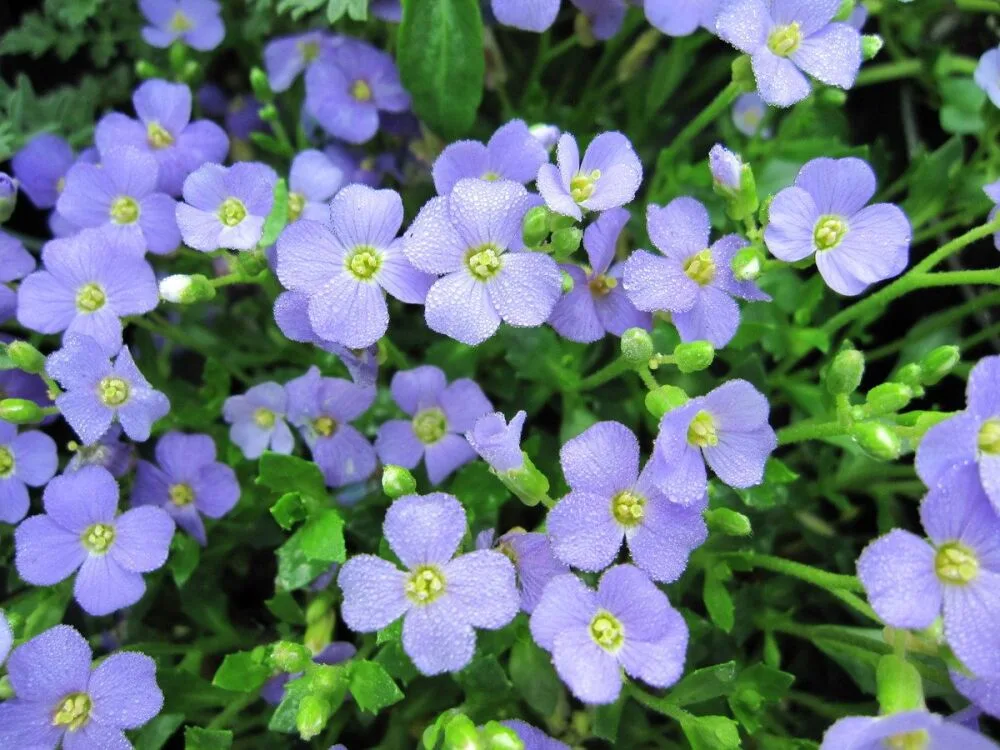
A compact, evergreen perennial, about 8cm tall, forming a mound of small, smooth, mid-green leaves, and producing relatively large, 4-petalled mauve-pink flowers with a central yellow eye, from mid to late spring, followed by slender seed pods
Scientific classification
- Species
- Aubrieta glabrescens (Aubrieta glabrescens)
- Genus
- Aubrieta
- Family
- Brassicaceae
- Order
- Brassicales
- Class
- Magnoliopsida
- Phylum
- Magnoliophyta
- Information to be completed
- Toxicity
- Herbaceous Perennial
- Plant type
- Information to be completed
- Height
- Information to be completed
- Spread
- Evergreen
- Foliage
- Tufted
- Habit
- Spring · Summer · Autumn · Winter
- Season of interest
- Full sun
- Sunlight
- Information to be completed
- Ideal temperature









Aubrieta glabrescens pictures
Distribution of Aubrieta glabrescens
Distribution map
- Native
- Introduced
- Cultivated
Source:WCVP v16 · Royal Botanic Gardens, Kew · CC BY 3.0 · Boundaries:WGSRPD / TDWG
Aubrieta glabrescens care guide
- Moderate regular watering, allowing brief slight drying between soakings
- Watering
- Full sun
- Sunlight

Watering
Moderate regular watering, allowing brief slight drying between soakings
Fertilizing
 Fertilizing
Balanced perennial feed every four weeks from spring through summer
Pruning
 Pruning
Cut back after flowering to maintain shape
Propagation
 Propagation
Propagate by softwood cuttings in early summer, or semi-hardwood cuttings in midsummer. Propagate by seed in spring or autumn, though seed-grown plants may vary
Growing
 Growing
Grow in sharply-drained, preferably neutral to alkaline soil in full sun. An ideal plant for dry areas such as rock gardens, slopes and over walls; native to rocky mountain slopes and rubble under rock cliffs
Common pests and diseases
Diseases
May be susceptible to white blister and downy mildew
Pests
May be susceptible to aphids, leaf and bud eelworms and flea beetles
Explore the plant health library →




