
beetroot 'Solo'
Also known as: Information to be completed
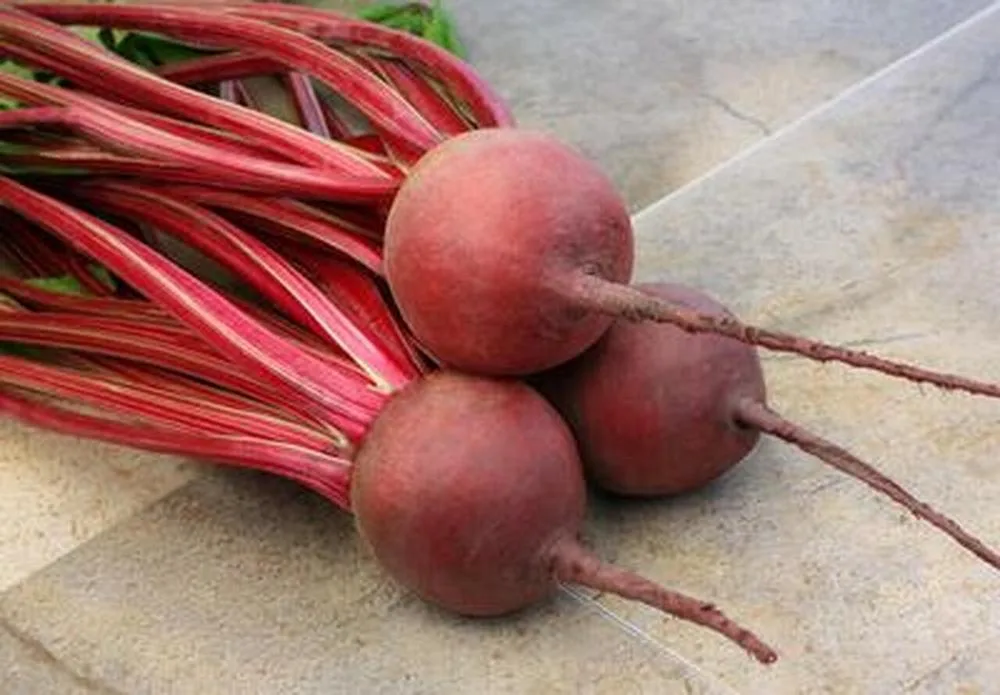
An annual vegetable grown for its round, smooth-skinned, deep red root with a high sugar content giving a sweet flavour that is good for growing both to harvest young as baby vegetables or leaving to mature. This cultivar is monogerm meaning that only one to two seedlings are produced from each seed cluster rather than the usual three thereby reducing the need to thin crops
Scientific classification
- Species
- beetroot 'Solo' (Beta vulgaris 'Solo')
- Genus
- Beta
- Family
- Amaranthaceae
- Order
- Caryophyllales
- Class
- Magnoliopsida
- Phylum
- Tracheophyta
- Information to be completed
- Toxicity
- Annual Biennial
- Plant type
- 0.1-0.5 metres
- Height
- 0.1-0.5 metres
- Spread
- Deciduous
- Foliage
- Bushy
- Habit
- Spring · Summer · Autumn
- Season of interest
- Full sun · Partial shade
- Sunlight
- Information to be completed
- Ideal temperature









beetroot 'Solo' pictures
Distribution of beetroot 'Solo'
Distribution map
- Native
- Introduced
- Cultivated
Source:WCVP v16 · Royal Botanic Gardens, Kew · CC BY 3.0 · Boundaries:WGSRPD / TDWG
beetroot 'Solo' care guide
- Keep soil consistently moist for steady leafy growth without drought stress
- Watering
- Full sun · Partial shade
- Sunlight

Watering
Keep soil consistently moist for steady leafy growth without drought stress
Fertilizing
 Fertilizing
Nitrogen-rich vegetable feed every two to three weeks in active growth
Pruning
 Pruning
No pruning required
Propagation
 Propagation
Propagate by seed. See sowing vegetable seeds
Growing
 Growing
Best grown in a fertile, free-draining soil in full sun. Sow at fortnightly intervals from March to July for a successional harvest. See RHS Grow Your Own Beetroot Guide
Common pests and diseases
Diseases
May be susceptible to downy mildews, foot and root rots and leaf spots
Pests
May be susceptible to aphids, flea beetles and beet leaf miner
Explore the plant health library →




