
parsnip 'Panache'
Also known as: Information to be completed
This smooth, white-skinned variety has creamy flesh with a sweet flavour. The roots are large and wedge shaped, have a good resistance to canker and store well. Sow: April to June, Harvest: September to February
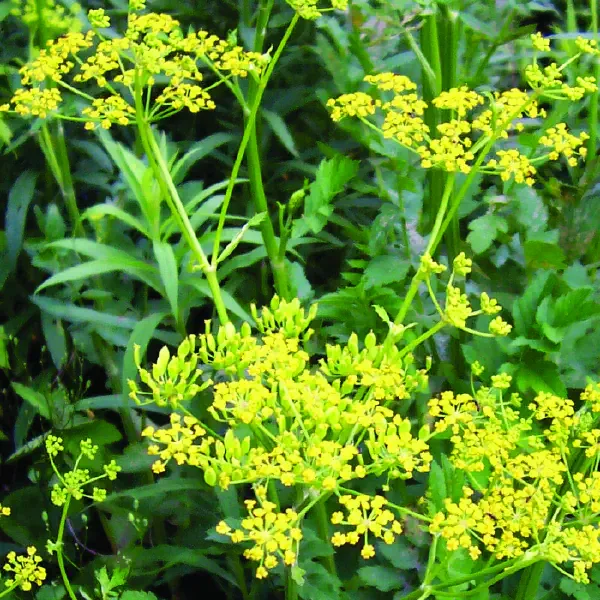
Scientific classification
- Species
- parsnip 'Panache' (Pastinaca sativa 'Panache')
- Genus
- Pastinaca
- Family
- Apiaceae
- Order
- Apiales
- Class
- Magnoliopsida
- Phylum
- Magnoliophyta
- Harmful to skin with sunlight. Wear gloves and other protective equipment when handling
- Toxicity
- Annual Biennial
- Plant type
- 0.1-0.5 metres
- Height
- 0.1-0.5 metres
- Spread
- Deciduous
- Foliage
- Columnar upright
- Habit
- Spring · Summer · Autumn · Winter
- Season of interest
- Partial shade · Full sun
- Sunlight
- Information to be completed
- Ideal temperature









parsnip 'Panache' pictures
Distribution of parsnip 'Panache'
Distribution map
- Native
- Introduced
- Cultivated
Locally extinct or doubtful records are excluded from native and introduced layers.
Source:WCVP v16 · Royal Botanic Gardens, Kew · CC BY 3.0 · Boundaries:WGSRPD / TDWG
Toxicity
Harmful to skin with sunlight. Wear gloves and other protective equipment when handling
parsnip 'Panache' care guide
- Moderate regular watering, allowing brief slight drying between soakings
- Watering
- Partial shade · Full sun
- Sunlight

Watering
Moderate regular watering, allowing brief slight drying between soakings
Fertilizing
 Fertilizing
Balanced perennial feed every four weeks from spring through summer
Pruning
 Pruning
No pruning required
Propagation
 Propagation
Propagate by seed. See sowing vegetable seeds
Growing
 Growing
Grow on an open, sunny site with deep, light soil. Keep the soil evenly moist to prevent roots splitting. Add well-rotted manure the previous autumn, especially if growing on a clay or chalk soil. Chalk and clay aren’t ideal for growing parsnips so you could also try deep containers. The ideal soil pH is 6.5-7 so adjust pH where necessary. See parsnip cultivation for more information.
Common pests and diseases
Diseases
Shows good resistance to parsnip canker
Pests
May be susceptible to carrot fly.
Explore the plant health library →




