
shallot 'Matador'
Also known as: Information to be completed
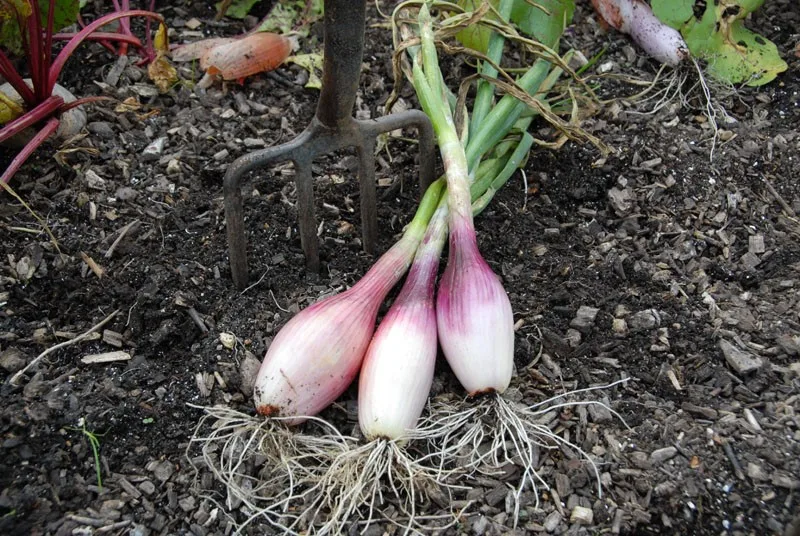
A seed-raised shallot, producing one bulb per seed, with upright, tubular, hollow, bluish-green leaves. The bulbs are round, with crisp, white flesh and red-brown skin. This cultivar is high-yielding, ready for harvest in early to mid-autumn, and stores well
Scientific classification
- Species
- shallot 'Matador' (Allium cepa 'Matador')
- Genus
- Allium
- Family
- Amaryllidaceae
- Order
- Asparagales
- Class
- Liliopsida
- Phylum
- Magnoliophyta
- Information to be completed
- Toxicity
- Herbs - Culinary · Bulbs
- Plant type
- 0.1-0.5 metres
- Height
- 0-0.1 metre
- Spread
- Deciduous
- Foliage
- Clump forming
- Habit
- Spring · Summer
- Season of interest
- Full sun
- Sunlight
- Information to be completed
- Ideal temperature









shallot 'Matador' pictures
Distribution of shallot 'Matador'
Distribution map
- Native
- Introduced
- Cultivated
Source:WCVP v16 · Royal Botanic Gardens, Kew · CC BY 3.0 · Boundaries:WGSRPD / TDWG
shallot 'Matador' care guide
- Water moderately in growth, keep drier after flowering
- Watering
- Full sun
- Sunlight

Watering
Water moderately in growth, keep drier after flowering
Fertilizing
 Fertilizing
Light bulb feed in spring before flowering
Pruning
 Pruning
No pruning required
Propagation
 Propagation
Propagate by seed or by onion sets. See how to grow: onions or sowing vegetable seeds
Growing
 Growing
Grow in free-draining, fertile soil in full sun. Keep well watered in dry periods but stop watering when bulbs are fully swollen. Harvest when foliage starts to turn yellow and flops over See Shallots (Grow your own)
Common pests and diseases
Diseases
May be susceptible to rusts, onion downy mildew and onion white rot
Pests
May be susceptible to stem and bulb eelworm, leek moth and onion fly
Explore the plant health library →




