
naranjilla
Also known as: lulo; Quito orange
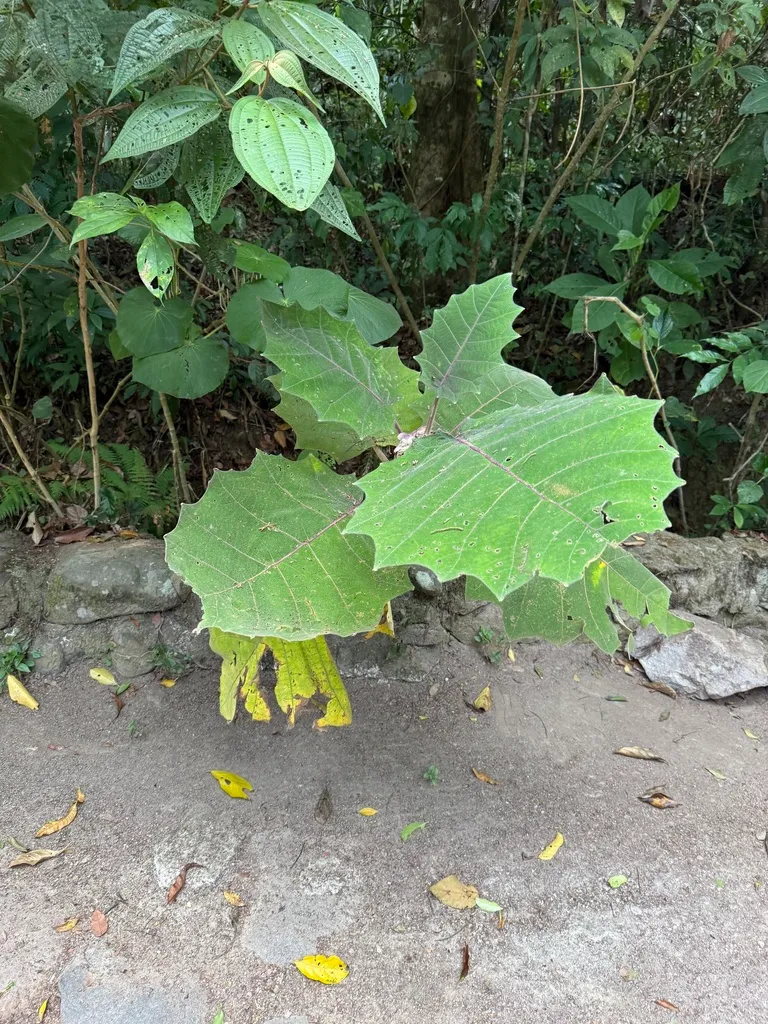
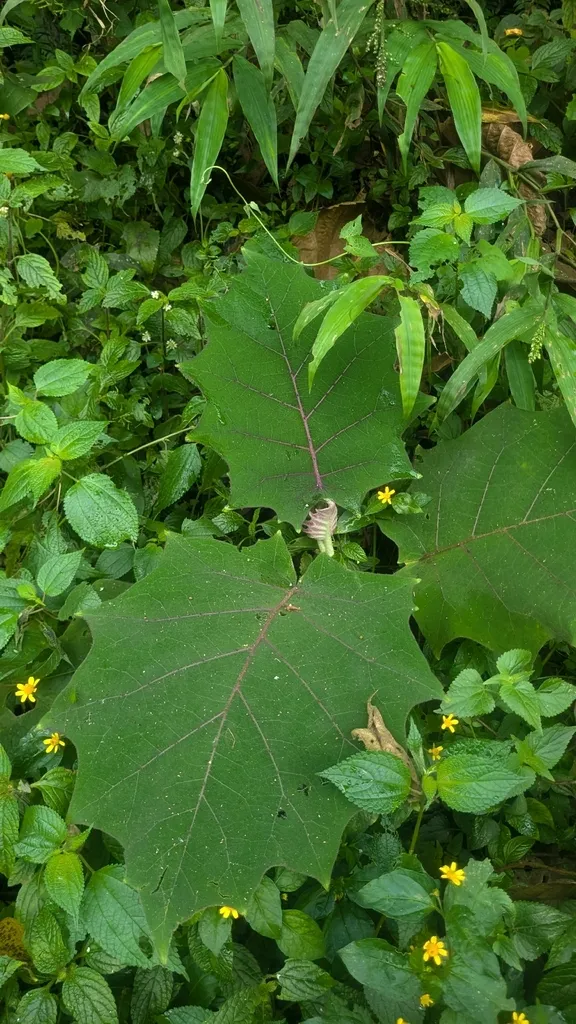
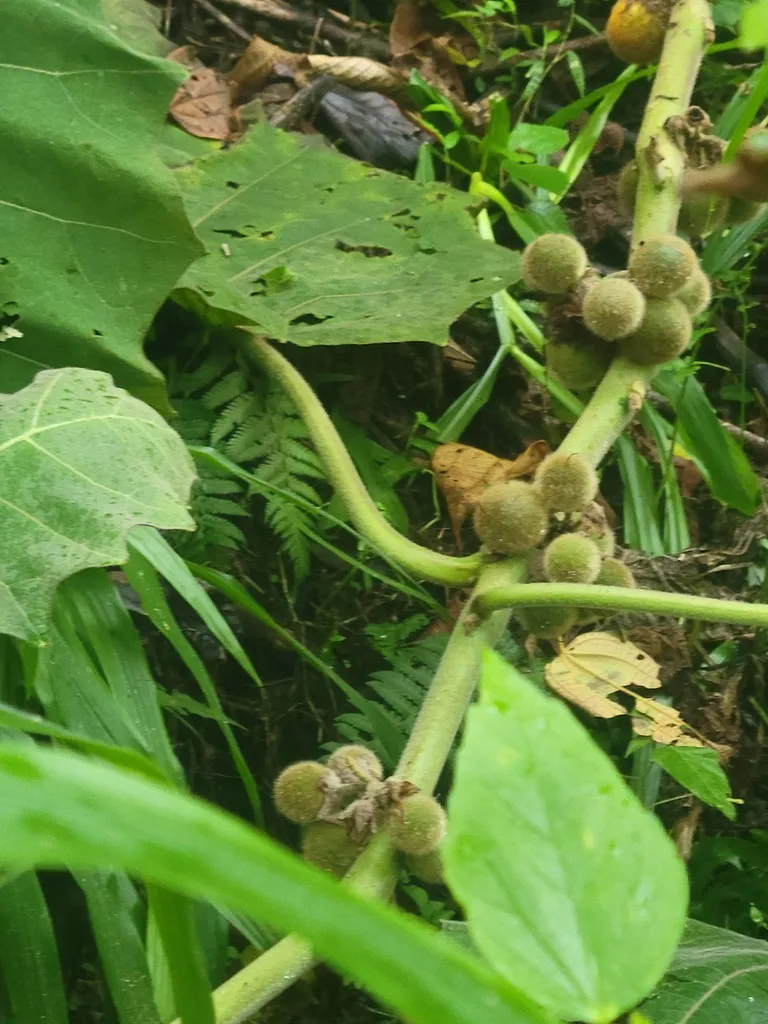
A tender, fast-growing shrub. Large green leaves are covered in fine hairs, with purple colouring along the veins. Spines protrude from the upper leaf surface and stems. Leaves and stems may display more purple colouring when young. Suitable for use in tropical style, ornamental planting. If given a long growing season it will produce white flowers, followed by orange fruits. Juice is made from the fruits when grown in tropical regions, but the fruits are covered in tiny hairs and may not fully ripen in the UK, so caution is advised
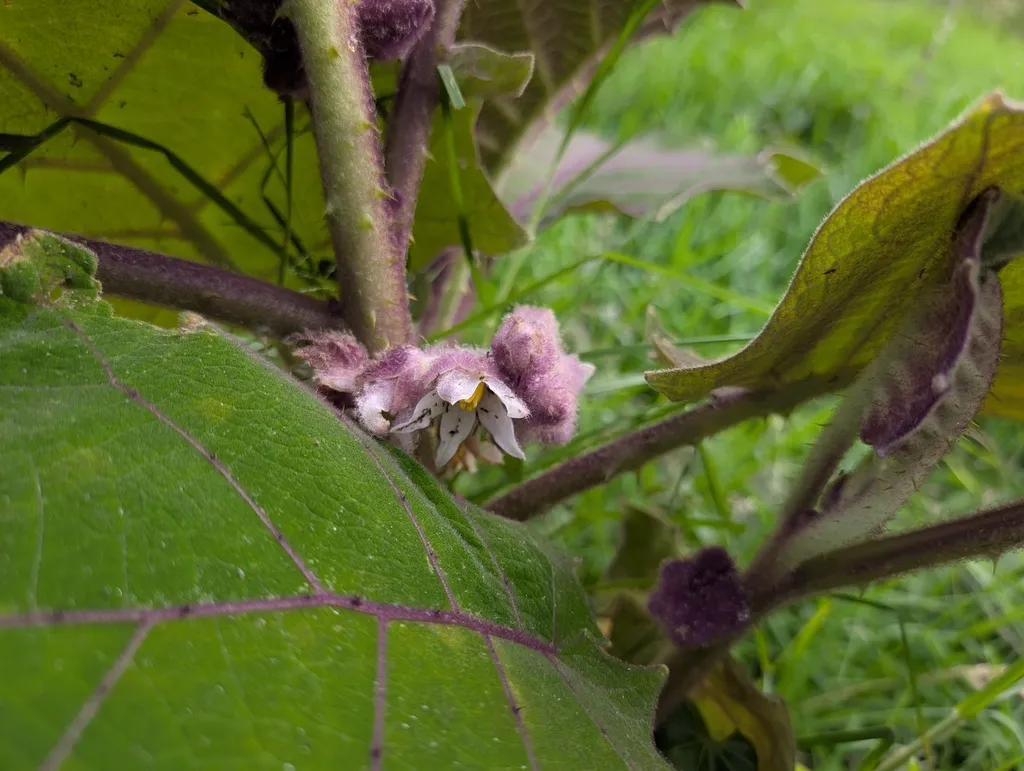
Scientific classification
- Species
- naranjilla (Solanum quitoense)
- Genus
- Solanum
- Family
- Solanaceae
- Information to be completed
- Toxicity
- Conservatory Greenhouse · Shrubs
- Plant type
- 1.5-2.5 metres
- Height
- 1.5-2.5 metres
- Spread
- Evergreen
- Foliage
- Bushy
- Habit
- Spring · Summer · Autumn · Winter
- Season of interest
- Full sun · Partial shade
- Sunlight
- Information to be completed
- Ideal temperature









naranjilla pictures
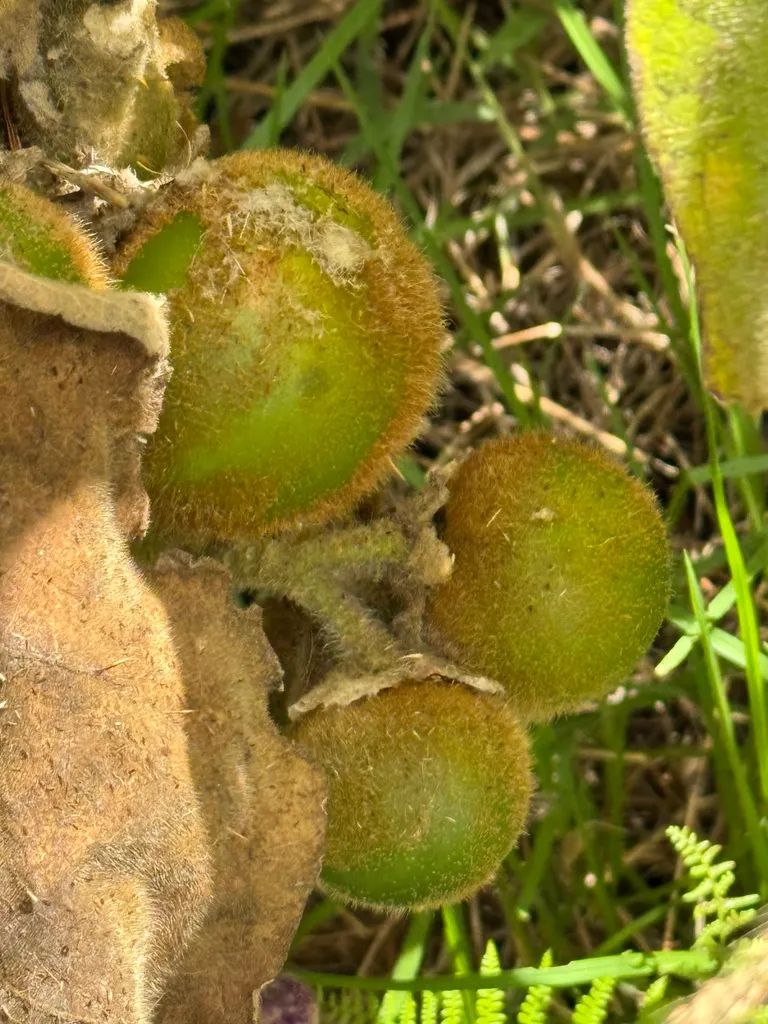
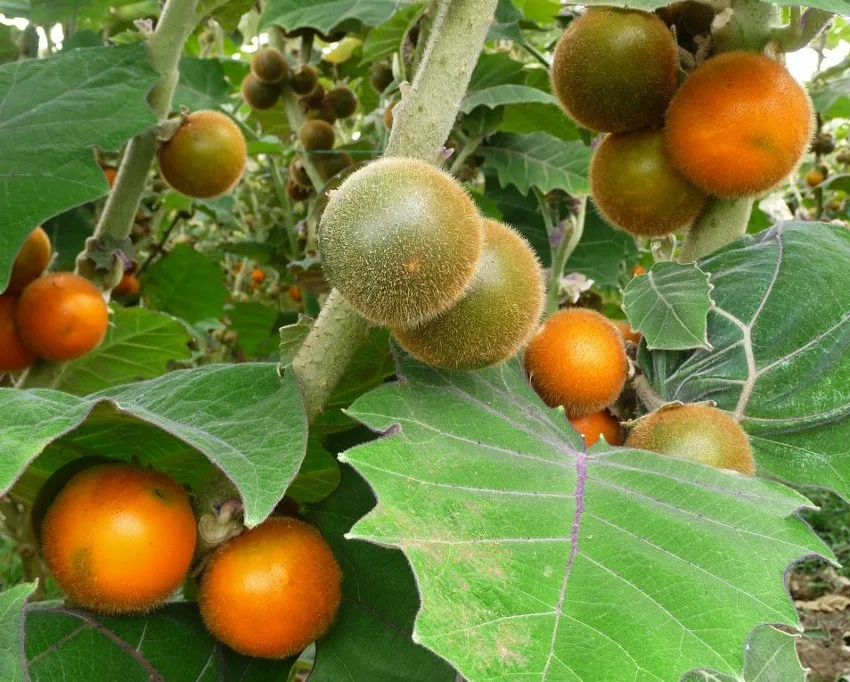
Distribution of naranjilla
Distribution map
- Native
- Introduced
- Cultivated
Source:WCVP v16 · Royal Botanic Gardens, Kew · CC BY 3.0 · Boundaries:WGSRPD / TDWG
Culture
Information to be completed
Toxicity
Information to be completed
Quick identification of naranjilla
Information to be completed
naranjilla care guide
- Moderate regular watering, allowing brief slight drying between soakings
- Watering
- Full sun · Partial shade
- Sunlight
- Information to be completed
- Ideal temperature

Watering
Moderate regular watering, allowing brief slight drying between soakings
Fertilizing
 Fertilizing
Balanced perennial feed every four weeks from spring through summer
Pruning
 Pruning
Can be pruned in late summer or early autumn if plants are to be overwintered in a greenhouse
Propagation
 Propagation
Propagate by seed
Growing
 Growing
Grow in fertile moisture-retentive soil in good light. Can be planted outside in early summer. If grown just for the foliage, it can be treated as an annual
People also ask
Information to be completed
Common pests and diseases
Diseases
May be susceptible to honey fungus (rarely)
Pests
May be susceptible to glasshouse whitefly, aphids and glasshouse red spider mite
Explore the plant health library →




