
pieris 'Firecrest'
Also known as: Information to be completed
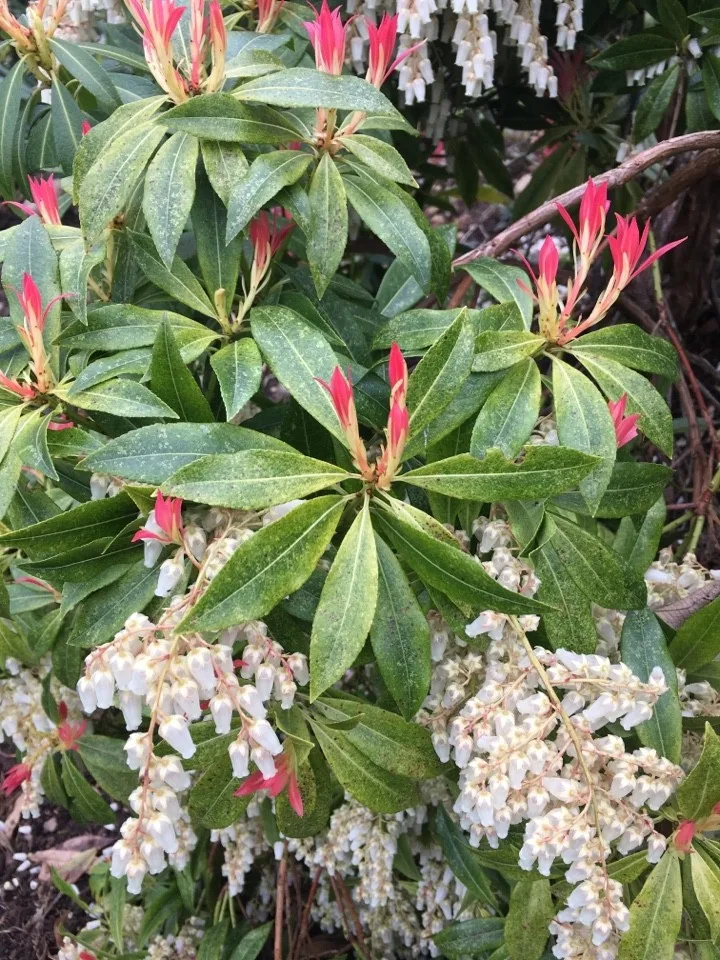
A large bushy evergreen shrub with broad leaves, bright red when young, later dark green. Flowers creamy-white, relatively large, in branched sprays in late winter and spring
Scientific classification
- Species
- pieris 'Firecrest' (Pieris 'Firecrest')
- Genus
- Pieris
- Family
- Ericaceae
- Harmful if eaten. Wear gloves and other protective equipment when handling
- Toxicity
- Shrubs
- Plant type
- 1.5-2.5 metres
- Height
- 1.5-2.5 metres
- Spread
- Evergreen
- Foliage
- Bushy
- Habit
- Spring · Summer · Autumn · Winter
- Season of interest
- Full sun · Partial shade
- Sunlight
- Information to be completed
- Ideal temperature









pieris 'Firecrest' pictures
Distribution of pieris 'Firecrest'
Distribution map
Information to be completed
Information to be completed
Culture
Information to be completed
Toxicity
Harmful if eaten. Wear gloves and other protective equipment when handling
Quick identification of pieris 'Firecrest'
Information to be completed
pieris 'Firecrest' care guide
- Constant slightly damp acidic soil, avoid full root zone dehydration
- Watering
- Full sun · Partial shade
- Sunlight
- Information to be completed
- Ideal temperature

Watering
Constant slightly damp acidic soil, avoid full root zone dehydration
Fertilizing
 Fertilizing
Weak pieris ericaceous feed monthly spring through summer growth
Pruning
 Pruning
Usually little pruning is needed. Lightly shape if necessary, removing dead, damaged or diseased shoots. Prune after flowering.
Propagation
 Propagation
Propagate by softwood cuttings in early summer or semi-hardwood cuttings in late summer. Some bottom heat may be required
Growing
 Growing
Grows well in acidic, moderately fertile, humus-rich soil but may need some protection in winter when young
People also ask
Information to be completed
Common pests and diseases
Diseases
May be susceptible to honey fungus (rarely), Phytophthora root rot, and fungal leaf spot
Pests
May be susceptible to pieris lacebug
Explore the plant health library →




