
Ranunculus asiaticus 'Bloomingdale White Shades'
Also known as: Information to be completed
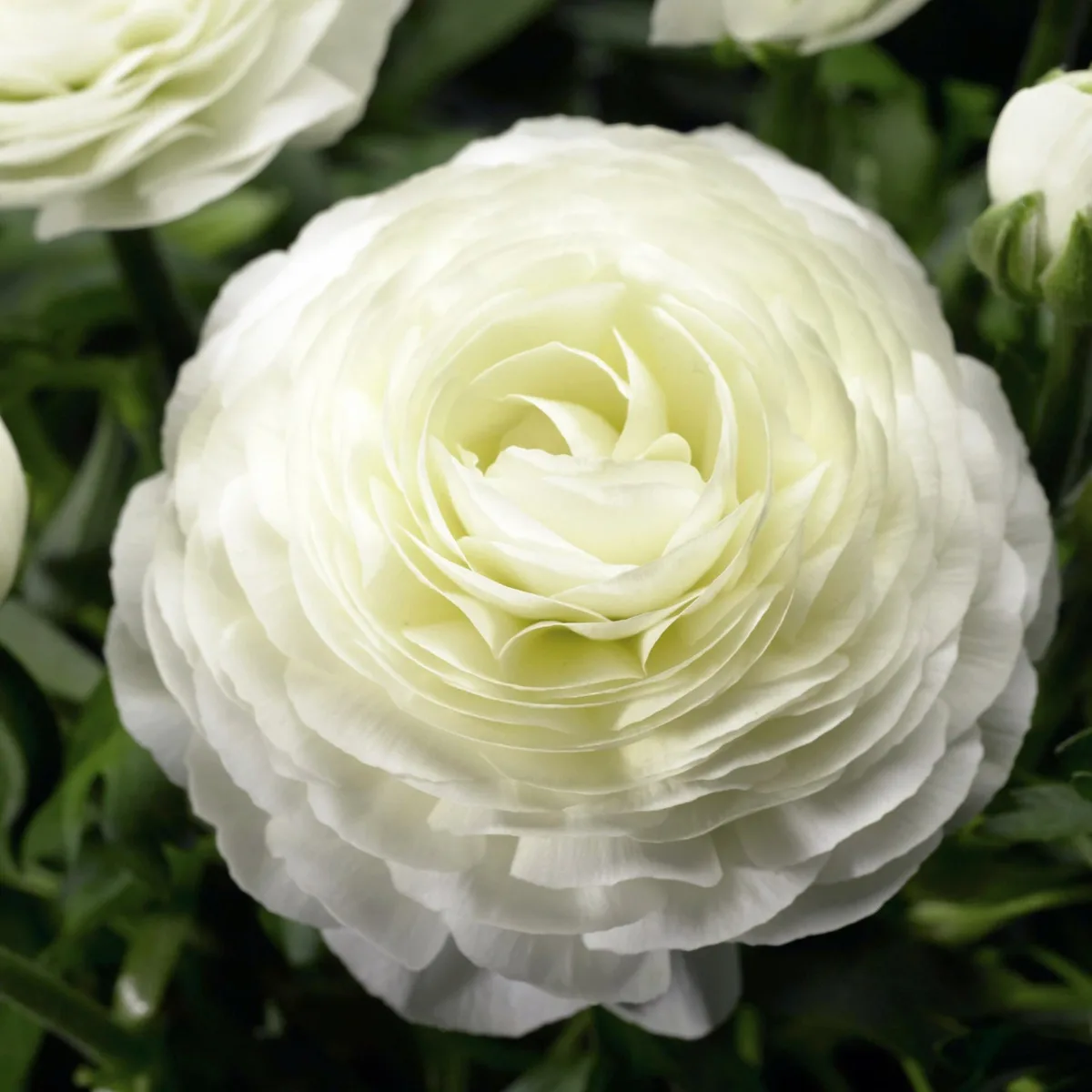
A tuberous perennial to 30cm with long-stalked, deeply lobed, mid-green foliage. In late spring and early summer upright, branching stems bear fully double flowers with many rows of ruffled, satiny, white petals. This cultivar may be raised from seed
Scientific classification
- Species
- Ranunculus asiaticus 'Bloomingdale White Shades' (Ranunculus asiaticus 'Bloomingdale White Shades')
- Genus
- Ranunculus
- Family
- Ranunculaceae
- Order
- Ranunculales
- Class
- Magnoliopsida
- Phylum
- Magnoliophyta
- Harmful if eaten, skin irritant. Wear gloves and other protective equipment when handling]
- Toxicity
- Herbaceous Perennial
- Plant type
- 0.1-0.5 metres
- Height
- 0.1-0.5 metres
- Spread
- Deciduous
- Foliage
- Clump forming
- Habit
- Spring · Summer
- Season of interest
- Full sun
- Sunlight
- Information to be completed
- Ideal temperature









Ranunculus asiaticus 'Bloomingdale White Shades' pictures
Toxicity
Harmful if eaten, skin irritant. Wear gloves and other protective equipment when handling]
Ranunculus asiaticus 'Bloomingdale White Shades' care guide
- Moderate regular watering, avoid prolonged drought or waterlogging
- Watering
- Full sun
- Sunlight

Watering
Moderate regular watering, avoid prolonged drought or waterlogging
Fertilizing
 Fertilizing
Balanced feed in spring and light repeat in growth season
Pruning
 Pruning
Remove spent flowers
Propagation
 Propagation
Propagate by seed or by division
Growing
 Growing
May be started from seed to flower in its second year, or from clusters of claw-like tubers planted in autumn or spring. Requires a dry, dormant period in summer. Grows best under unheated glass with good light and ventilation, using a fertile, humus-rich, free-draining compost such as a mix of equal parts loam, leaf mould and grit. Can also be used as a short-term bedding plant on well-drained soils
Common pests and diseases
Diseases
May be susceptible to powdery mildews and grey moulds
Pests
May be susceptible to aphids, slugs and snails
Explore the plant health library →




