
geranium 'Black Knight' Lea
Also known as: Information to be completed
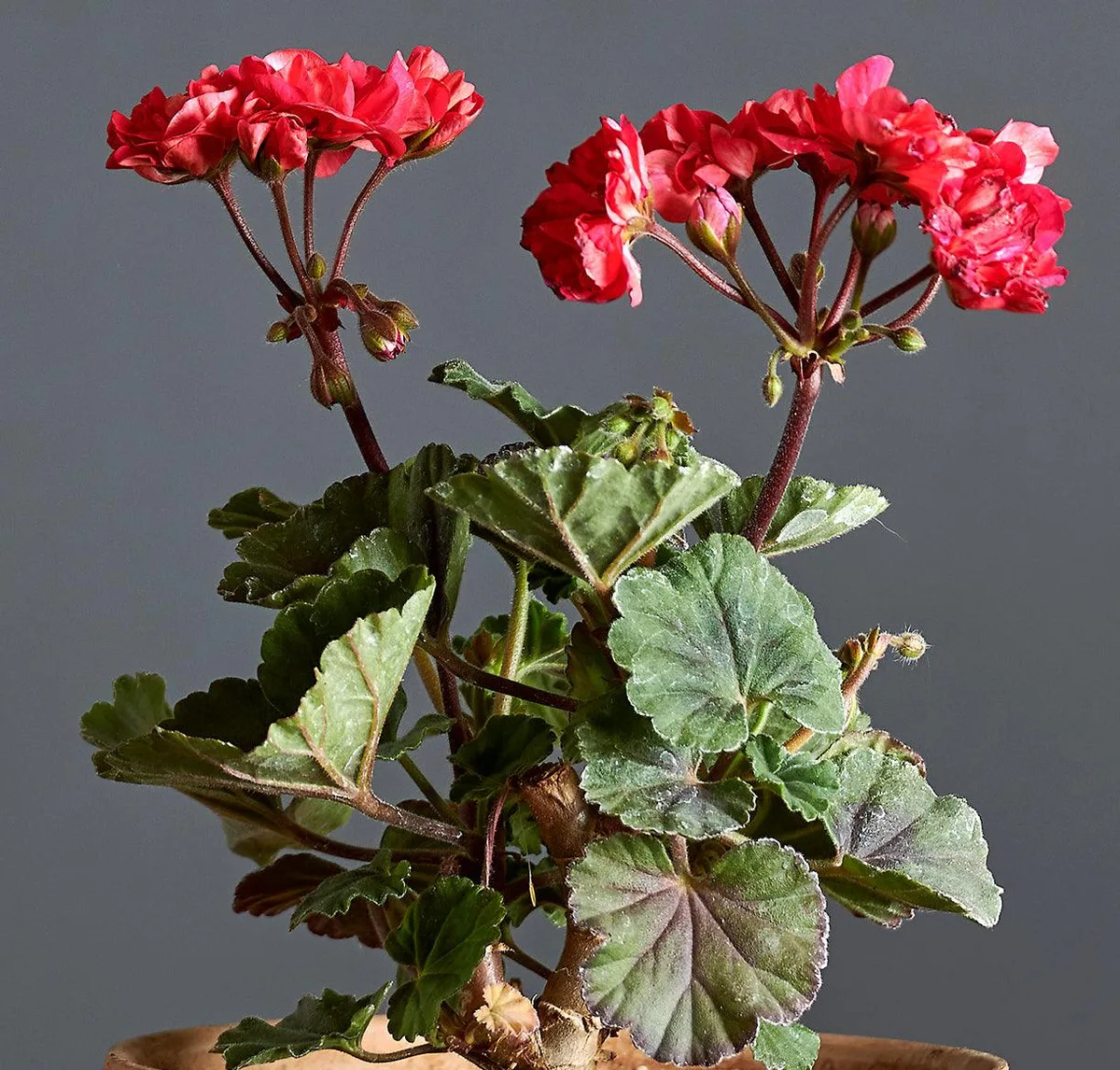
An Angel Pelargonium, small and compact, bushy, evergreen, tender perennial with small round leaves and pansy-like five-petalled flowers in summer. Flowers are dark purple with a pale pink edge and a white throat. Very floriferous and will require minimal frost free care in winter.
Scientific classification
- Species
- geranium 'Black Knight' Lea (Pelargonium 'Black Knight' Lea)
- Genus
- Pelargonium
- Family
- Geraniaceae
- Order
- Geraniales
- Class
- Magnoliopsida
- Phylum
- Magnoliophyta
- Information to be completed
- Toxicity
- Shrubs
- Plant type
- 0.1-0.5 metres
- Height
- 0.1-0.5 metres
- Spread
- Evergreen
- Foliage
- Bushy
- Habit
- Spring · Summer · Autumn · Winter
- Season of interest
- Full sun
- Sunlight
- Information to be completed
- Ideal temperature









geranium 'Black Knight' Lea pictures
geranium 'Black Knight' Lea care guide
- Allow partial soil drying before watering, avoid cold wet compost around roots
- Watering
- Full sun
- Sunlight

Watering
Allow partial soil drying before watering, avoid cold wet compost around roots
Fertilizing
 Fertilizing
High-potash pelargonium feed every two weeks through blooming warm season
Pruning
 Pruning
Pinch back tips of shoots in spring or early summer and deadhead to promote flowering. If overwintering, cut back hard in autumn or spring.
Propagation
 Propagation
Propagate by seed in late winter and from softwood cuttings from spring to autumn.
Growing
 Growing
Will grow well in a frost-free environment, in well-drained fertile neutral to alkaline soil, preferably in full sun but will tolerate some partial shade, in borders or containers. Irrigate moderately from spring to summer, and sparingly in winter allowing the compost to dry up between waterings. Apply a balanced liquid fertilizer during the growing season and switch to a high potassium fertilizer when flowering starts. Overwinter in containers before the first frost in autumn. See Pelargonium cultivation for further advice.
Common pests and diseases
Diseases
May be susceptible to Pelargonium rust, Pelargonium viruses, Leafy gall.
Pests
May be susceptible to Thrips, vine weevil, Leafhopper, Root mealybug, Whitefly.
Explore the plant health library →




