
apricot 'Garden Aprigold'
Also known as: Information to be completed
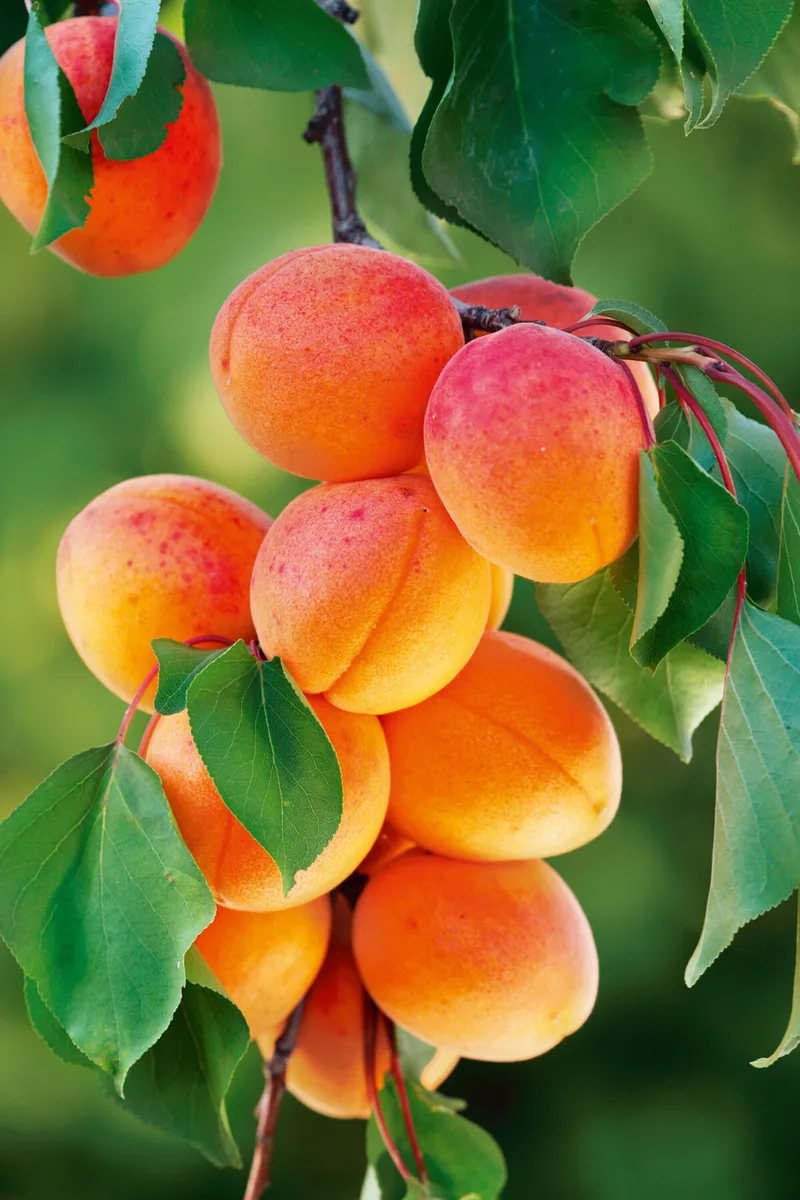
A naturally compact, self-fertile apricot cultivar. The pale pink spring blossom is followed by orange-gold fruit. Well suited for container cultivation. Cropping season: July
Scientific classification
- Species
- apricot 'Garden Aprigold' (Prunus armeniaca 'Garden Aprigold')
- Genus
- Prunus
- Family
- Rosaceae
- Order
- Rosales
- Class
- Magnoliopsida
- Phylum
- Magnoliophyta
- Information to be completed
- Toxicity
- Fruit Edible
- Plant type
- 1-1.5 metres
- Height
- 1-1.5 metres
- Spread
- Deciduous
- Foliage
- Bushy
- Habit
- Spring · Summer
- Season of interest
- Full sun
- Sunlight
- Information to be completed
- Ideal temperature









apricot 'Garden Aprigold' pictures
Distribution of apricot 'Garden Aprigold'
Distribution map
- Native
- Introduced
- Cultivated
Source:WCVP v16 · Royal Botanic Gardens, Kew · CC BY 3.0 · Boundaries:WGSRPD / TDWG
apricot 'Garden Aprigold' care guide
- Deep watering during dry spells, allowing slight surface drying between soakings
- Watering
- Full sun
- Sunlight

Watering
Deep watering during dry spells, allowing slight surface drying between soakings
Fertilizing
 Fertilizing
Balanced shrub or tree feed once each early spring
Pruning
 Pruning
Naturally compact. It needs minimal pruning. Prune in summer if needed. See How to grow: Apricots for more details
Propagation
 Propagation
Propagate by grafting on rootstock for fruit. Seed-raised plants are likely to be inferior to the parent
Growing
 Growing
Apricots flourish on deep, moisture-retentive, well-drained, ideally slightly alkaline soils and struggle in poor, shallow soils. Thsi cultivar is well suited for container growing – fruit in containers. If container grown, ideally overwinter under cover such as in a cold greenhouse or place in a very sheltered spot. The early blossom is vulnerable to frost, so trees need a warm, sheltered position. Protect blossom from frost at night, and hand pollinate if insects are scarce. See How to grow: Apricots for cultivation details
Common pests and diseases
Diseases
May be susceptible to peach leaf curl, silver leaf, bacterial canker, blossom wilt and honey fungus
Pests
May be susceptible to aphids, brown scale, glasshouse red spider mite. Birds and squirrels may damage fruit
Explore the plant health library →




