
cabbage palm 'Baptistii'
Also known as: Information to be completed
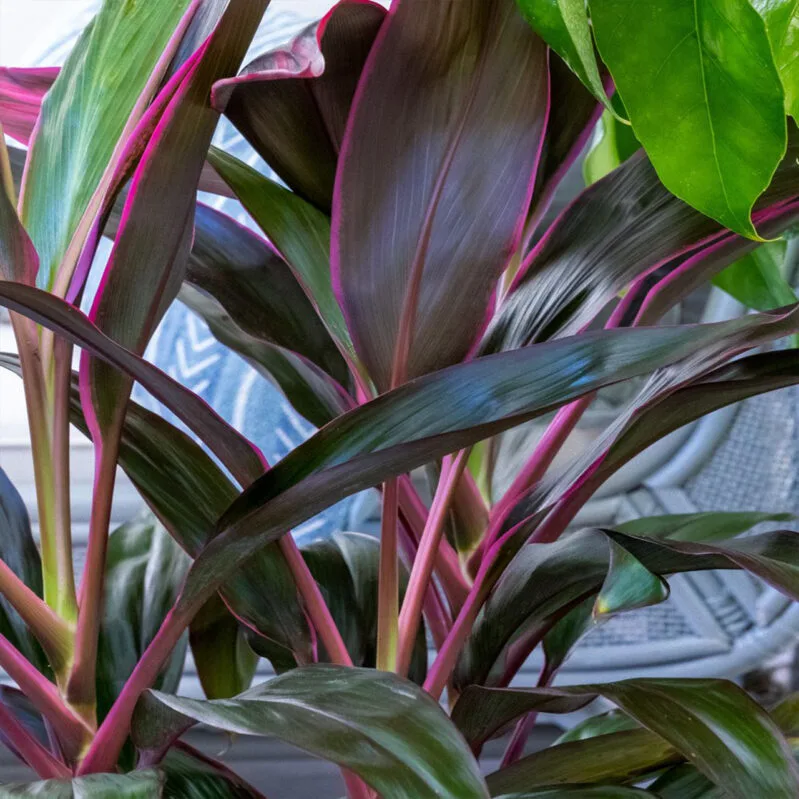
An erect, suckering shrub to 1.2m tall, with broadly strap-shaped, strongly recurved leaves streaked yellow and pink. Makes a good houseplant
Scientific classification
- Species
- cabbage palm 'Baptistii' (Cordyline fruticosa 'Baptistii')
- Genus
- Cordyline
- Family
- Asparagaceae
- Order
- Asparagales
- Class
- Liliopsida
- Phylum
- Tracheophyta
- Information to be completed
- Toxicity
- Houseplants
- Plant type
- 1-1.5 metres
- Height
- 0.1-0.5 metres
- Spread
- Evergreen
- Foliage
- Columnar upright
- Habit
- Spring · Summer · Autumn · Winter
- Season of interest
- Partial shade · Full sun
- Sunlight
- Information to be completed
- Ideal temperature









cabbage palm 'Baptistii' pictures
cabbage palm 'Baptistii' care guide
- Moderate regular watering, allowing brief slight drying between soakings
- Watering
- Partial shade · Full sun
- Sunlight

Watering
Moderate regular watering, allowing brief slight drying between soakings
Fertilizing
 Fertilizing
Balanced perennial feed every four weeks from spring through summer
Pruning
 Pruning
No pruning required
Propagation
 Propagation
Propagate by cuttings (with the top leaves attached), or stem section cuttings (taking care to keep the sections the right way up)
Growing
 Growing
Grow in pots of multipurpose compost in bright filtered light. Water moderately while in growth and apply a balanced liquid feed monthly; water sparingly in winter. Mist daily to increase humidity and occasionally wipe dust from the leaves with a soft cloth. Top dress annually and pot on every 2-3 years in spring. See cordyline cultivation for further information
Common pests and diseases
Diseases
May be susceptible to cordyline slime flux and honey fungus (rarely)
Pests
May be susceptible to glasshouse red spider mite and scale insects
Explore the plant health library →




