
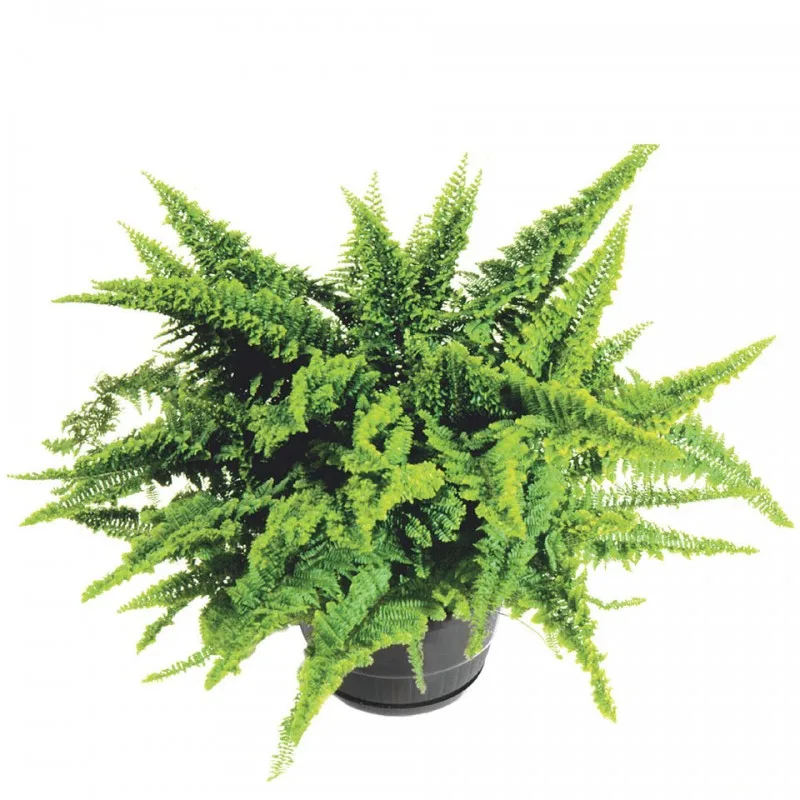
sword fern 'Fluffy Ruffles'
Also known as: Information to be completed
A compact, clump-forming evergreen fern with dense, broadly triangular, tripinnate fronds
Scientific classification
- Species
- sword fern 'Fluffy Ruffles' (Nephrolepis exaltata 'Fluffy Ruffles')
- Genus
- Nephrolepis
- Family
- Nephrolepidaceae
- Order
- Polypodiales
- Class
- Polypodiopsida
- Phylum
- Monilophyta
- Information to be completed
- Toxicity
- Ferns · Herbaceous Perennial · Conservatory Greenhouse
- Plant type
- 0.1-0.5 metres
- Height
- 0.5-1 metres
- Spread
- Evergreen
- Foliage
- Bushy
- Habit
- Spring · Summer · Autumn · Winter
- Season of interest
- Partial shade
- Sunlight
- Information to be completed
- Ideal temperature









sword fern 'Fluffy Ruffles' pictures
Distribution of sword fern 'Fluffy Ruffles'
Distribution map
- Native
- Introduced
- Cultivated
Source:WCVP v16 · Royal Botanic Gardens, Kew · CC BY 3.0 · Boundaries:WGSRPD / TDWG
sword fern 'Fluffy Ruffles' care guide
- Moderate regular watering, allowing brief slight drying between soakings
- Watering
- Partial shade
- Sunlight

Watering
Moderate regular watering, allowing brief slight drying between soakings
Fertilizing
 Fertilizing
Balanced perennial feed every four weeks from spring through summer
Pruning
 Pruning
Remove any dead fronds
Propagation
 Propagation
Sow spores are 21°C (70°F) as soon as ripe, but resulting plants are unlikely to come true. Separate rooted runners in late winter or early spring
Growing
 Growing
Grow indoors or under glass in a multipurpose compost or a mix of 1 part loam, 2 parts sharp sand, and 3 parts leaf mould in bright filtered light, with moderate to high humidity and good ventilation. During the growing season, water moderately soft water and apply a half-strength balanced liquid fertiliser monthly. Water sparingly in winter. Fronds can rot if they become too wet
Common pests and diseases
Diseases
Generally disease free
Pests
Can suffer from scale insects
Explore the plant health library →




