
foxtail lily 'Line Dance'
Also known as: Information to be completed
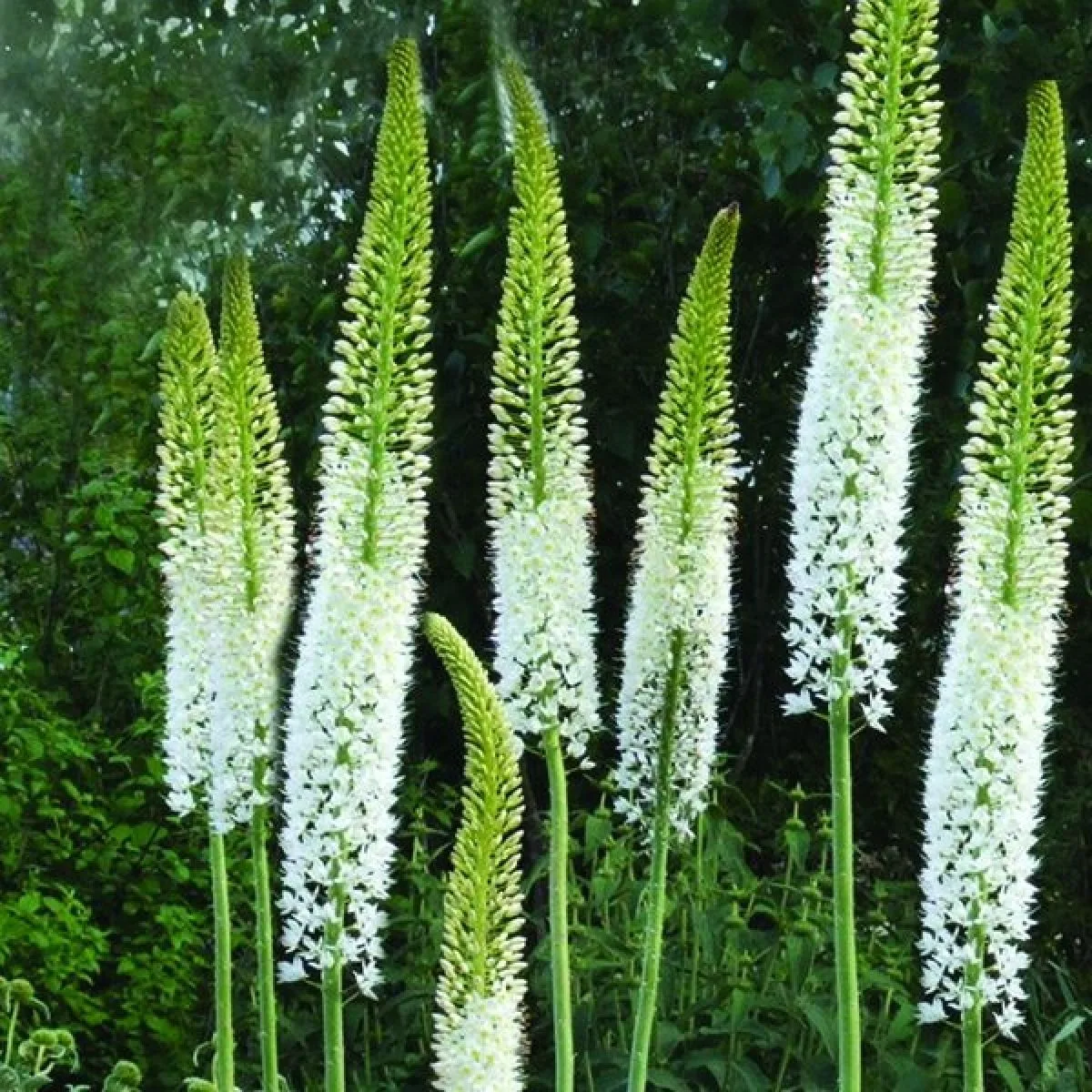
A clump-forming perennial, to 1.2m high in flower, with fleshy roots and narrowly lance-shaped, mid green leaves that die back after flowering. Tall spikes of small, densely packed white flowers open from pale peach coloured buds in early summer
Scientific classification
- Species
- foxtail lily 'Line Dance' (Eremurus 'Line Dance')
- Genus
- Eremurus
- Family
- Asphodelaceae
- Information to be completed
- Toxicity
- Herbaceous Perennial
- Plant type
- 1-1.5 metres
- Height
- 0.5-1 metres
- Spread
- Deciduous
- Foliage
- Clump forming
- Habit
- Spring · Summer
- Season of interest
- Full sun
- Sunlight
- Information to be completed
- Ideal temperature









foxtail lily 'Line Dance' pictures
Distribution of foxtail lily 'Line Dance'
Distribution map
Information to be completed
Information to be completed
Culture
Information to be completed
Toxicity
Information to be completed
Quick identification of foxtail lily 'Line Dance'
Information to be completed
foxtail lily 'Line Dance' care guide
- Moderate regular watering, allowing brief slight drying between soakings
- Watering
- Full sun
- Sunlight
- Information to be completed
- Ideal temperature

Watering
Moderate regular watering, allowing brief slight drying between soakings
Fertilizing
 Fertilizing
Balanced perennial feed every four weeks from spring through summer
Pruning
 Pruning
Unless seeds are required, spent flower spikes can be cut down at the base
Propagation
 Propagation
Propagate by seed, or by division of mature plants, taking care to minimise root disturbance. Plants grown from seed may vary, and may take 3-5 years to flower
Growing
 Growing
Grow in fertile, free draining soil, in a sunny position with plenty of root space. May need staking in windy sites. Mulch with garden compost in autumn, but avoid covering the crown. Needs winter cold to flower, but protect young spring growth from frost. See eremurus cultivation for more detailed advice
People also ask
Information to be completed
Common pests and diseases
Diseases
Generally disease-free
Pests
May be susceptible to slugs and snails
Explore the plant health library →




