
Chinese stachyurus
Also known as: Information to be completed
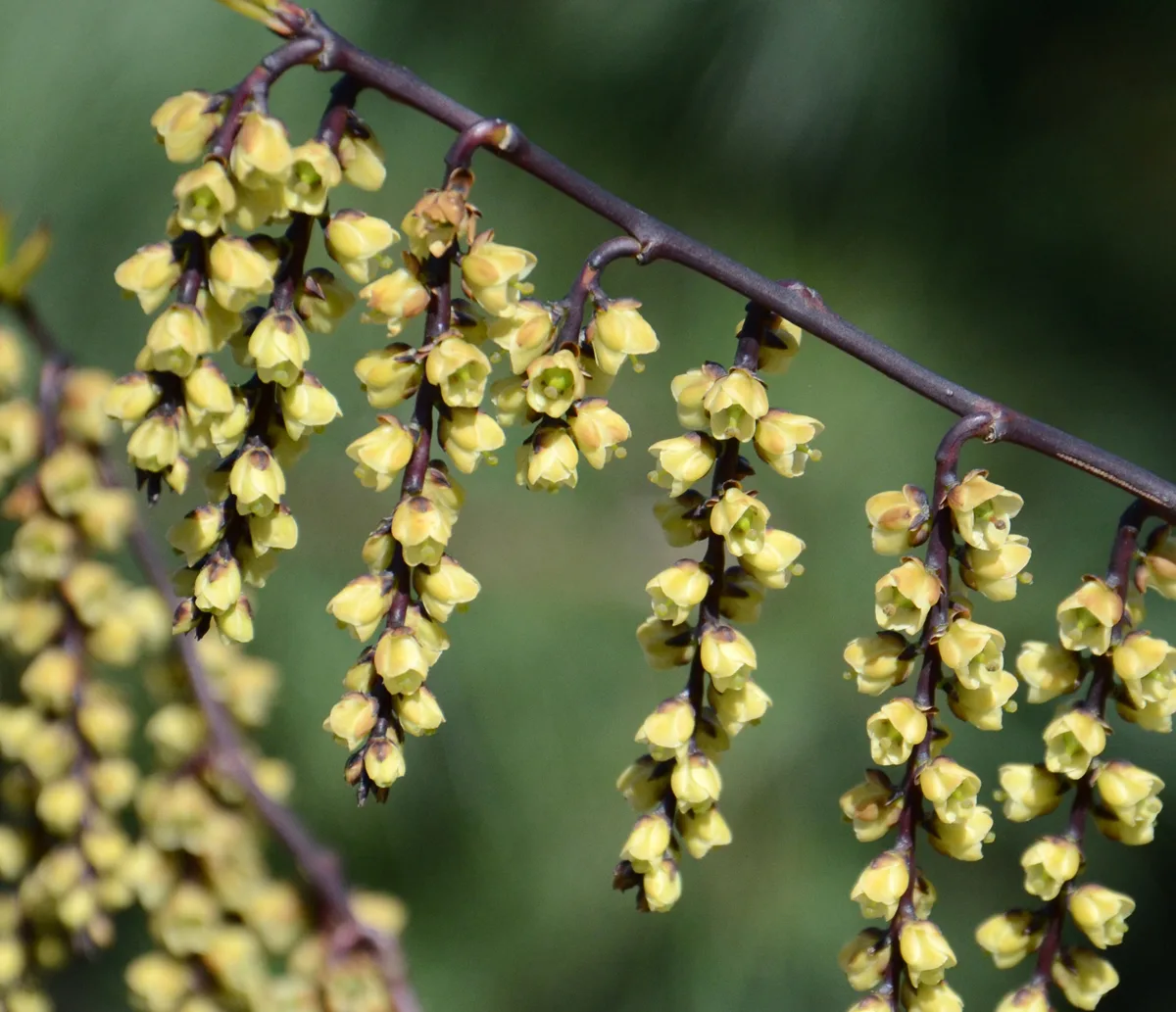
S. chinensis is a medium to large-sized shrub with a spreading habit and purplish young branches. It bears stiff, hanging, catkin-like sprays up to 13cm long of pale yellow, cup-shaped flowers in late winter and early spring. The green leaves are broad, narrowing to a tapering point, and show good autumn colour
Scientific classification
- Species
- Chinese stachyurus (Stachyurus chinensis)
- Genus
- Stachyurus
- Family
- Stachyuraceae
- Order
- Crossosomatales
- Class
- Magnoliopsida
- Phylum
- Magnoliophyta
- Information to be completed
- Toxicity
- Shrubs
- Plant type
- 1.5-2.5 metres
- Height
- 2.5-4 metres
- Spread
- Deciduous
- Foliage
- Bushy
- Habit
- Autumn · Spring · Summer · Winter
- Season of interest
- Partial shade
- Sunlight
- Information to be completed
- Ideal temperature









Chinese stachyurus pictures
Distribution of Chinese stachyurus
Distribution map
- Native
- Introduced
- Cultivated
Source:WCVP v16 · Royal Botanic Gardens, Kew · CC BY 3.0 · Boundaries:WGSRPD / TDWG
Chinese stachyurus care guide
- Moderate regular watering, avoid prolonged drought or waterlogging
- Watering
- Partial shade
- Sunlight

Watering
Moderate regular watering, avoid prolonged drought or waterlogging
Fertilizing
 Fertilizing
Balanced feed in spring and light repeat in growth season
Pruning
 Pruning
Little pruning is needed. Remove diseased, damaged, crowded or crossing shoots and unwanted growth. Timing depends on the plant: generally late winter or early spring; plants prone to bleeding and deciduous magnolias need different timing, and deciduous azaleas and lilacs are pruned after flowering.
Propagation
 Propagation
Propagate by softwood cuttings or heeled semi-ripe cuttings
Growing
 Growing
Grow in light, moist but well-drained, humus-rich, neutral to acidic soil. Suitable for shrub border or for a woodland garden but especially good against a wall. Protect from cold winds
Common pests and diseases
Diseases
May be susceptible to honey fungus in gardens where it is present but insufficient data to determine degree of susceptibility
Pests
Generally pest-free
Explore the plant health library →




