
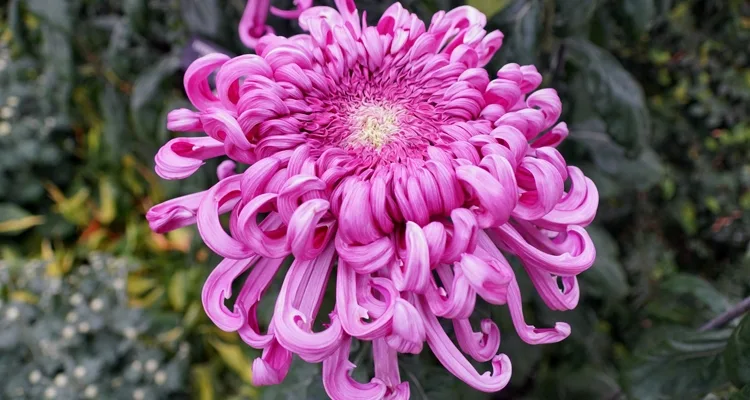
chrysanthemum 'Tightrope'
Also known as: Information to be completed
A compact, bushy, rounded plant to 30cm tall, with short sprays of yellow-centred single white flowers from late summer
Scientific classification
- Species
- chrysanthemum 'Tightrope' (Chrysanthemum 'Tightrope')
- Genus
- Chrysanthemum
- Family
- Asteraceae
- Skin allergen. Wear gloves and other protective equipment when handling
- Toxicity
- Herbaceous Perennial
- Plant type
- 0.1-0.5 metres
- Height
- 0.1-0.5 metres
- Spread
- Deciduous
- Foliage
- Bushy
- Habit
- Spring · Summer · Autumn
- Season of interest
- Full sun
- Sunlight
- Information to be completed
- Ideal temperature









chrysanthemum 'Tightrope' pictures
Distribution of chrysanthemum 'Tightrope'
Distribution map
Information to be completed
Information to be completed
Culture
Information to be completed
Toxicity
Skin allergen. Wear gloves and other protective equipment when handling
Quick identification of chrysanthemum 'Tightrope'
Information to be completed
chrysanthemum 'Tightrope' care guide
- Water regularly, allowing topsoil to dry slightly between waterings; avoid wet leaves.
- Watering
- Full sun
- Sunlight
- Information to be completed
- Ideal temperature

Watering
Water regularly, allowing topsoil to dry slightly between waterings; avoid wet leaves.
Fertilizing
 Fertilizing
Feed every 2–3 weeks with a balanced liquid fertilizer from spring until buds color.
Pruning
 Pruning
Cut down to 10cm (4in) after flowering if being grown in a frost free area, otherwise lift and overwinter
Propagation
 Propagation
Propagate in spring, by division or basal stem cuttings
Growing
 Growing
Grow in a well-drained position, in full sun. Performance will be slightly better in alkaline, moderately fertile soil. Divide every 3 years in spring. Cut down to 10cm (4in) after flowering and provide a dry mulch or dig up and overwinter in frost free conditions
People also ask
Information to be completed
Common pests and diseases
Diseases
May be susceptible to glasshouse grey mould, powdery mildews and chrysanthemum white rust
Pests
May be susceptible to aphids, capsid bug and leaf miner
Explore the plant health library →




