
greater stitchwort
Also known as: ag-flower; ag-worm flower; all-bone; break-bones; devil's corn; Easter bells; greater starwort; lady's lint; lady's white petticoat; Latin flower; little John; May grass; miller's star; snap Jack; snappers; snap-stalks; starflower; thunder flower; tongue grass; adder's meat; bird's tongue; devil's eye; moonflower; satin flower; snake flower; snake grass
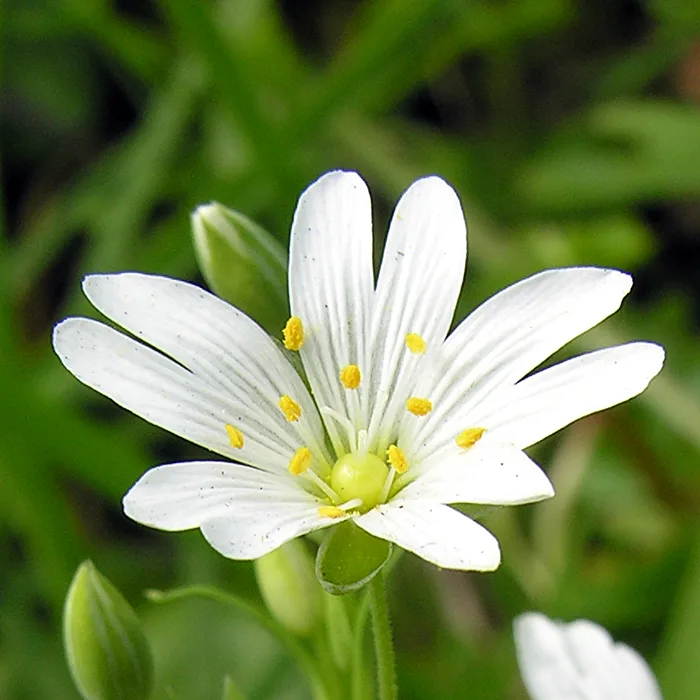
A perennial that reaches around 50cm in height. Stems are brittle, leaves are grass-like and both are rough-edged. White flowers, with five deeply-notched petals, are borne in spring and early summer. Seed capsules make a popping sound when ripe
Scientific classification
- Species
- greater stitchwort (Stellaria holostea)
- Genus
- Stellaria
- Family
- Caryophyllaceae
- Information to be completed
- Toxicity
- Herbaceous Perennial
- Plant type
- 0.1-0.5 metres
- Height
- 0-0.1 metre
- Spread
- Semi evergreen
- Foliage
- Bushy
- Habit
- Spring · Summer · Autumn · Winter
- Season of interest
- Partial shade
- Sunlight
- Information to be completed
- Ideal temperature









greater stitchwort pictures
Distribution of greater stitchwort
Distribution map
Europe, North Africa
Information to be completed
Culture
Information to be completed
Toxicity
Information to be completed
Quick identification of greater stitchwort
Information to be completed
greater stitchwort care guide
- Moderate regular watering, allowing slight drying between waterings
- Watering
- Partial shade
- Sunlight
- Information to be completed
- Ideal temperature

Watering
Moderate regular watering, allowing slight drying between waterings
Fertilizing
 Fertilizing
Balanced feed monthly during active growth season
Pruning
 Pruning
None required
Propagation
 Propagation
Propagate by seed
Growing
 Growing
Prefers moist, mildly acidic infertile soils. Occurs in woodland and hedgerows in semi-shaded sites
People also ask
Information to be completed
Common pests and diseases
Diseases
Generally trouble free
Pests
Generally trouble free
Explore the plant health library →




