
Dancing Lady Orchid
Also known as: Dancing Lady Orchid, Golden Shower Orchid
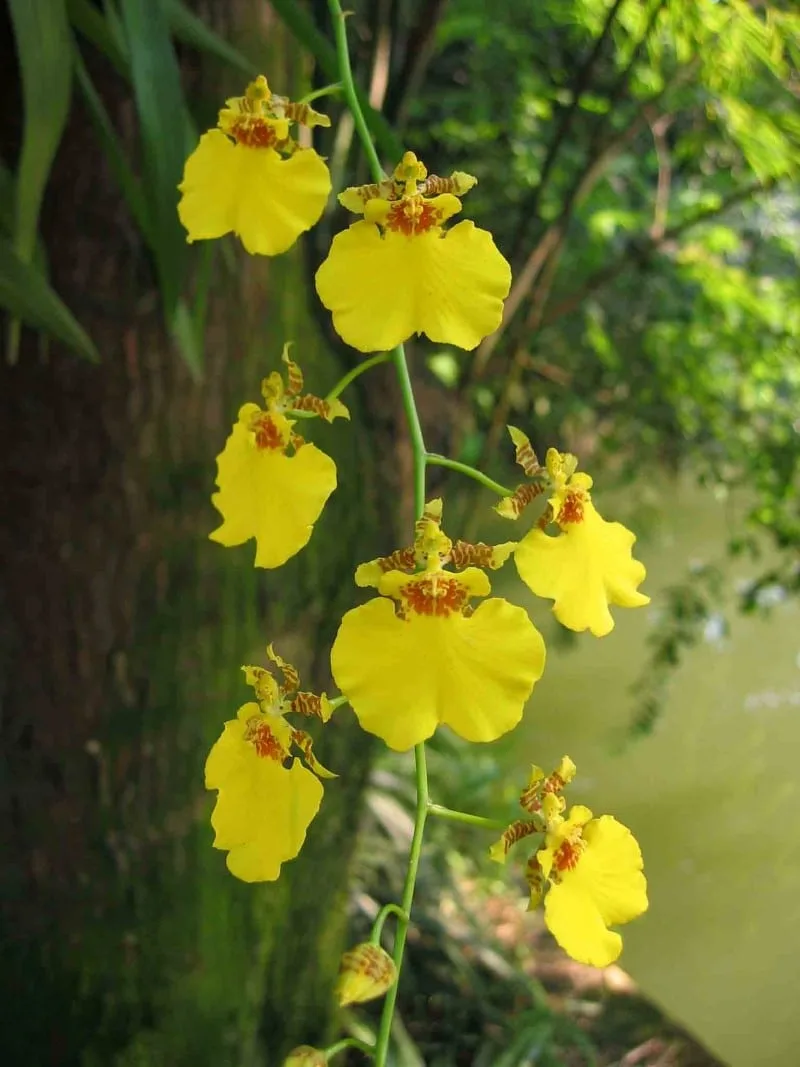
Oncidium varicosum is an epiphytic orchid with clustered, ovoid pseudobulbs each bearing two narrow, leathery leaves. From late winter to spring, arching flower stems emerge bearing numerous small, bright yellow flowers with brown markings, resembling a flared dancing skirt. The inflorescence can reach up to 60 cm in height, creating a spectacular cascading display. This compact orchid is valued for its long-lasting flowers and ease of flowering under the right conditions.
Scientific classification
- Species
- Dancing Lady Orchid (Oncidium varicosum)
- Genus
- Oncidium
- Family
- Orchidaceae
- Order
- Asparagales
- Class
- Liliopsida
- Phylum
- Magnoliophyta
- Non-toxic to humans and pets.
- Toxicity
- Houseplants · Conservatory Greenhouse
- Plant type
- 0.3 - 0.6 metres
- Height
- 0.2 - 0.4 metres
- Spread
- Evergreen
- Foliage
- Clump forming · Upright
- Habit
- Spring
- Season of interest
- Bright indirect light
- Sunlight
- Information to be completed
- Ideal temperature









Dancing Lady Orchid pictures
Distribution of Dancing Lady Orchid
Distribution map
- Native
- Introduced
- Cultivated
Source:WCVP v16 · Royal Botanic Gardens, Kew · CC BY 3.0 · Boundaries:WGSRPD / TDWG
Toxicity
Non-toxic to humans and pets.
Dancing Lady Orchid care guide
- Keep medium slightly moist; avoid standing water
- Watering
- Bright indirect light
- Sunlight

Watering
Keep medium slightly moist; avoid standing water
Fertilizing
 Fertilizing
Weekly with diluted fertilizer during growing season
Pruning
 Pruning
After flowering, cut the spent flower spike back to the base. Remove any yellow or dead leaves as they appear to maintain plant health and air circulation.
Propagation
 Propagation
 is best by division when repotting in spring. Carefully separate pseudobulbs into clumps of at least three mature bulbs, ensuring each division has healthy roots. Pot each division into fresh orchid compost and water sparingly until new growth appears. Maintain temperatures around 20-25°C to encourage rooting.
Growing
 Growing
Grow Oncidium varicosum in bright, indirect light, avoiding direct midday sun which can scorch leaves. Use a free-draining orchid compost based on bark and peat, and water regularly during active growth, allowing the compost to become slightly dry between waterings. Reduce watering in winter and maintain high humidity by misting or using a humidity tray. Fertilize every two weeks with a balanced orchid feed diluted to half strength during the growing season, and keep temperatures above 10°C in winter.
Common pests and diseases
Diseases
Oncidium varicosum can be susceptible to root rot and leaf spot if overwatered or grown in poor air circulation. It may also suffer from fungal or bacterial infections on pseudobulbs in excessively humid conditions.
Pests
Common pests include aphids, scale insects, and red spider mites. Regularly inspect leaves and treat promptly with insecticidal soap or neem oil if infestation occurs.
Explore the plant health library →




