
Wax Begonia
Also known as: Wax Begonia, Bedding Begonia
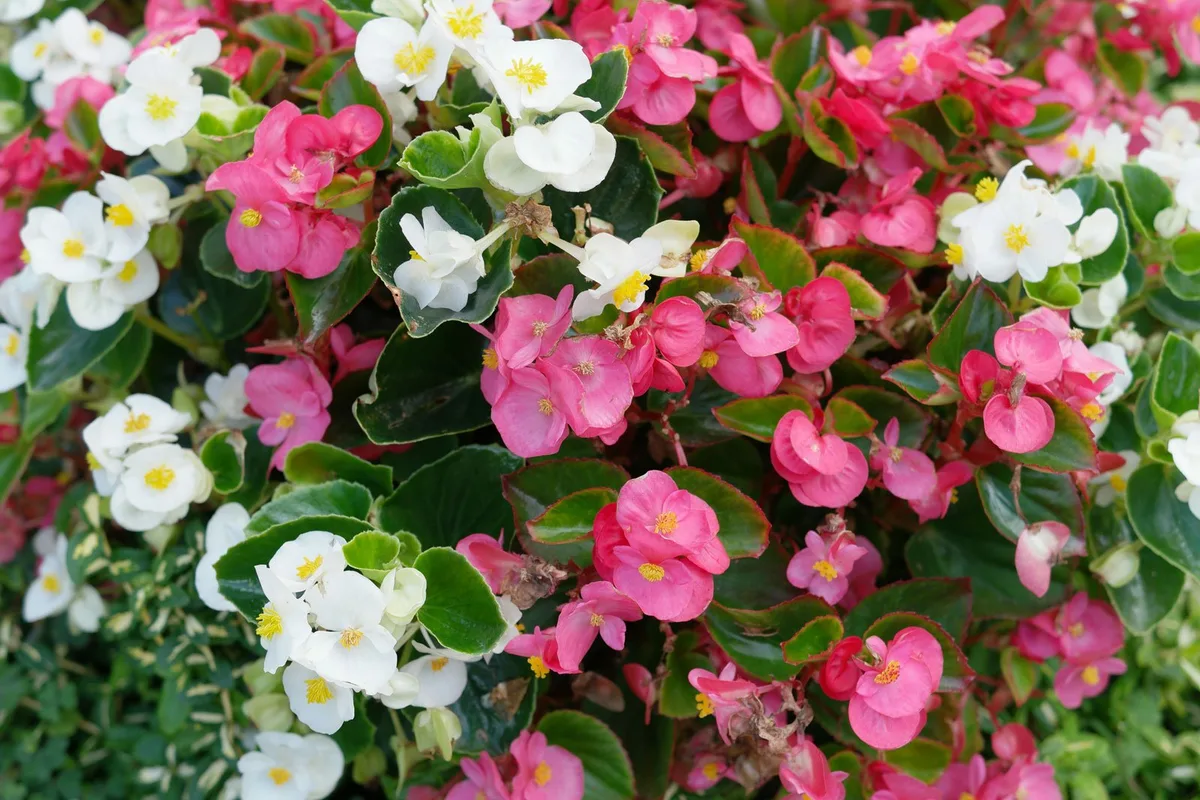
Wax Begonia is a compact, bushy perennial often grown as an annual bedding plant. It features glossy, waxy, rounded leaves in shades of green, bronze, or variegated, and produces clusters of small, showy flowers in pink, red, white, or bicolor from late spring to frost. The fleshy stems and leaves give it a succulent-like appearance. It is prized for its long flowering period and neat, mounding habit, making it ideal for borders, edging, and containers.
Scientific classification
- Species
- Wax Begonia (Begonia semperflorens-cultorum)
- Genus
- Begonia
- Family
- Begoniaceae
- Order
- Cucurbitales
- Class
- Magnoliopsida
- Phylum
- Magnoliophyta
- Toxic if ingested; may cause oral irritation, drooling, and vomiting in pets and humans. Keep away from children and animals.
- Toxicity
- Bedding · Houseplants · Herbaceous Perennial
- Plant type
- 0.1 - 0.3 metres
- Height
- 0.1 - 0.3 metres
- Spread
- Evergreen
- Foliage
- Bushy
- Habit
- Summer · Autumn
- Season of interest
- Partial shade
- Sunlight
- 15 – 25 °C
- Ideal temperature









Wax Begonia pictures
Distribution of Wax Begonia
Distribution map
Brazil
Toxicity
Toxic if ingested; may cause oral irritation, drooling, and vomiting in pets and humans. Keep away from children and animals.
Wax Begonia care guide
- Keep soil slightly moist
- Watering
- Partial shade
- Sunlight
- 15 – 25 °C
- Ideal temperature

Watering
Keep soil slightly moist
Fertilizing
 Fertilizing
Every 2 weeks
Pruning
 Pruning
Pinch out growing tips when young to promote bushiness. Remove spent flowers regularly to encourage continuous blooming and maintain a tidy appearance.
Propagation
 Propagation
Sow seeds in early spring at 20-25°C (68-77°F) for annual bedding use; seedlings emerge in 14-21 days. Alternatively, take stem tip cuttings in late spring or summer; root in moist potting mix under high humidity and 20°C (68°F). Seeds may produce variable flower colors.
Growing
 Growing
Grow in moist but well-drained, humus-rich soil in partial shade or bright indirect light. Avoid direct midday sun, which can scorch the leaves. Water regularly to keep the soil consistently moist, but do not allow waterlogging. Feed with a balanced liquid fertilizer every two weeks during the growing season. In autumn, reduce watering and overwinter indoors in a frost-free location if kept as a perennial. In temperate regions, it is often discarded after frost and replanted annually.
Common pests and diseases
Diseases
Susceptible to powdery mildew and Botrytis (gray mold) in humid conditions; good air circulation and avoiding overhead watering help prevent these diseases.
Pests
Common pests include aphids, spider mites, and thrips; inspect regularly and treat with insecticidal soap or neem oil if needed.
Explore the plant health library →




