
Curry Leaf Plant
Also known as: Curry tree, Sweet neem, Karapincha, Curry leaf plant
Murraya koenigii is an evergreen shrub or small tree, typically reaching 1.5–3 m in height. Its pinnate leaves consist of 11–21 leaflets, each strongly aromatic with a characteristic curry scent when crushed. Clusters of small, fragrant white flowers appear in spring and summer, followed by glossy black berries. The plant is valued both as a culinary herb and as an ornamental for its lush foliage and compact growth habit.
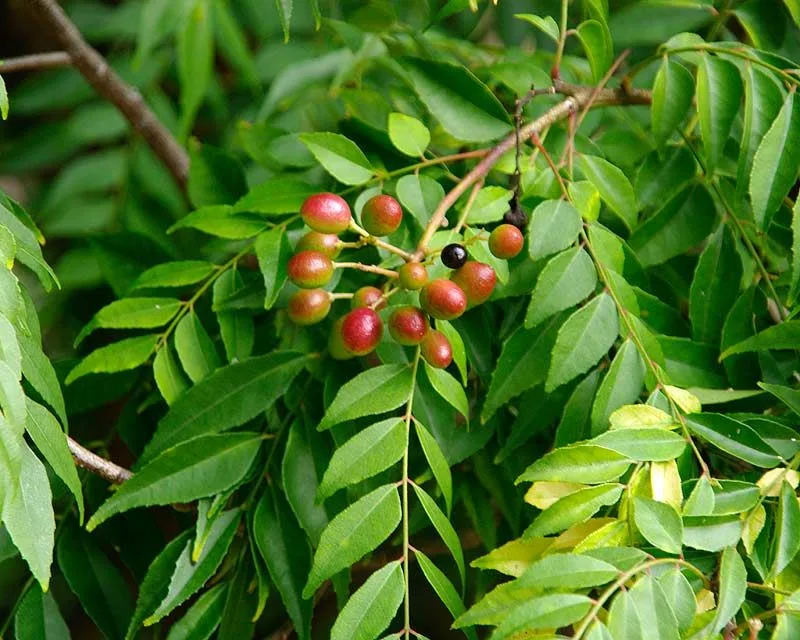
Scientific classification
- Species
- Curry Leaf Plant (Murraya koenigii)
- Genus
- Murraya
- Family
- Rutaceae
- Order
- Sapindales
- Class
- Magnoliopsida
- Phylum
- Magnoliophyta
- Non-toxic
- Toxicity
- Shrubs · Foliage · Herbs - Culinary
- Plant type
- 1.5 - 3 metres
- Height
- 1.5 - 2.5 metres
- Spread
- Evergreen
- Foliage
- Upright · Bushy
- Habit
- Spring · Summer
- Season of interest
- Full sun · Partial shade
- Sunlight
- 20 – 30 °C
- Ideal temperature









Curry Leaf Plant pictures
Distribution of Curry Leaf Plant
Distribution map
- Native
- Introduced
- Cultivated
Source:WCVP v16 · Royal Botanic Gardens, Kew · CC BY 3.0 · Boundaries:WGSRPD / TDWG
Toxicity
Non-toxic
Curry Leaf Plant care guide
- Keep soil consistently moist, not waterlogged
- Watering
- Full sun · Partial shade
- Sunlight
- 20 – 30 °C
- Ideal temperature

Watering
Keep soil consistently moist, not waterlogged
Fertilizing
 Fertilizing
Bi-weekly during growing season
Pruning
 Pruning
Prune in early spring to maintain a compact shape and encourage bushy growth. Remove dead, diseased, or crossing branches; light trimming can be done after flowering.
Propagation
 Propagation
Propagate by semi-ripe cuttings taken in summer, 10–15 cm long, with a heel. Insert into moist sandy compost and keep at 25–30°C with high humidity. Alternatively, sow fresh seeds in spring at 20–25°C; germination is rapid.
Growing
 Growing
Grow in well-drained, fertile loam or sandy soil in full sun to partial shade. Water regularly during the growing season, allowing the surface to dry slightly between waterings. Apply a balanced liquid fertilizer monthly from spring to late summer. In cooler regions (below 5°C), overwinter indoors or in a heated greenhouse; container plants can be moved under cover. Mulch the root zone to retain moisture and suppress weeds.
Common pests and diseases
Diseases
Susceptible to root rot if overwatered or planted in poorly drained soil. May also be affected by powdery mildew in humid conditions.
Pests
Common pests include aphids, whiteflies, and spider mites, especially when grown under cover. Regular inspection and insecticidal soap can control infestations.
Explore the plant health library →




