
Air plant
Also known as: Air plant, Tillandsia
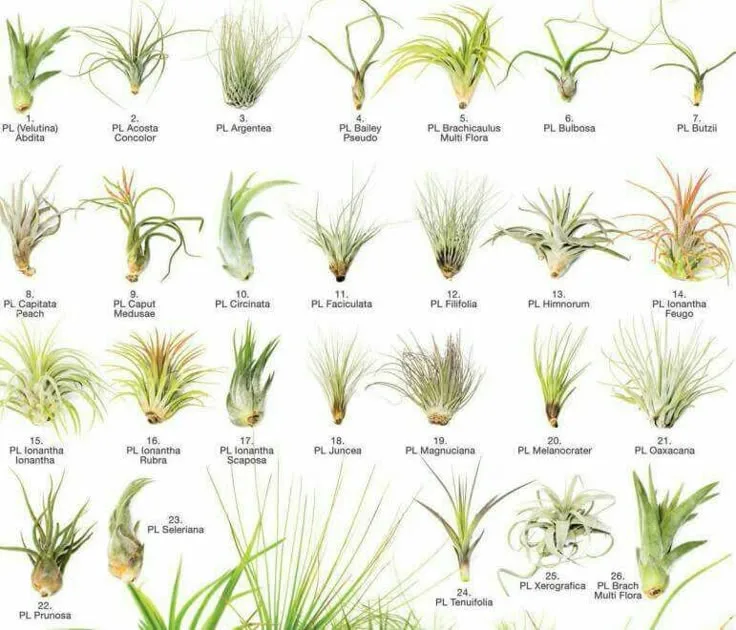
Tillandsia species are epiphytic perennials with linear or lance-shaped leaves arranged in rosettes. Leaves are often covered with specialized scales (trichomes) that absorb moisture and nutrients from the air. The inflorescence emerges from the center, bearing colorful bracts and small tubular flowers in shades of pink, red, purple, or white. Their unique, soilless growth habit and striking floral display make them popular as living art pieces in homes and greenhouses.
Scientific classification
- Species
- Air plant (Tillandsia spp.)
- Genus
- Tillandsia
- Family
- Bromeliaceae
- Order
- Poales
- Class
- Liliopsida
- Phylum
- Magnoliophyta
- Non-toxic to humans and pets.
- Toxicity
- Houseplants · Foliage
- Plant type
- 0.1 - 0.3 metres
- Height
- 0.1 - 0.3 metres
- Spread
- Evergreen
- Foliage
- Clump forming
- Habit
- Spring · Summer
- Season of interest
- Bright indirect light
- Sunlight
- 15 – 25 °C
- Ideal temperature









Air plant pictures
Distribution of Air plant
Distribution map
Central and South America, Mexico, Caribbean
Toxicity
Non-toxic to humans and pets.
Air plant care guide
- Mist or soak 2-3 times per week, shake off excess water
- Watering
- Bright indirect light
- Sunlight
- 15 – 25 °C
- Ideal temperature

Watering
Mist or soak 2-3 times per week, shake off excess water
Fertilizing
 Fertilizing
Monthly with diluted fertilizer spray
Pruning
 Pruning
Remove any dead or dried leaves by gently pulling them away from the base. After flowering, cut off the spent inflorescence to encourage offsets (pups).
Propagation
 Propagation
Propagate by separating offsets (pups) that form at the base of the mother plant when they are about one-third the size of the parent. Pull or cut them away and mount individually. Seeds can also be sown on moist sphagnum moss in a warm, humid environment, though germination is slow and requires patience.
Growing
 Growing
Provide bright, indirect light; direct afternoon sun may scorch leaves. Water by misting 2–3 times per week or by soaking the plant in room-temperature water for 20–30 minutes every 7–10 days, then shake off excess water and allow to dry completely before returning to its container. Good air circulation is essential to prevent rot. Temperatures should remain above 10°C (50°F). No soil is needed; mount on bark, driftwood, or place in a well-ventilated container with no potting mix.
Common pests and diseases
Diseases
Over-watering or poor air circulation can lead to fungal rot, especially at the base. Ensure thorough drying between waterings to minimize risk.
Pests
Mealybugs and scale insects occasionally infest Tillandsia. Inspect leaf crevices regularly and treat with insecticidal soap if necessary.
Explore the plant health library →




