
Indian Almond
Also known as: Indian Almond, Tropical Almond, Sea Almond, Bengal Almond
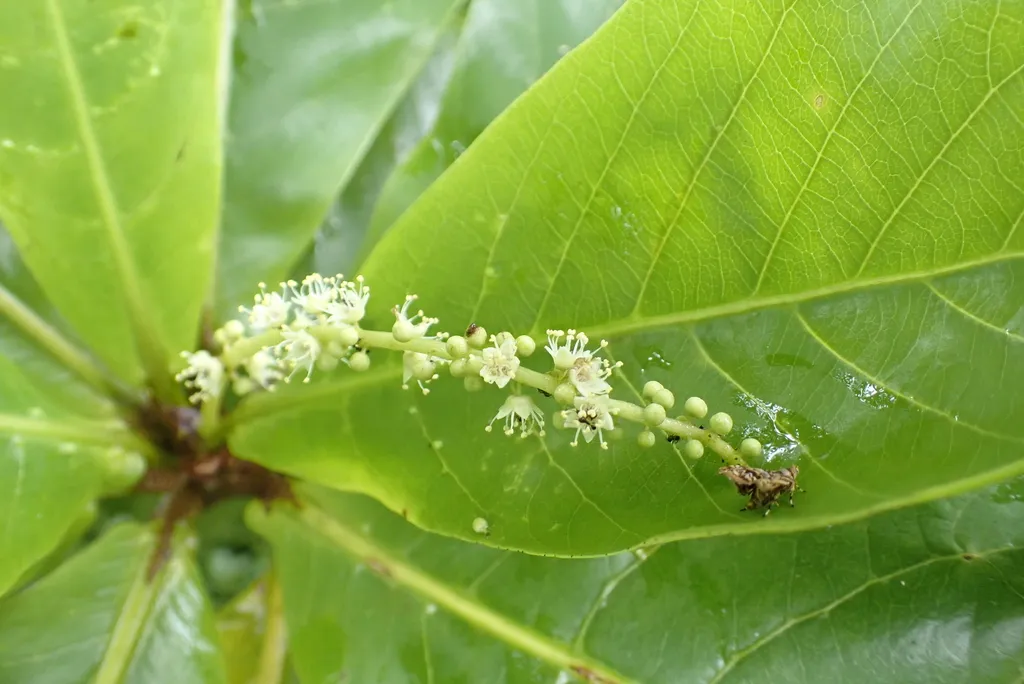
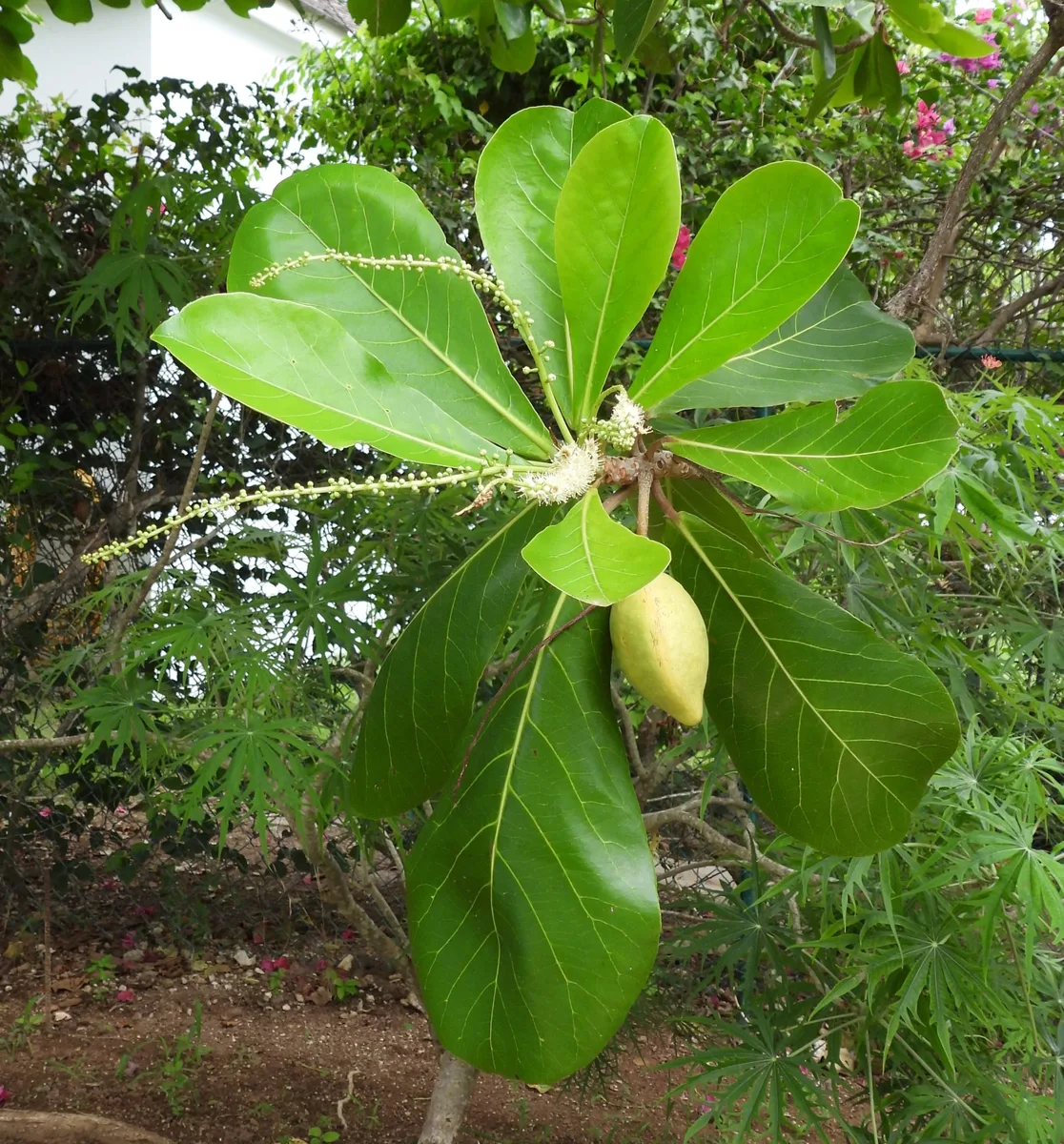
Terminalia catappa is a large deciduous tree reaching 15–25 m in height with a spreading, umbrella-shaped canopy. Its broad, obovate leaves are 10–25 cm long, turning brilliant shades of red, orange, and yellow in autumn before falling. Small, white, inconspicuous flowers appear in axillary spikes during summer, followed by green to purple, almond-shaped drupes that are edible but slightly astringent. The tree is valued for its striking seasonal foliage and its ability to provide dense shade.
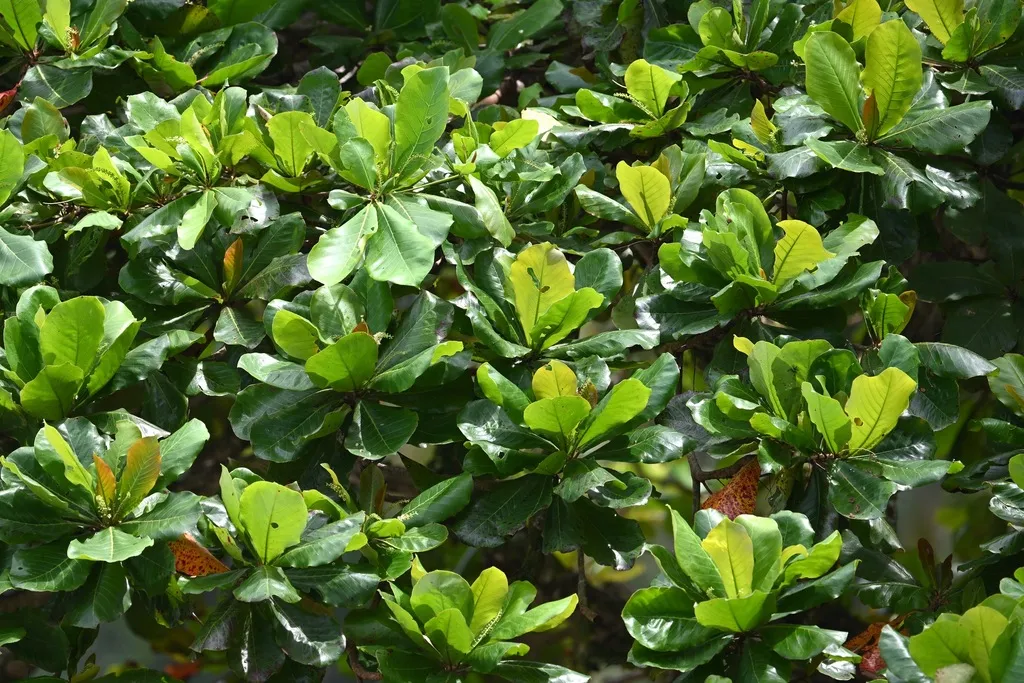
Scientific classification
- Species
- Indian Almond (Terminalia catappa)
- Genus
- Terminalia
- Family
- Combretaceae
- Order
- Myrtales
- Class
- Magnoliopsida
- Phylum
- Magnoliophyta
- Non-toxic to humans and pets, though ingestion of large amounts of the raw fruit may cause mild digestive discomfort.
- Toxicity
- Tree
- Plant type
- 15 - 25 metres
- Height
- 10 - 15 metres
- Spread
- Deciduous
- Foliage
- Spreading
- Habit
- Summer · Autumn
- Season of interest
- Full sun
- Sunlight
- Information to be completed
- Ideal temperature









Indian Almond pictures
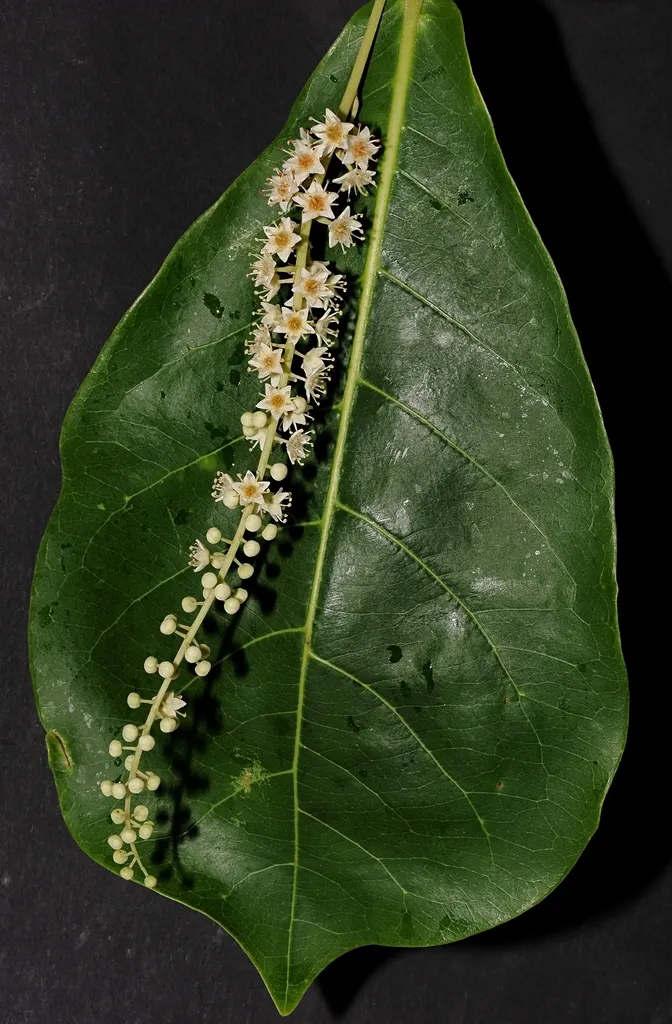
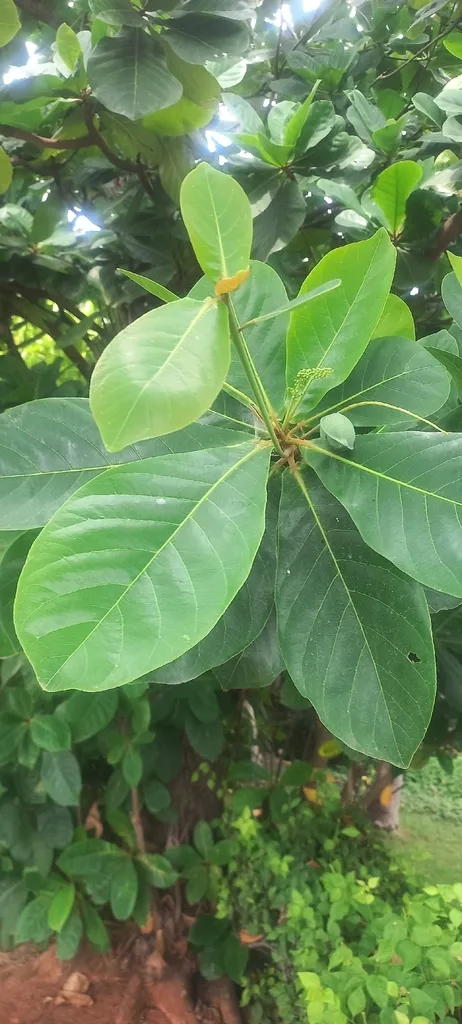
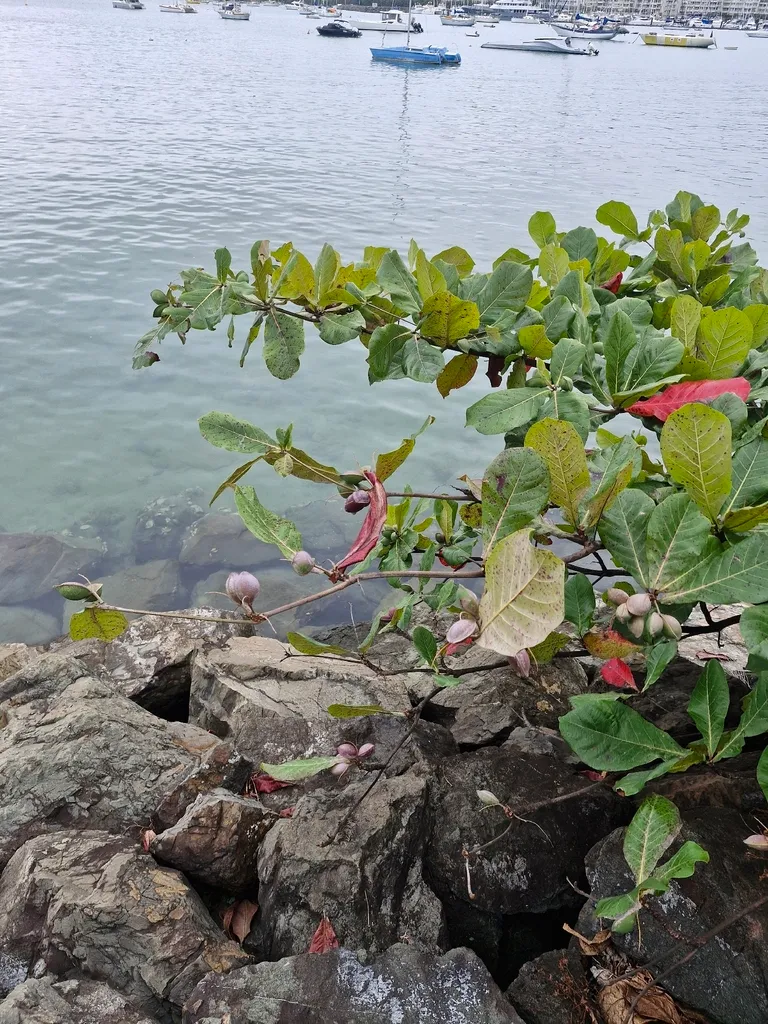
Distribution of Indian Almond
Distribution map
- Native
- Introduced
- Cultivated
Source:WCVP v16 · Royal Botanic Gardens, Kew · CC BY 3.0 · Boundaries:WGSRPD / TDWG
Toxicity
Non-toxic to humans and pets, though ingestion of large amounts of the raw fruit may cause mild digestive discomfort.
Indian Almond care guide
- Water deeply once a week, allow soil to dry slightly between waterings
- Watering
- Full sun
- Sunlight

Watering
Water deeply once a week, allow soil to dry slightly between waterings
Fertilizing
 Fertilizing
Fertilize in early spring and mid-summer
Pruning
 Pruning
Prune in late winter or early spring while the tree is dormant. Remove dead, damaged, or crossing branches to maintain an open, balanced crown. Light formative pruning may be done on young trees to encourage a strong central leader.
Propagation
 Propagation
Propagate by seed: soak fresh seeds in warm water for 24 hours, then sow in a well-drained seed compost at 20-25°C. Germination usually occurs within 2-4 weeks. Semi-ripe cuttings can be taken in summer with bottom heat, though success rates are lower. Seedlings should be grown on in warmth and not exposed to frost.
Growing
 Growing
Grow in full sun in well-drained soil; tolerates a wide range of soil types including sand and loam, and is highly salt-tolerant, making it ideal for coastal gardens. Water regularly during the first growing season to establish a deep root system; once established, it is drought tolerant. In cooler climates, grow in a large container and overwinter in a heated greenhouse or conservatory, as it is frost tender (minimum 10°C). Apply a balanced fertilizer in spring to encourage vigorous growth.
Common pests and diseases
Diseases
Generally healthy but may be susceptible to leaf spot diseases in humid conditions, especially when air circulation is poor. Root rot can occur in waterlogged soils.
Pests
Occasionally attacked by caterpillars, aphids, and scale insects. Regular monitoring and horticultural oils can help manage infestations.
Explore the plant health library →




