
Coral Bells
Also known as: Coral Bells, Alumroot
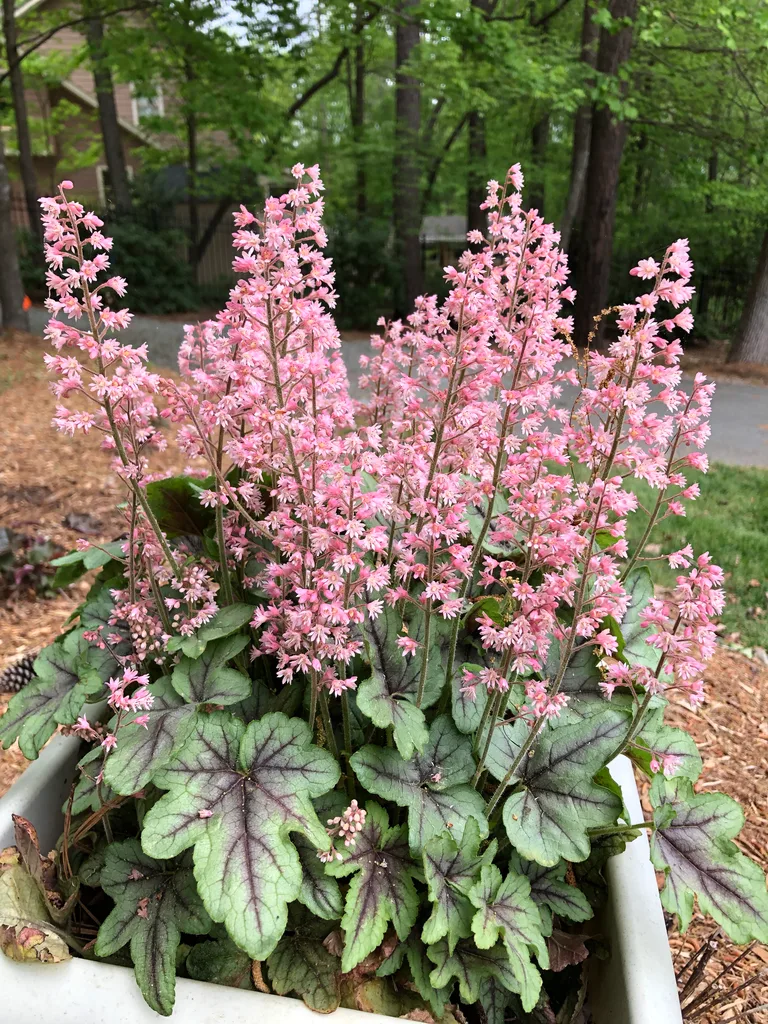
Heuchera, commonly known as Coral Bells, is a clump-forming perennial with rounded to heart-shaped leaves that exhibit a stunning range of colors, including green, purple, bronze, and silver. In late spring to early summer, it produces delicate, bell-shaped flowers on slender stems above the foliage, typically in shades of pink, red, or white. The compact habit and vibrant foliage make it a versatile choice for borders, edging, and ground cover, providing year-round interest in mild climates.
Scientific classification
- Species
- Coral Bells (Heuchera spp.)
- Genus
- Heuchera
- Family
- Saxifragaceae
- Order
- Saxifragales
- Class
- Magnoliopsida
- Phylum
- Magnoliophyta
- Non-toxic to humans and pets.
- Toxicity
- Herbaceous Perennial · Foliage
- Plant type
- 0.3 - 0.6 metres
- Height
- 0.3 - 0.5 metres
- Spread
- Evergreen
- Foliage
- Clump forming
- Habit
- Spring · Summer · Autumn
- Season of interest
- Partial shade
- Sunlight
- 15 – 25 °C
- Ideal temperature









Coral Bells pictures
Distribution of Coral Bells
Distribution map
North America
Toxicity
Non-toxic to humans and pets.
Coral Bells care guide
- Keep soil consistently moist, but not soggy
- Watering
- Partial shade
- Sunlight
- 15 – 25 °C
- Ideal temperature

Watering
Keep soil consistently moist, but not soggy
Fertilizing
 Fertilizing
Apply balanced liquid fertilizer monthly during growing season
Pruning
 Pruning
Remove dead or damaged leaves in early spring before new growth emerges. After flowering, cut back flower stems to promote fresh foliage and improve the plant's appearance.
Propagation
 Propagation
Divide established clumps in spring or autumn; each division should have several growing points and a healthy root system. Alternatively, take semi-ripe stem cuttings in early summer, insert them in a moist, well-drained medium, and keep in a shaded cold frame or propagator until rooted.
Growing
 Growing
Heuchera thrives in partial shade with moist but well-drained soil; avoid waterlogged conditions. Water regularly during dry spells to keep the soil consistently moist, especially in containers. Apply a balanced slow-release fertilizer in spring to promote lush growth. In cold regions, apply a winter mulch around the crown to protect from frost heave. Divide clumps every 3–4 years to maintain vigor and prevent the center from becoming woody.
Common pests and diseases
Diseases
Heuchera can be susceptible to leaf spot and powdery mildew, especially in humid conditions or when foliage remains wet. Avoid overhead watering and ensure good air circulation to reduce disease risk.
Pests
Common pests include aphids, slugs, and snails, which may feed on young leaves and flower stems. Regular inspection and organic controls such as beer traps or diatomaceous earth can help manage infestations.
Explore the plant health library →




