
Garden Rose
Also known as: Hybrid Tea Rose, Floribunda Rose, Climbing Rose, Shrub Rose
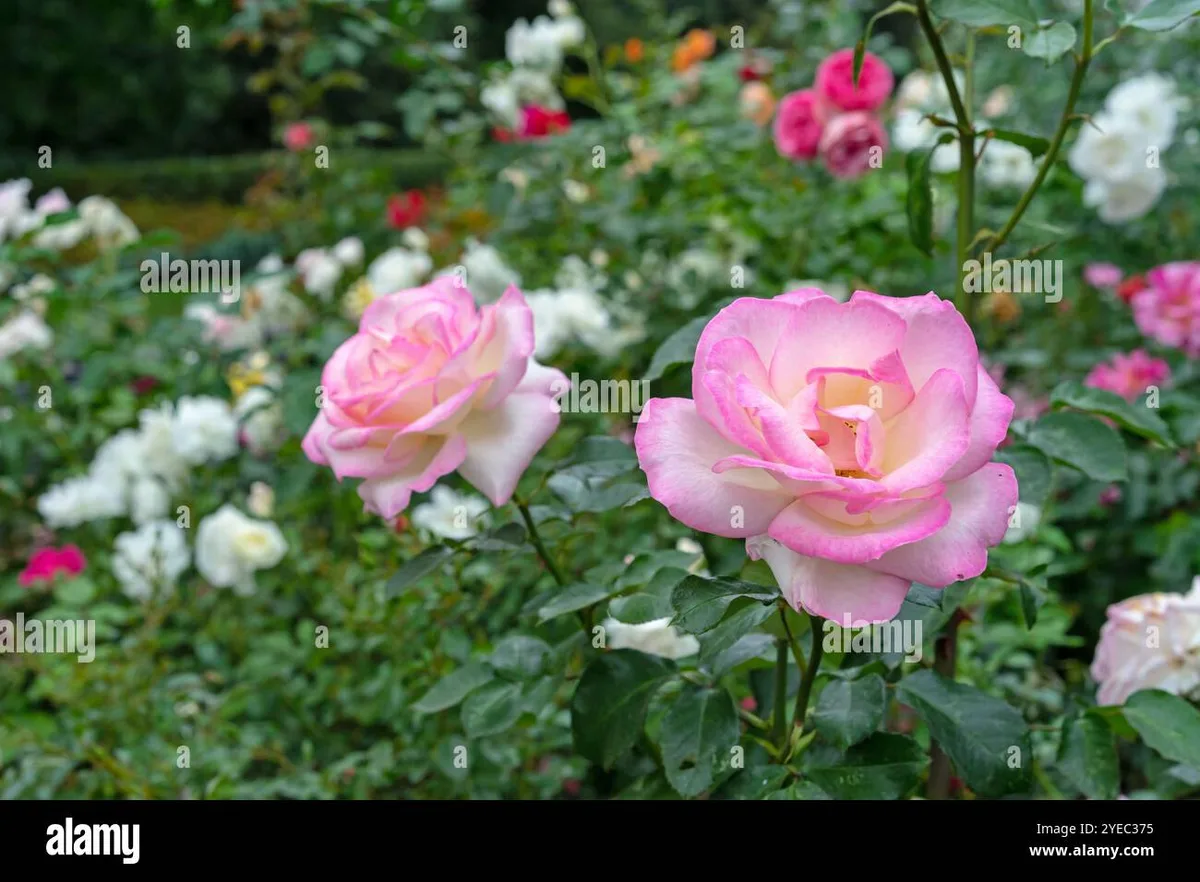
Garden roses (Rosa hybrida) are woody deciduous shrubs with prickly stems and compound leaves composed of 5-9 leaflets. Blooms vary widely in form from single to fully double, in a vast range of colors including white, yellow, pink, red, purple, and orange. Plants typically grow in an upright, bushy habit, reaching 0.6-2.5 meters tall depending on cultivar. Their primary ornamental value lies in the showy, often fragrant flowers that appear repeatedly from late spring to autumn.
Scientific classification
- Species
- Garden Rose (Rosa hybrida)
- Genus
- Rosa
- Family
- Rosaceae
- Order
- Rosales
- Class
- Magnoliopsida
- Phylum
- Magnoliophyta
- Non-toxic to humans and pets, though the thorns can cause physical injury.
- Toxicity
- Roses
- Plant type
- 0.6 - 2.5 metres
- Height
- 0.6 - 1.5 metres
- Spread
- Deciduous
- Foliage
- Bushy · Upright
- Habit
- Summer
- Season of interest
- Full sun
- Sunlight
- 15 – 25 °C
- Ideal temperature









Garden Rose pictures
Distribution of Garden Rose
Distribution map
Hybrid origin; parents from temperate Eurasia and North America
Toxicity
Non-toxic to humans and pets, though the thorns can cause physical injury.
Garden Rose care guide
- Water at base deeply and regularly, keep foliage dry
- Watering
- Full sun
- Sunlight
- 15 – 25 °C
- Ideal temperature

Watering
Water at base deeply and regularly, keep foliage dry
Fertilizing
 Fertilizing
Fertilize every 4-6 weeks during growing season
Pruning
 Pruning
Prune in late winter or early spring before new growth begins. Remove dead, diseased, or crossing branches, and cut back remaining canes by about one-third to one-half to encourage strong new shoots and abundant blooms.
Propagation
 Propagation
Propagate from hardwood cuttings taken in late autumn or softwood cuttings in early summer. For softwood cuttings, take 10-15 cm long shoots from healthy plants, remove lower leaves, dip in rooting hormone, and insert into a mix of sand and peat or perlite. Keep in a humid environment at 18-21°C; roots form in 4-8 weeks. Alternatively, many modern hybrids are propagated by budding onto rootstocks in late summer.
Growing
 Growing
Plant garden roses in a sunny location with fertile, well-drained soil. Incorporate plenty of organic matter such as well-rotted manure or compost into the planting hole. Water deeply and regularly during the first growing season to establish a strong root system; mature plants require about 2-3 cm of water per week during dry periods. Apply a balanced rose fertilizer in early spring and again after the first flush of blooms, following label rates. Mulch around the base annually with organic material to retain moisture and suppress weeds. In colder climates, protect the graft union by mounding soil or mulch around the base in late autumn.
Common pests and diseases
Diseases
Garden roses are susceptible to black spot (Diplocarpon rosae), powdery mildew (Podosphaera pannosa), and rust (Phragmidium spp.). Resistant cultivars are available, but regular fungicide application may be needed in humid climates.
Pests
Common pests include aphids (especially Macrosiphum rosae), spider mites, thrips, and rose sawflies. Regular inspection and early intervention with insecticidal soap or neem oil can help control infestations.
Explore the plant health library →




