
White Mussaenda
Also known as: White Mussaenda, Tropical Dogwood
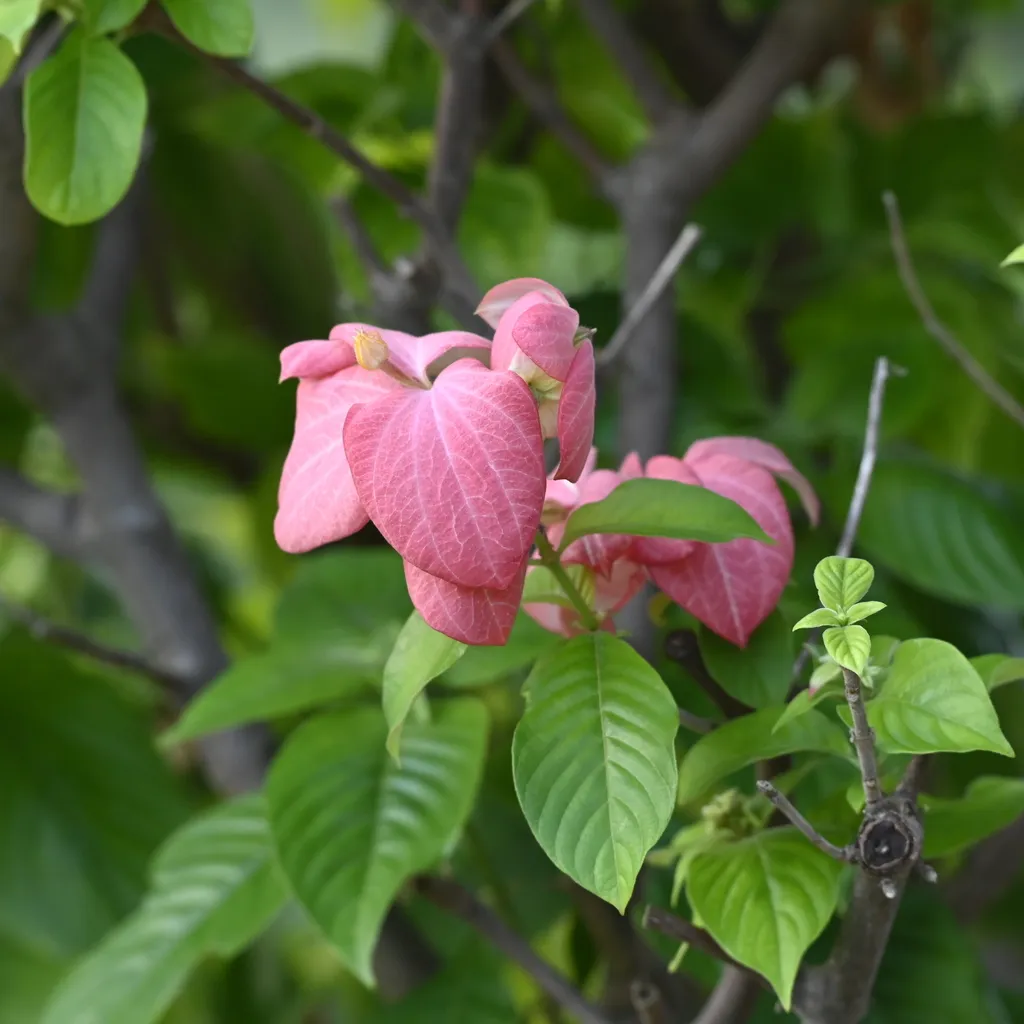
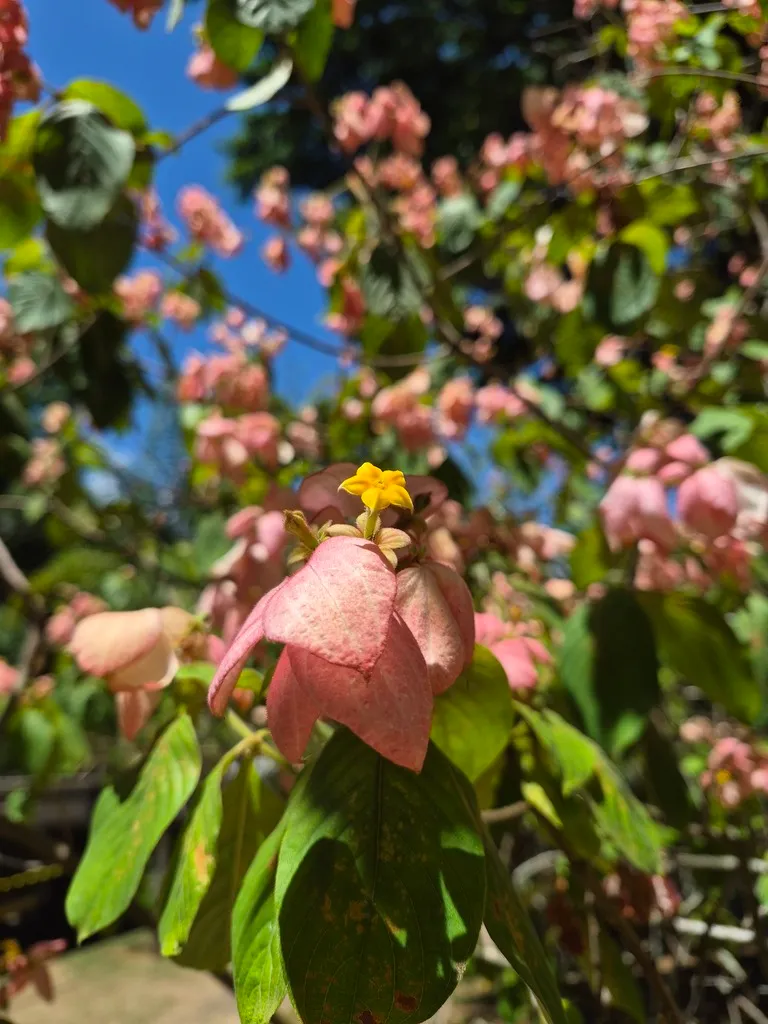
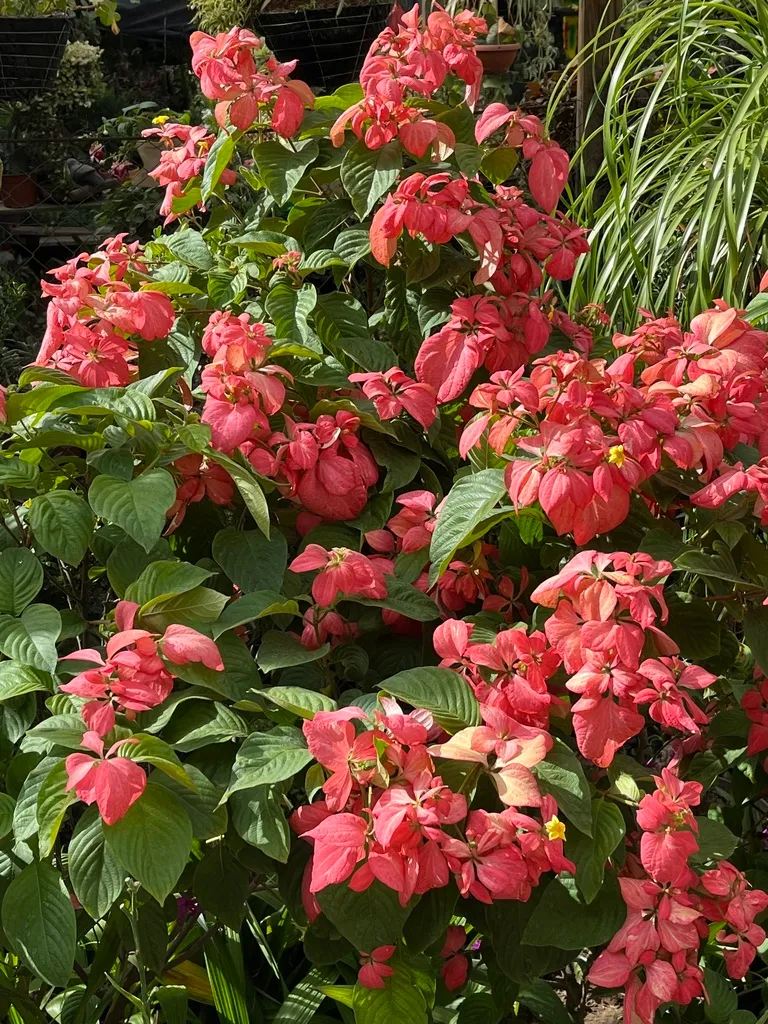
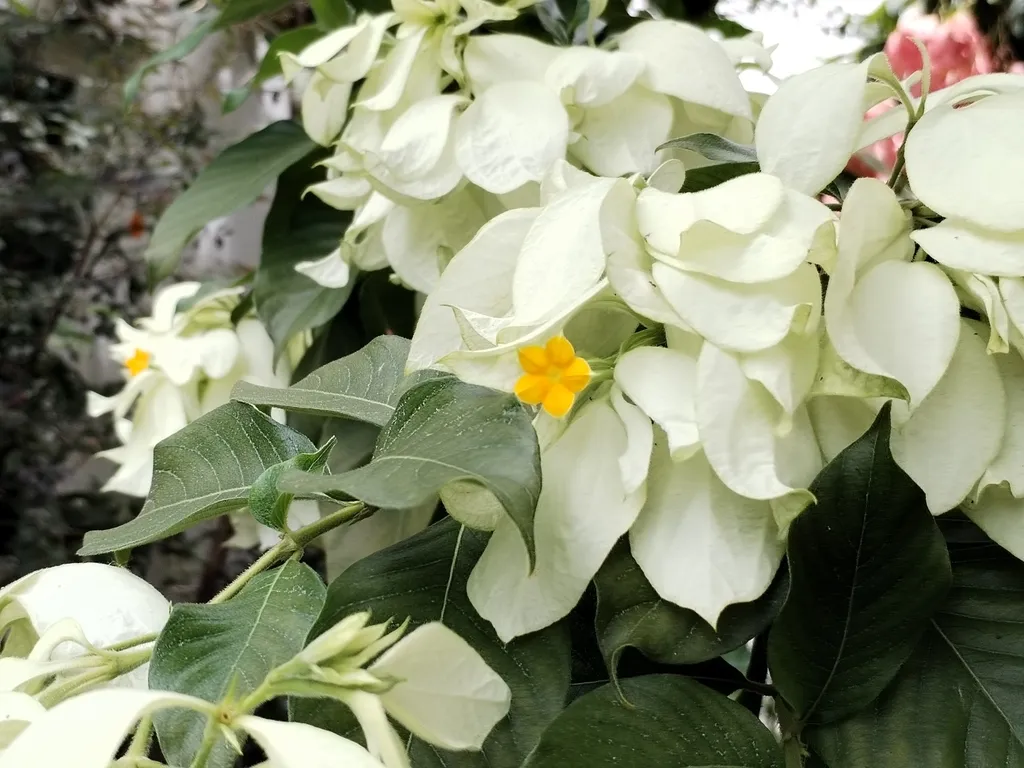
Mussaenda philippica is a tropical evergreen shrub typically growing 1.5–2 m tall, with ovate, dark green leaves and showy white petal-like bracts surrounding small, yellow, tubular flowers. The bracts are the main ornamental feature, appearing in clusters from late spring to summer. The plant has a bushy, upright habit and glossy foliage that provides year-round interest.
Scientific classification
- Species
- White Mussaenda (Mussaenda philippica)
- Genus
- Mussaenda
- Family
- Rubiaceae
- Order
- Gentianales
- Class
- Magnoliopsida
- Phylum
- Magnoliophyta
- Non-toxic to humans and pets.
- Toxicity
- Shrubs · Conservatory Greenhouse
- Plant type
- 1.5 - 2.0 metres
- Height
- 1.0 - 1.5 metres
- Spread
- Evergreen
- Foliage
- Bushy
- Habit
- Summer
- Season of interest
- Full sun · Partial shade
- Sunlight
- Information to be completed
- Ideal temperature









White Mussaenda pictures
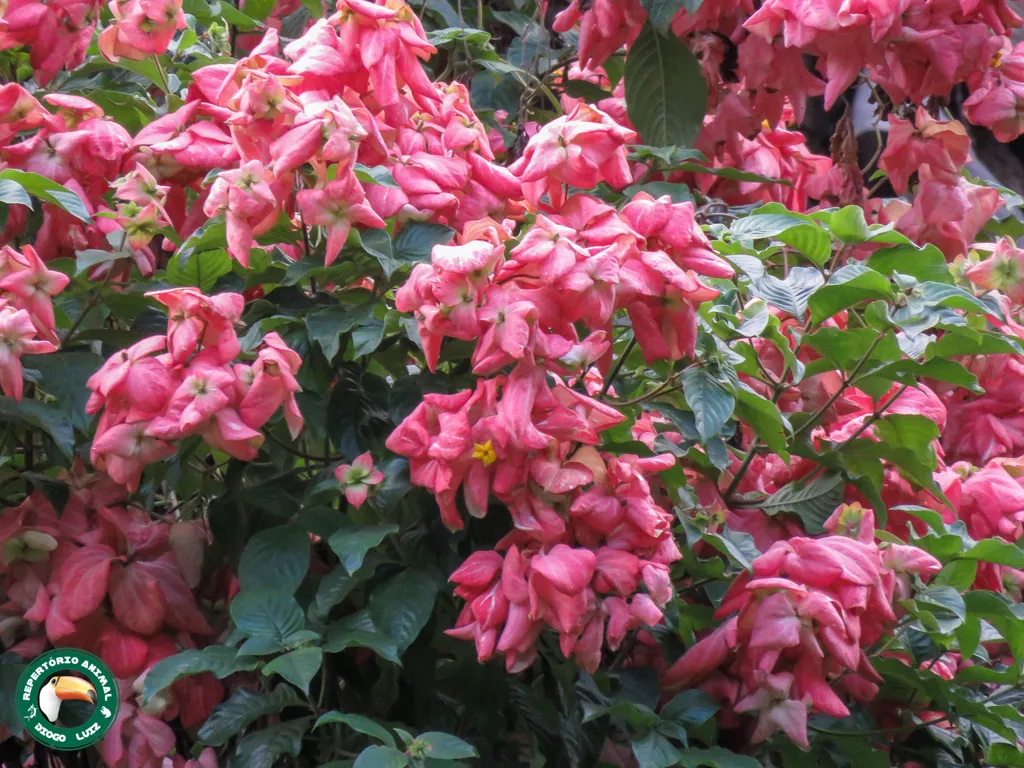
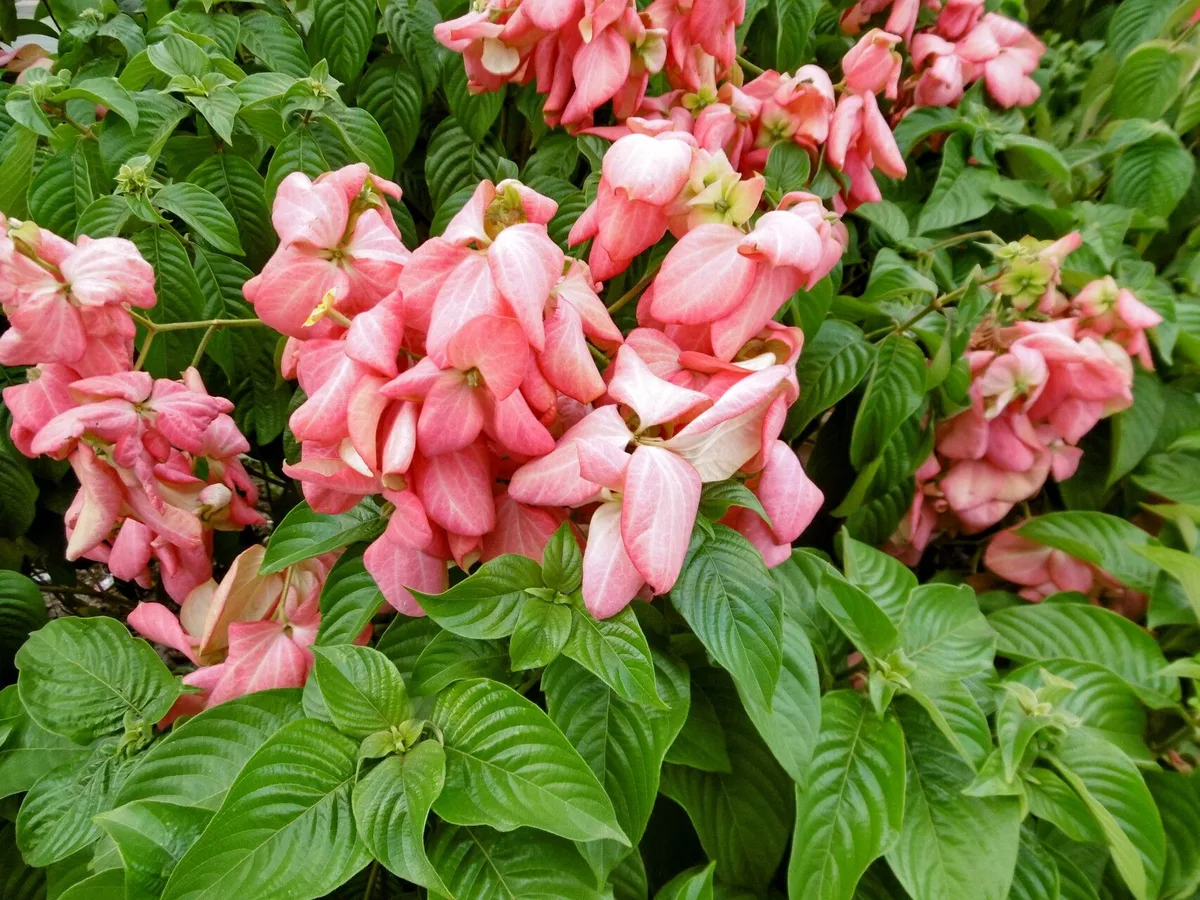
Distribution of White Mussaenda
Distribution map
- Native
- Introduced
- Cultivated
Source:WCVP v16 · Royal Botanic Gardens, Kew · CC BY 3.0 · Boundaries:WGSRPD / TDWG
Toxicity
Non-toxic to humans and pets.
White Mussaenda care guide
- Water deeply when soil surface feels dry
- Watering
- Full sun · Partial shade
- Sunlight

Watering
Water deeply when soil surface feels dry
Fertilizing
 Fertilizing
Every two weeks during flowering season
Pruning
 Pruning
Prune after flowering to maintain a compact shape and remove spent flower heads. Cut back leggy stems in early spring before new growth begins.
Propagation
 Propagation
Propagate by semi-ripe cuttings taken in summer. Use rooting hormone and place in a propagator with bottom heat (20–25°C). Alternatively, softwood cuttings can be taken in spring. Keep cuttings in high humidity until rooted.
Growing
 Growing
Grow in a warm, sheltered location with full sun to partial shade. Plant in moist but well-drained loamy soil with a slightly acidic to neutral pH. Water regularly during the growing season, allowing the surface to dry slightly between waterings. In frost-prone areas, overwinter indoors or in a heated greenhouse at minimum 10°C. Apply a balanced liquid fertilizer monthly from spring to late summer.
Common pests and diseases
Diseases
Susceptible to root rot if overwatered or grown in poorly drained soil. Leaf spot and powdery mildew may occur in humid conditions.
Pests
Common pests include aphids, whiteflies, and spider mites, especially under greenhouse conditions.
Explore the plant health library →




