
Variegated Monstera
Also known as: Variegated Swiss Cheese Plant, Variegated Monstera, Albo Monstera
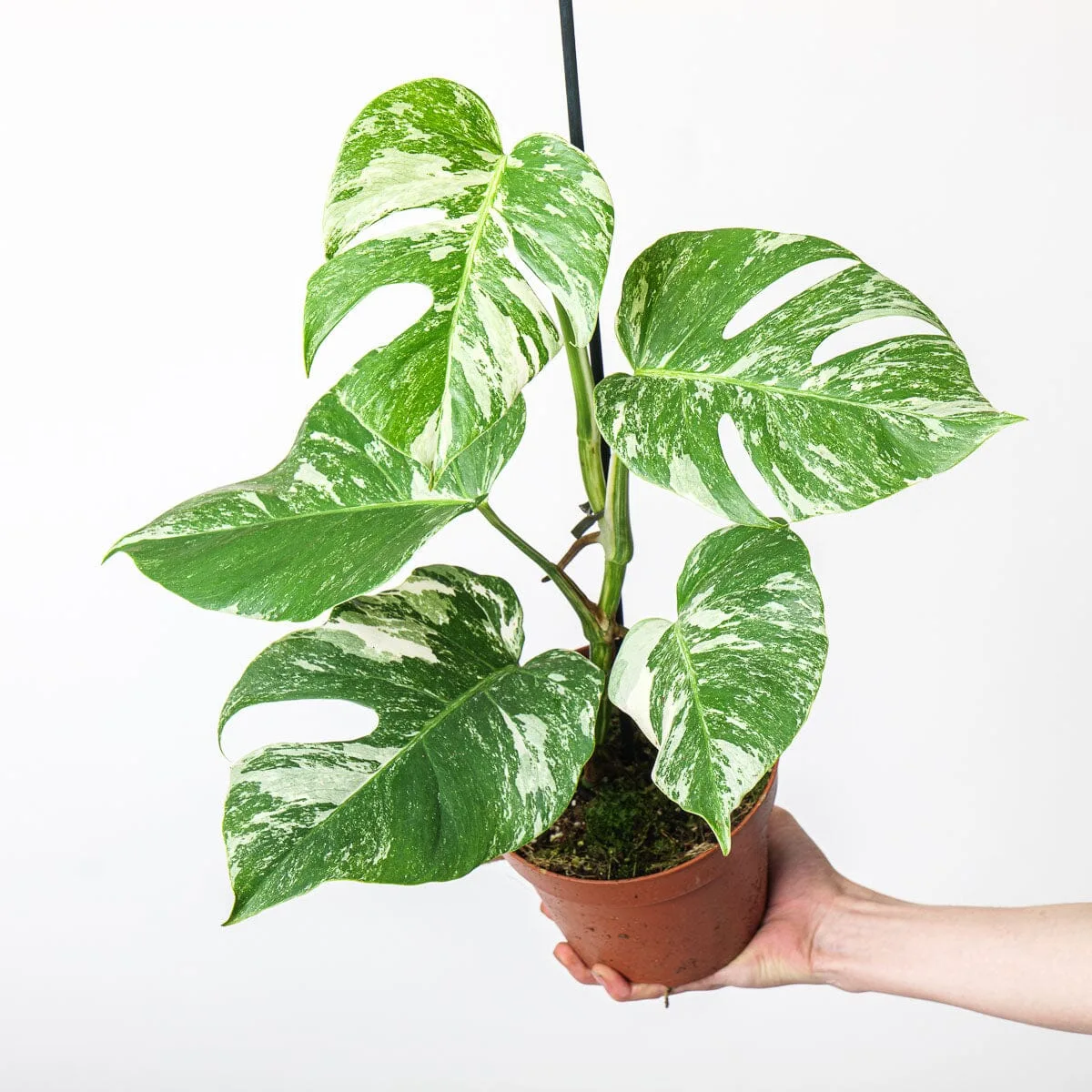
Monstera deliciosa 'Albo-Variegata' is a striking variegated form of the Swiss cheese plant, featuring large, glossy, heart-shaped leaves with deep fenestrations and creamy white or pale yellow marbled variegation. The plant grows as a climbing evergreen, producing aerial roots that attach to supports. Its bold foliage and dramatic colour pattern make it a favourite among indoor plant enthusiasts. This slow-growing cultivar maintains its variegation best under bright, indirect light.
Scientific classification
- Species
- Variegated Monstera (Monstera deliciosa 'Albo-Variegata')
- Genus
- Monstera
- Family
- Araceae
- Order
- Alismatales
- Class
- Liliopsida
- Phylum
- Magnoliophyta
- All parts of the plant contain calcium oxalate crystals and are toxic to humans and pets if ingested, causing mouth and throat irritation.
- Toxicity
- Houseplants · Foliage · Climber
- Plant type
- 1.5 - 3 metres
- Height
- 1 - 2 metres
- Spread
- Evergreen
- Foliage
- Climbing · Upright
- Habit
- Summer
- Season of interest
- Bright indirect light
- Sunlight
- 18 – 27 °C
- Ideal temperature









Variegated Monstera pictures
Distribution of Variegated Monstera
Distribution map
- Native
- Introduced
- Cultivated
Source:WCVP v16 · Royal Botanic Gardens, Kew · CC BY 3.0 · Boundaries:WGSRPD / TDWG
Toxicity
All parts of the plant contain calcium oxalate crystals and are toxic to humans and pets if ingested, causing mouth and throat irritation.
Variegated Monstera care guide
- Water when top 2 inches of soil are dry, avoid overwatering
- Watering
- Bright indirect light
- Sunlight
- 18 – 27 °C
- Ideal temperature

Watering
Water when top 2 inches of soil are dry, avoid overwatering
Fertilizing
 Fertilizing
Monthly with diluted fertilizer during spring and summer
Pruning
 Pruning
Prune in spring to control size or remove damaged leaves. Cut back leggy stems to just above a node to encourage bushier growth; always use clean, sharp tools.
Propagation
 Propagation
Propagate via stem cuttings taken in spring or early summer. Use a cutting with at least one node and one leaf, place in water or moist sphagnum moss until roots form (2-4 weeks), then pot up. Air layering is also effective for larger plants. Maintain high humidity and warmth (20-25°C) during rooting.
Growing
 Growing
Grow in a warm, humid location with bright, indirect light; avoid direct sun which can scorch the leaves. Use a well-draining peat-based potting mix with added perlite or bark. Water when the top 2-3 cm of soil feels dry, allowing excess water to drain freely; reduce watering in winter. Fertilize monthly during the growing season (spring to autumn) with a balanced liquid houseplant fertilizer diluted to half strength. Maintain temperatures above 15°C; protect from cold drafts and sudden temperature drops.
Common pests and diseases
Diseases
Susceptible to root rot if overwatered; ensure proper drainage. Leaf spot and bacterial soft rot may occur in overly humid or stagnant air conditions.
Pests
Common pests include spider mites, mealybugs, and scale insects. Regularly inspect leaf undersides and treat promptly with insecticidal soap or neem oil.
Explore the plant health library →




