
Lemon Lime Philodendron
Also known as: Lemon Lime Philodendron, Heartleaf Philodendron 'Lemon Lime'
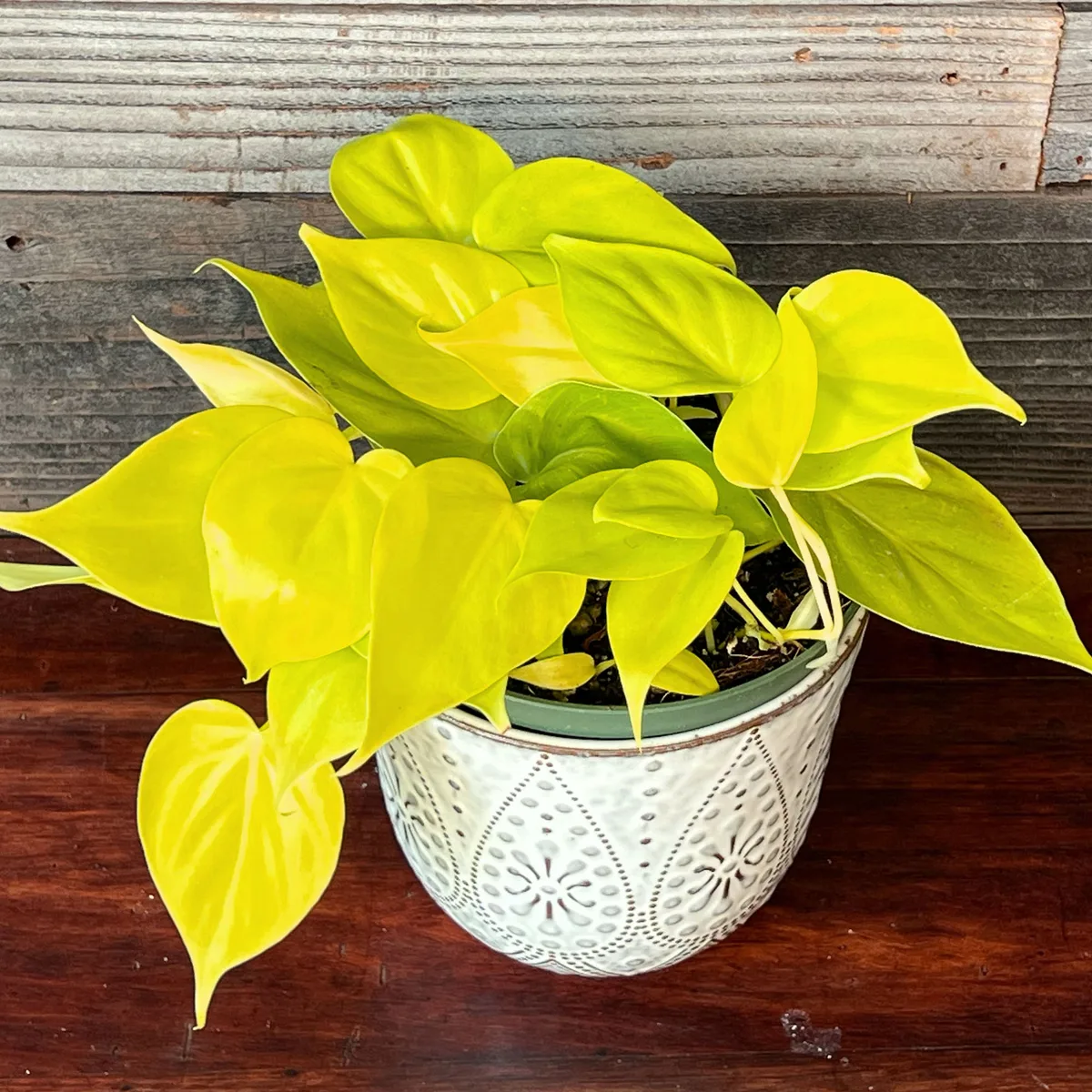
Philodendron hederaceum 'Lemon Lime' is a vigorous, evergreen climbing or trailing houseplant with heart-shaped, bright chartreuse to lime green leaves. The stems can grow several feet long, making it ideal for hanging baskets or trained up a moss pole. Its vibrant foliage provides a cheerful pop of color in any indoor setting.
Scientific classification
- Species
- Lemon Lime Philodendron (Philodendron hederaceum 'Lemon Lime')
- Genus
- Philodendron
- Family
- Araceae
- Order
- Alismatales
- Class
- Liliopsida
- Phylum
- Magnoliophyta
- Toxic to humans and pets if ingested due to calcium oxalate crystals; causes oral irritation, salivation, and swelling.
- Toxicity
- Houseplants · Foliage · Climber
- Plant type
- 0.3 - 0.6 metres
- Height
- 0.3 - 0.6 metres
- Spread
- Evergreen
- Foliage
- Climbing · Trailing
- Habit
- Spring · Summer · Autumn
- Season of interest
- Bright indirect light
- Sunlight
- Information to be completed
- Ideal temperature









Lemon Lime Philodendron pictures
Distribution of Lemon Lime Philodendron
Distribution map
- Native
- Introduced
- Cultivated
Locally extinct or doubtful records are excluded from native and introduced layers.
Source:WCVP v16 · Royal Botanic Gardens, Kew · CC BY 3.0 · Boundaries:WGSRPD / TDWG
Toxicity
Toxic to humans and pets if ingested due to calcium oxalate crystals; causes oral irritation, salivation, and swelling.
Lemon Lime Philodendron care guide
- Water when top inch of soil is dry
- Watering
- Bright indirect light
- Sunlight

Watering
Water when top inch of soil is dry
Fertilizing
 Fertilizing
Monthly during growing season
Pruning
 Pruning
Prune in spring to control size and shape, cutting back leggy stems just above a leaf node. Remove any yellow or dead leaves as they appear.
Propagation
 Propagation
Propagate easily from stem cuttings taken in spring or summer. Select a 4-6 inch stem with at least one node and aerial roots, remove lower leaves, and place in water or moist potting mix. Keep in a warm (20-25°C), bright location; roots should develop within 2-4 weeks.
Growing
 Growing
Grow in bright, indirect light; avoid direct sunlight which can scorch the leaves. Use a well-draining peat or loam-based potting mix. Water when the top inch of soil becomes dry, keeping the soil consistently moist but not waterlogged. Reduce watering in winter. Apply a balanced liquid fertilizer monthly during the growing season (spring to autumn). Maintain temperatures above 15°C; avoid cold drafts and sudden temperature drops.
Common pests and diseases
Diseases
Susceptible to root rot if overwatered or planted in poorly draining soil. Leaf spot diseases may occur in overly humid conditions with poor air circulation.
Pests
Common pests include spider mites, mealybugs, and scale insects. Regularly inspect and treat with insecticidal soap or neem oil if needed.
Explore the plant health library →




