
Mother of Thousands
Also known as: Mother of Thousands, Alligator Plant, Chandelier Plant
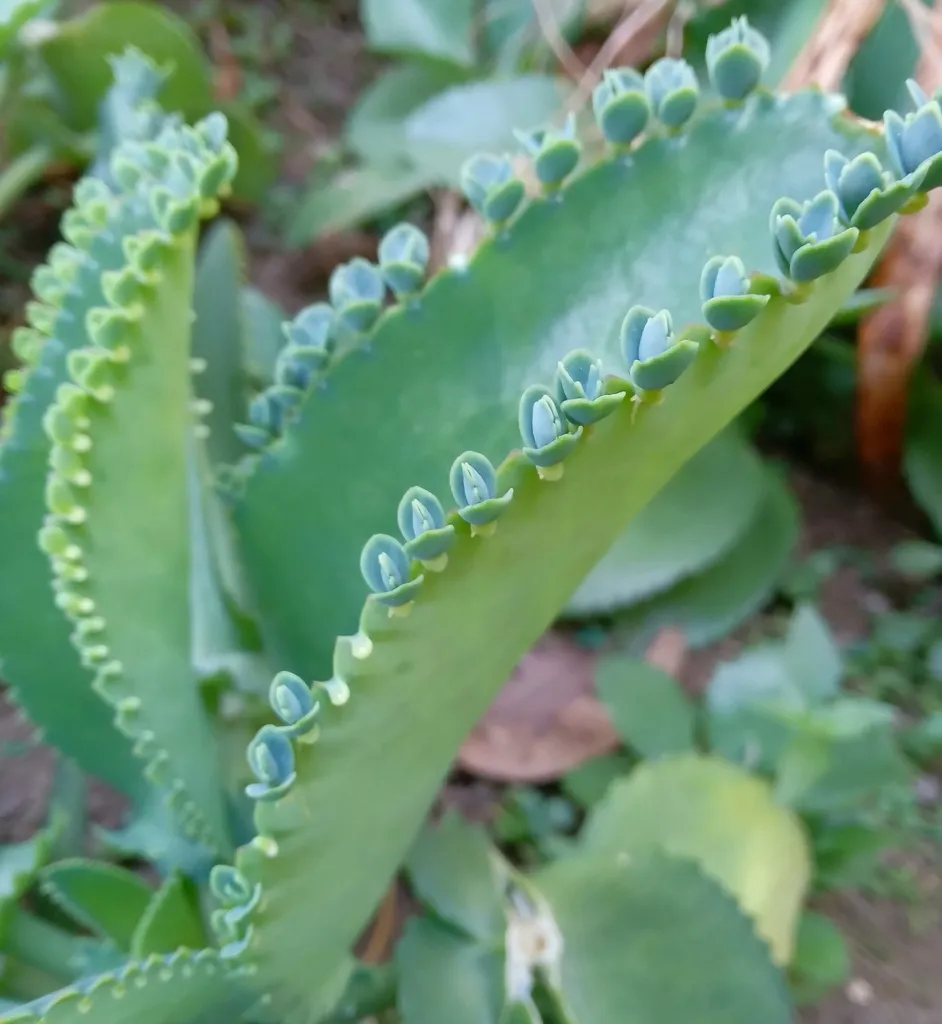
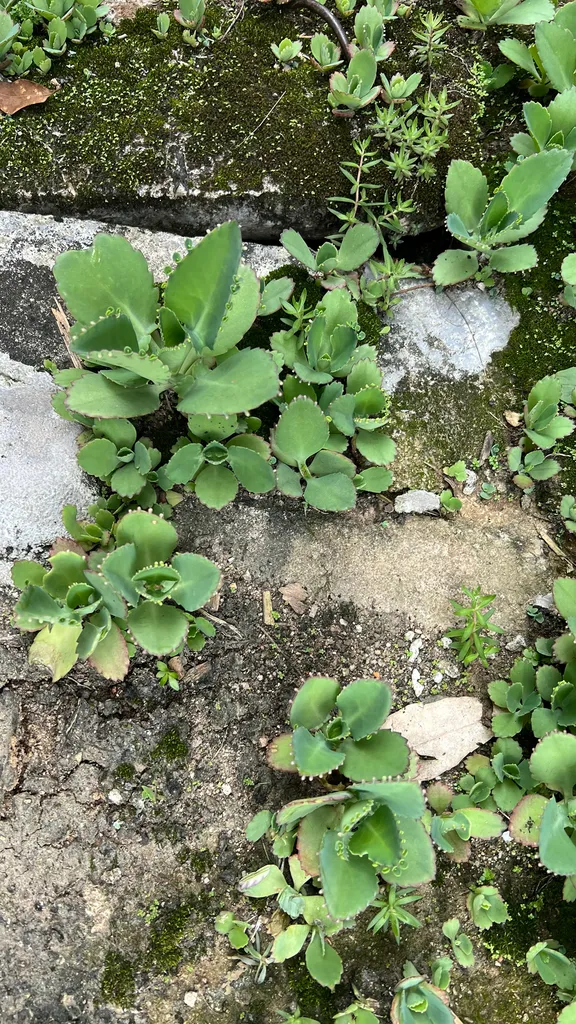
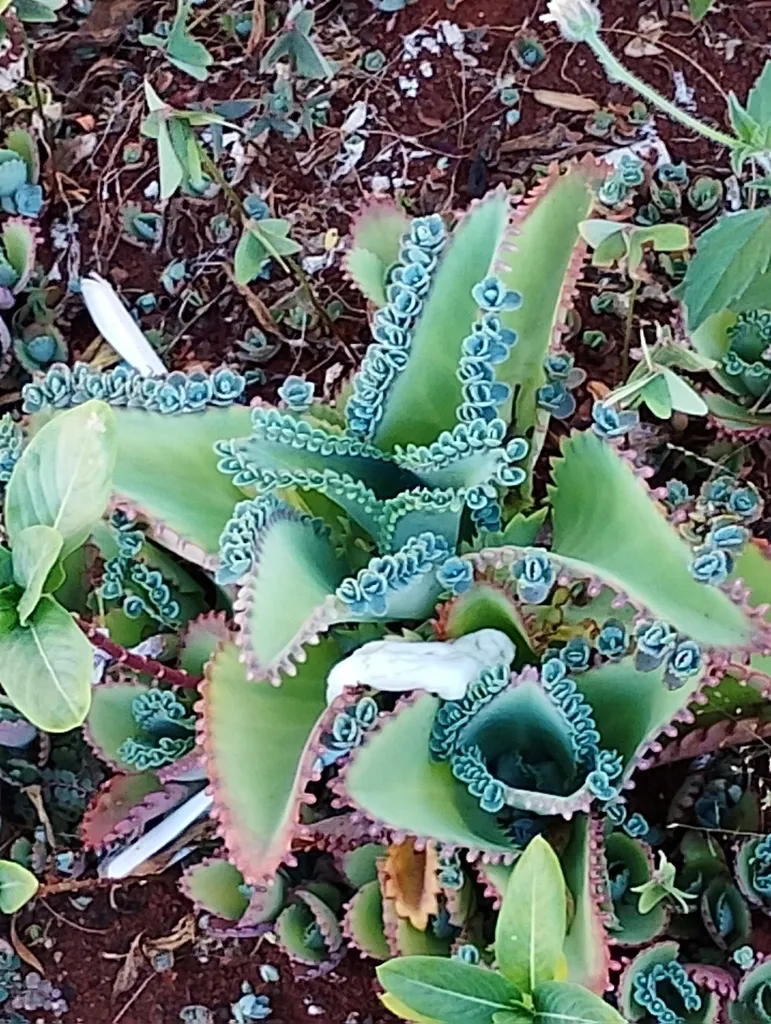
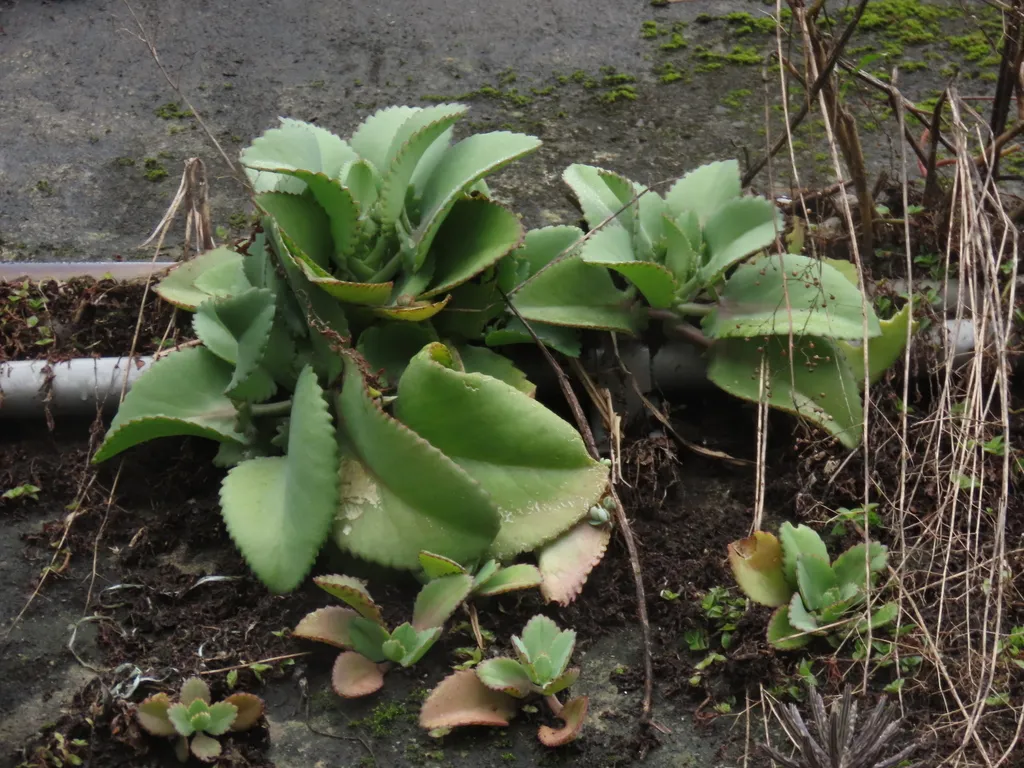
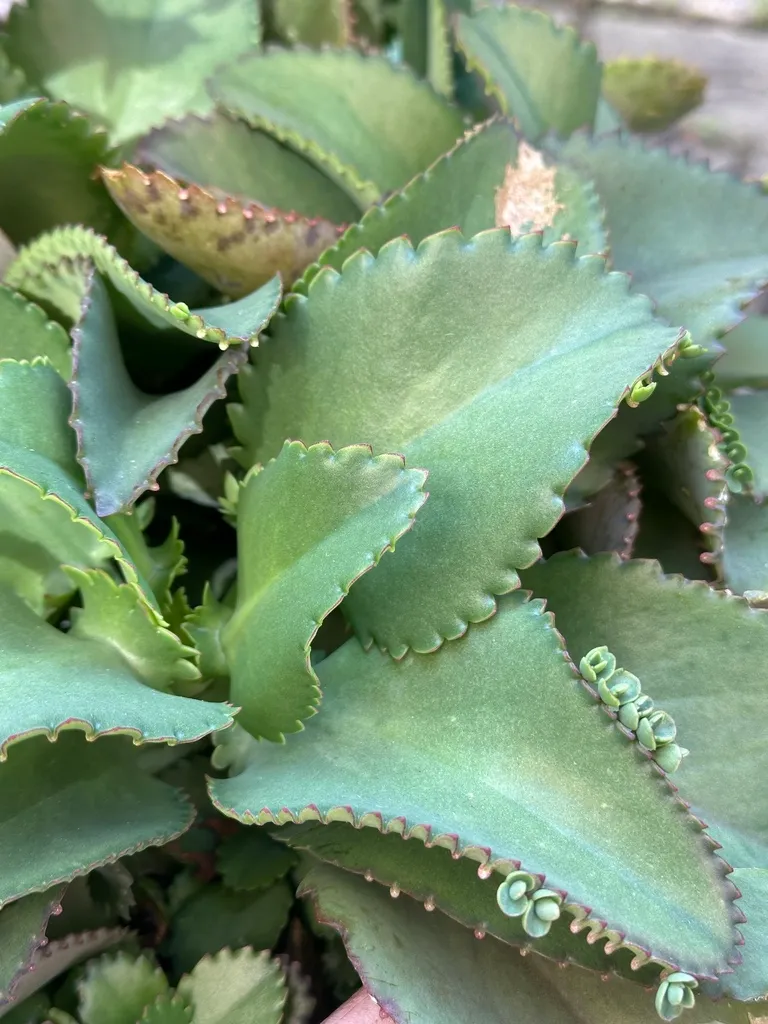
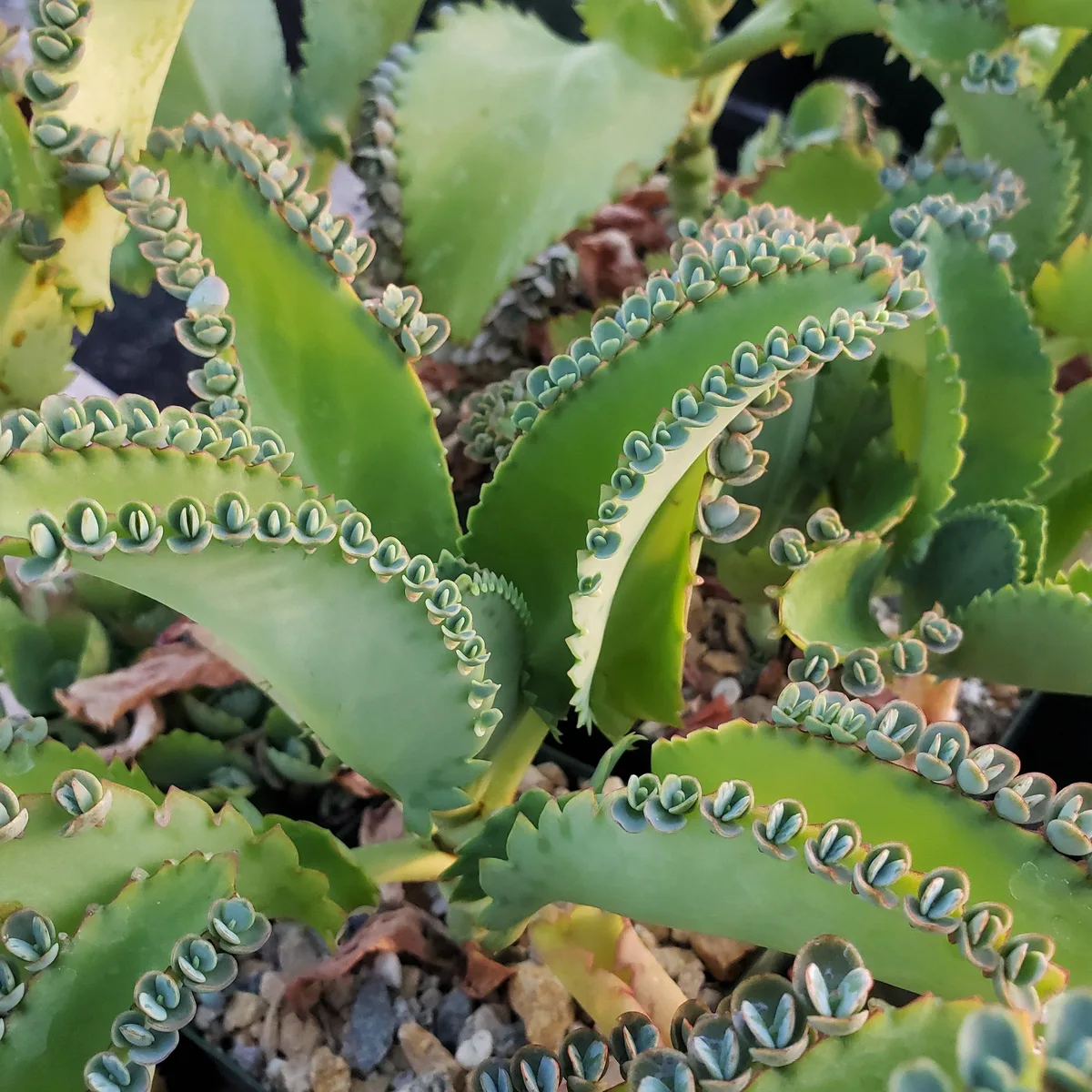
Kalanchoe laetivirens is a succulent perennial with upright, fleshy stems and thick, glossy green leaves. The leaf margins produce numerous tiny plantlets (bulbils) that drop and root easily, giving the plant its common name 'Mother of Thousands'. Under warm conditions it may produce small, pendulous tubular flowers in shades of pink or reddish-purple, though flowering is rare indoors. Its unique reproductive habit makes it a fascinating houseplant for collectors.
Scientific classification
- Species
- Mother of Thousands (Kalanchoe laetivirens)
- Genus
- Kalanchoe
- Family
- Crassulaceae
- Order
- Saxifragales
- Class
- Magnoliopsida
- Phylum
- Magnoliophyta
- Toxic if ingested – contains cardiac glycosides that can cause vomiting, diarrhoea and heart irregularities in humans and pets.
- Toxicity
- Succulent · Houseplants · Perennial
- Plant type
- 0.3 - 0.6 metres
- Height
- 0.3 - 0.5 metres
- Spread
- Evergreen
- Foliage
- Upright · Spreading
- Habit
- Spring · Summer
- Season of interest
- Bright indirect light
- Sunlight
- 18 – 28 °C
- Ideal temperature









Mother of Thousands pictures
Distribution of Mother of Thousands
Distribution map
- Native
- Introduced
- Cultivated
Source:WCVP v16 · Royal Botanic Gardens, Kew · CC BY 3.0 · Boundaries:WGSRPD / TDWG
Toxicity
Toxic if ingested – contains cardiac glycosides that can cause vomiting, diarrhoea and heart irregularities in humans and pets.
Mother of Thousands care guide
- Water sparingly, allow soil to dry out completely between watering
- Watering
- Bright indirect light
- Sunlight
- 18 – 28 °C
- Ideal temperature

Watering
Water sparingly, allow soil to dry out completely between watering
Fertilizing
 Fertilizing
Fertilize once a month during spring and summer
Pruning
 Pruning
Remove any dead or yellowing leaves in spring to keep the plant tidy. If the stem becomes leggy, you can cut it back to encourage bushier growth.
Propagation
 Propagation
The easiest method is to gently detach the plantlets from the leaf margins and place them on the surface of moist potting mix. They root readily within 1–2 weeks. Alternatively, take stem cuttings in spring or summer, allow them to callus for a day, then insert into damp sand or succulent mix. Keep at 18–24°C for best results.
Growing
 Growing
Provide bright indirect light; direct sunlight may scorch the leaves. Use a well-draining potting mix (e.g., cactus or succulent mix) and allow the soil to dry out completely between waterings. During the growing season (spring to summer), water moderately and feed with a balanced liquid fertiliser monthly. Reduce watering drastically in winter and keep in a warm spot (above 10°C). Overwatering or poor drainage can lead to root rot.
Common pests and diseases
Diseases
Prone to root rot and powdery mildew if overwatered or kept in poor air circulation. Ensure good drainage and air flow to prevent these issues.
Pests
Susceptible to aphids, mealybugs, and scale insects. Check the undersides of leaves regularly and treat infestations early with insecticidal soap or neem oil.
Explore the plant health library →




