
Umbrella tree
Also known as: Umbrella tree, Octopus tree, Queensland umbrella tree, Australian ivy palm
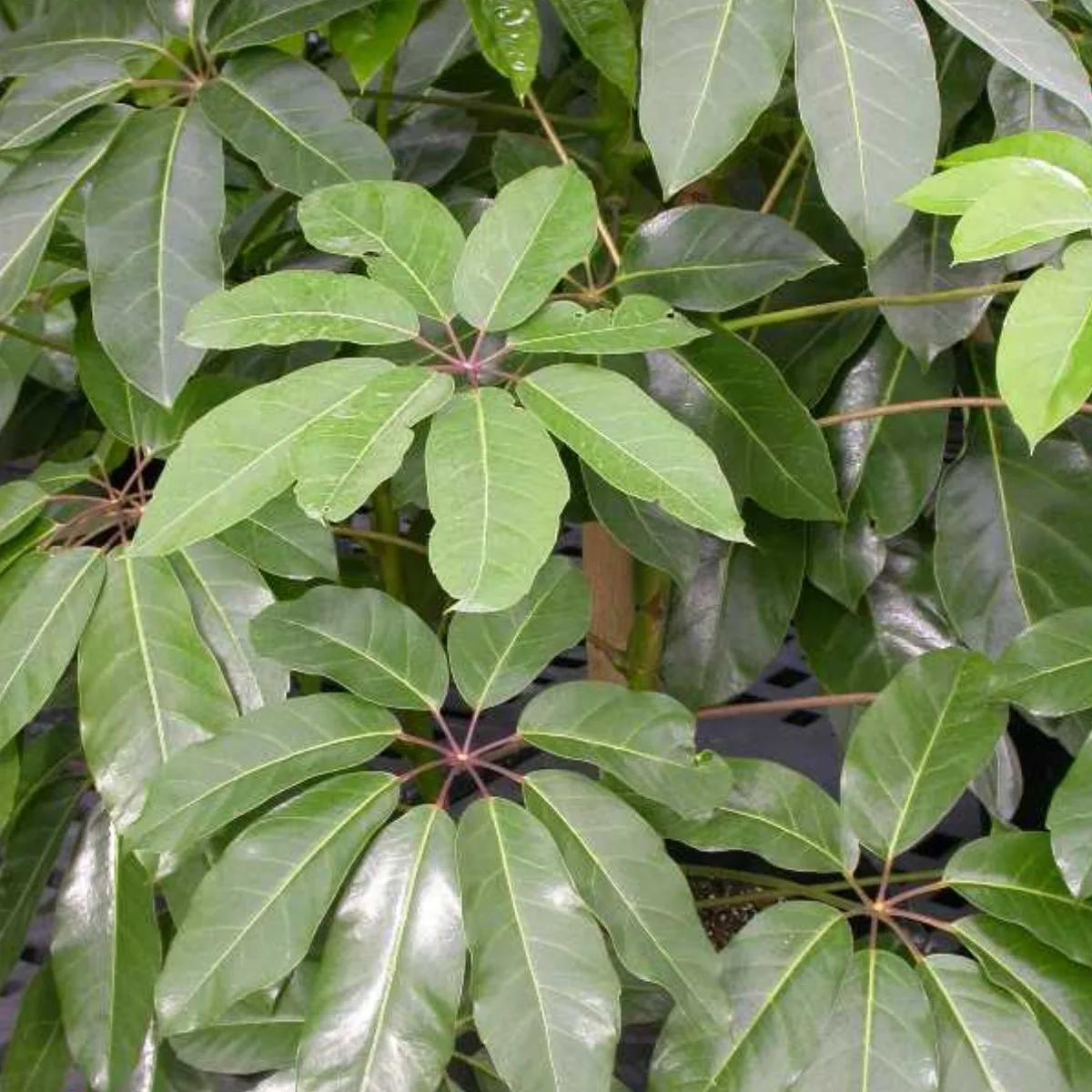
Schefflera actinophylla is a fast-growing evergreen tree or large shrub, reaching up to 15 metres in its native habitat but typically 2-3 metres indoors. It features large, palmate leaves with 7-16 glossy, dark green leaflets radiating from a central point, resembling an umbrella. In summer, mature plants produce striking clusters of small red flowers on long, arching stalks, followed by purple-black berries. Its bold, tropical foliage makes it a popular houseplant for bright interiors.
Scientific classification
- Species
- Umbrella tree (Schefflera actinophylla)
- Genus
- Schefflera
- Family
- Araliaceae
- Toxic to humans and pets if ingested; contains calcium oxalate crystals that can cause oral irritation, drooling, and vomiting.
- Toxicity
- Houseplants · Foliage · Tree
- Plant type
- 1.5 - 2.5 metres (indoor), up to 15 metres in habitat
- Height
- 1 - 1.5 metres
- Spread
- Evergreen
- Foliage
- Upright · Spreading
- Habit
- Summer
- Season of interest
- Bright indirect light
- Sunlight
- Information to be completed
- Ideal temperature









Umbrella tree pictures
Distribution of Umbrella tree
Distribution map
- Native
- Introduced
- Cultivated
Source:WCVP v16 · Royal Botanic Gardens, Kew · CC BY 3.0 · Boundaries:WGSRPD / TDWG
Culture
Information to be completed
Toxicity
Toxic to humans and pets if ingested; contains calcium oxalate crystals that can cause oral irritation, drooling, and vomiting.
Quick identification of Umbrella tree
Information to be completed
Umbrella tree care guide
- Moderate regular watering, allowing brief slight drying between soakings
- Watering
- Bright indirect light
- Sunlight
- Information to be completed
- Ideal temperature

Watering
Moderate regular watering, allowing brief slight drying between soakings
Fertilizing
 Fertilizing
Balanced perennial feed every four weeks from spring through summer
Pruning
 Pruning
Prune in early spring to control size and shape; remove dead or leggy stems at the base. Pinch out growing tips to encourage bushier growth.
Propagation
 Propagation
Propagate by semi-ripe stem cuttings in late spring or early summer; take 10-15 cm cuttings with at least one node, dip in rooting hormone, and insert in moist perlite or peat-sand mix. Keep at 20-25°C with high humidity and bottom heat. Air layering also works well for larger specimens.
Growing
 Growing
Grow in bright, indirect light; avoid direct sun which can scorch leaves. Use a well-drained, peat-based potting mix kept evenly moist from spring to autumn, allowing the top 2 cm to dry between waterings in winter. Feed monthly with a balanced liquid fertiliser during the growing season. Maintain high humidity by misting or using a pebble tray; temperatures should be above 15°C year-round. Repot every 2-3 years as growth slows.
People also ask
Information to be completed
Common pests and diseases
Diseases
Susceptible to root rot if overwatered; ensure good drainage. Leaf spot and powdery mildew may occur in poor air circulation. Generally resilient if growing conditions are correct.
Pests
May be attacked by spider mites, mealybugs, scale insects, and aphids, especially in dry indoor conditions. Regularly check leaf undersides and treat with insecticidal soap or neem oil.
Explore the plant health library →




