
sweet pea 'High Scent'
Also known as: Information to be completed
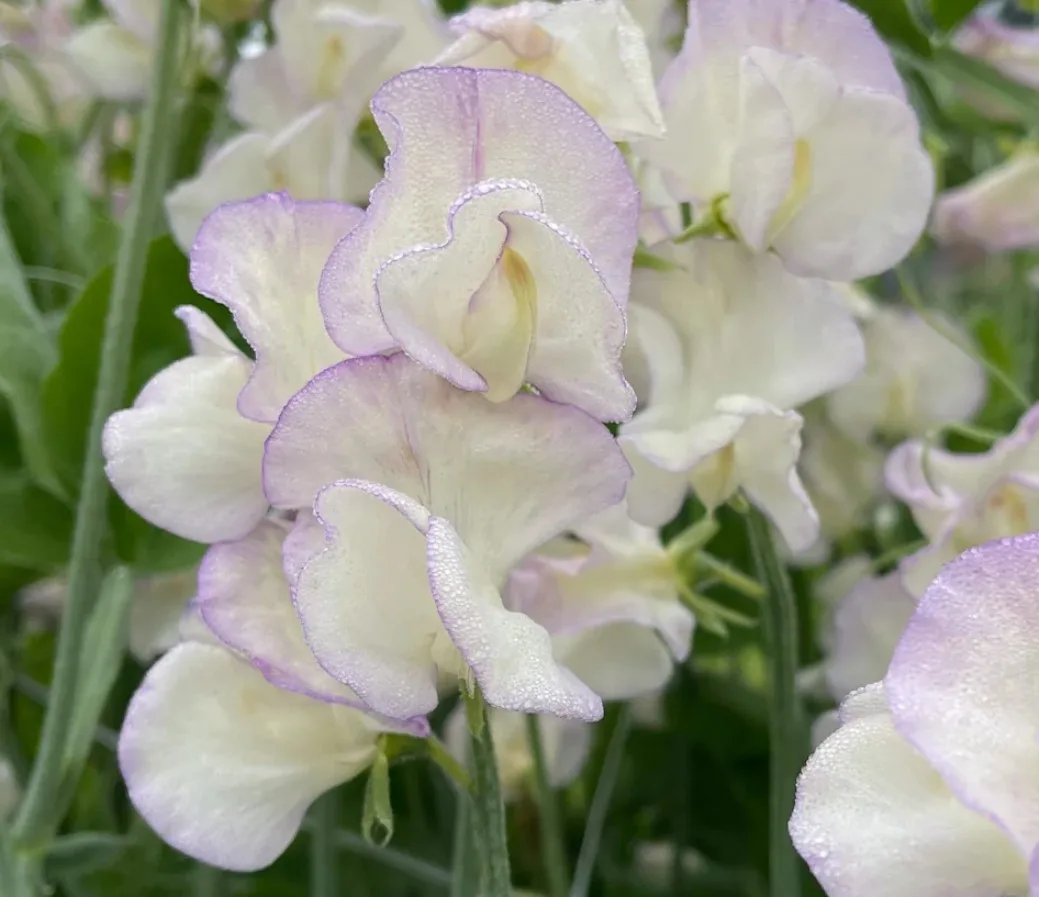
A free-flowering sweet pea, growing to 1.8m high. Flower stems to 20cm long, bearing 3-4 flowers, 4cm in diameter, creamy white with a dark violet picotee edge. Highly scented as per its name
Scientific classification
- Species
- sweet pea 'High Scent' (Lathyrus odoratus 'High Scent')
- Genus
- Lathyrus
- Family
- Fabaceae
- Order
- Fabales
- Class
- Magnoliopsida
- Phylum
- Magnoliophyta
- Pods and seeds are not edible. Wear gloves and other protective equipment when handling
- Toxicity
- Annual Biennial · Climber Wall Shrub
- Plant type
- 1.5-2.5 metres
- Height
- 0.1-0.5 metres
- Spread
- Deciduous
- Foliage
- Climbing
- Habit
- Spring · Summer · Autumn
- Season of interest
- Full sun · Partial shade
- Sunlight
- Information to be completed
- Ideal temperature









sweet pea 'High Scent' pictures
Distribution of sweet pea 'High Scent'
Distribution map
- Native
- Introduced
- Cultivated
Source:WCVP v16 · Royal Botanic Gardens, Kew · CC BY 3.0 · Boundaries:WGSRPD / TDWG
Toxicity
Pods and seeds are not edible. Wear gloves and other protective equipment when handling
sweet pea 'High Scent' care guide
- Water regularly in growth, never let roots bake dry
- Watering
- Full sun · Partial shade
- Sunlight

Watering
Water regularly in growth, never let roots bake dry
Fertilizing
 Fertilizing
Regular potash-rich feed through flowering season
Pruning
 Pruning
Deadhead regularly and cut back after flowering
Propagation
 Propagation
Propagate by seed. Sow in a cold frame in early autumn, early spring or in-situ in mid-spring. See sowing seeds indoors for further advice
Growing
 Growing
Grow in humus-rich, fertile, well-drained soil in full sun or light dappled shade. Incorporate well-rotted organic manure before planting and apply a balanced liquid fertilizer every two weeks when in growth. Deadhead regularly to prolong flowering. See sweetpea cultivation for further information
Common pests and diseases
Diseases
May be susceptible to powdery mildews, Fusarium wilt and sweet pea viruses
Pests
May be susceptible to aphids, slugs and snails
Explore the plant health library →




