
Bacteria Staghorn Fern
Also known as: Bacteria Staghorn Fern, Staghorn Fern 'Bacteria'
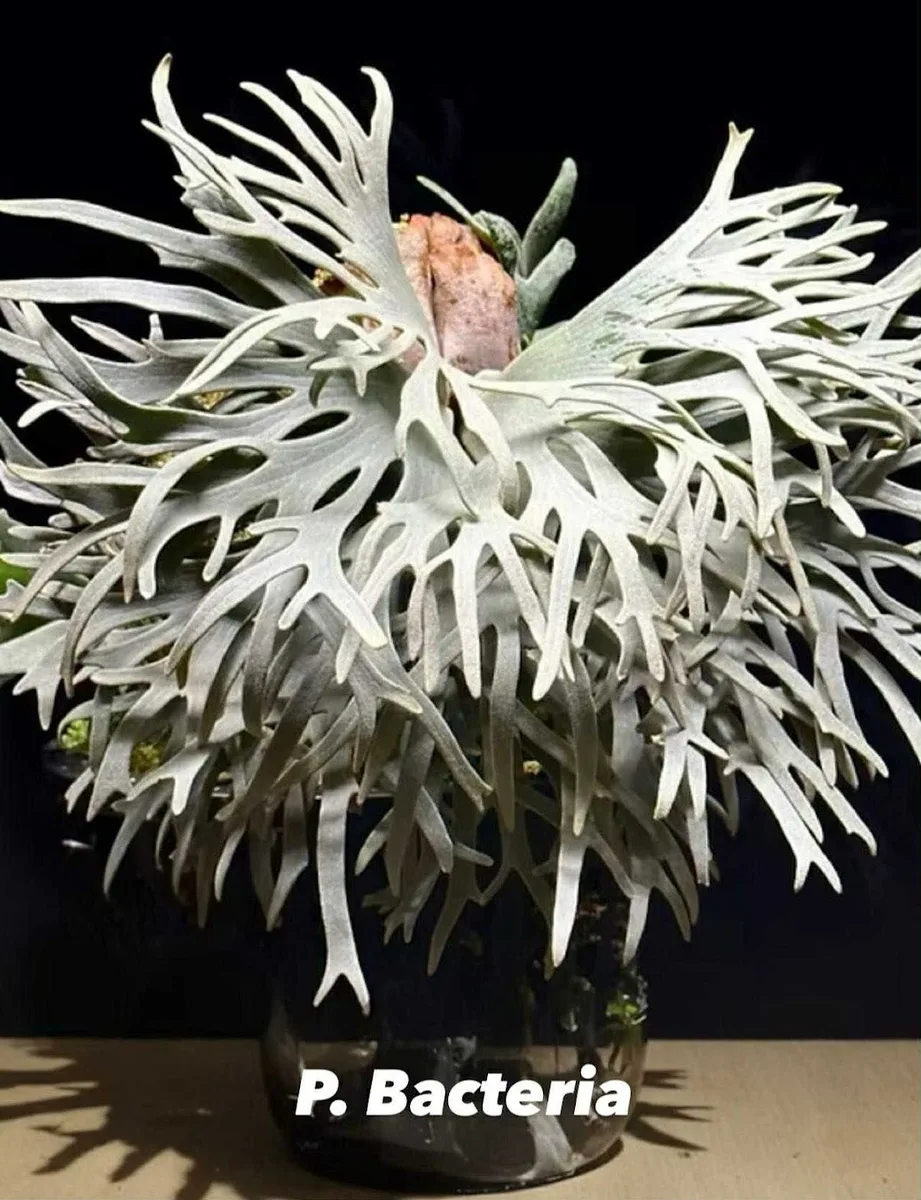
Platycerium willinckii 'Bacteria' is a compact staghorn fern with distinctive, overlapping sterile fronds that form a rounded nest-like base. The fertile fronds are forked, resembling antlers, and have a bluish-green hue with a velvety texture. This cultivar is particularly valued for its smaller size and bushy appearance, making it ideal for indoor displays or terrariums. It produces spores on the undersides of the fertile fronds, adding to its visual interest.
Scientific classification
- Species
- Bacteria Staghorn Fern (Platycerium willinckii 'Bacteria')
- Genus
- Information to be completed
- Family
- Polypodiaceae
- Non-toxic to humans and pets.
- Toxicity
- Ferns · Houseplants
- Plant type
- 0.3 - 0.6 metres
- Height
- 0.3 - 0.6 metres
- Spread
- Evergreen
- Foliage
- Clump forming
- Habit
- Spring · Summer
- Season of interest
- Bright indirect light
- Sunlight
- 18 – 27 °C
- Ideal temperature









Bacteria Staghorn Fern pictures
Distribution of Bacteria Staghorn Fern
Distribution map
- Native
- Introduced
- Cultivated
Source:WCVP v16 · Royal Botanic Gardens, Kew · CC BY 3.0 · Boundaries:WGSRPD / TDWG
Toxicity
Non-toxic to humans and pets.
Bacteria Staghorn Fern care guide
- Water when the top of the mix feels slightly dry, keep evenly moist but not soggy
- Watering
- Bright indirect light
- Sunlight
- 18 – 27 °C
- Ideal temperature

Watering
Water when the top of the mix feels slightly dry, keep evenly moist but not soggy
Fertilizing
 Fertilizing
Every 4-6 weeks during the growing season (spring and summer)
Pruning
 Pruning
Remove only dead or damaged fronds at the base using sterile scissors to maintain appearance. Prune in early spring if needed.
Propagation
 Propagation
Propagate by removing offsets (pups) that form at the base of mature plants, usually in spring. Carefully separate the offset with a sharp, sterile knife, ensuring it has its own root system, and pot up in a moist peat-based mix. Keep in high humidity and warm conditions (20-25°C) until established.
Growing
 Growing
Grow in a well-drained, open mix of peat, bark and perlite, ensuring the root ball is never allowed to dry out completely. Water thoroughly when the surface feels slightly dry, using rainwater or distilled water to avoid mineral buildup. Provide bright, indirect light and maintain high humidity by misting or using a humidity tray. During the growing season (spring and summer), apply a balanced liquid fertilizer diluted to half strength every 4-6 weeks. Protect from temperatures below 10°C and avoid direct sunlight which can scorch the fronds.
Common pests and diseases
Diseases
Susceptible to root rot if overwatered or grown in poorly drained medium. Fungal leaf spots may occur in conditions of poor air circulation.
Pests
May be attacked by scale insects, mealybugs, and spider mites, especially in dry indoor air.
Explore the plant health library →




