
Ring of Fire Philodendron
Also known as: Ring of Fire Philodendron, Philodendron 'Ring of Fire'
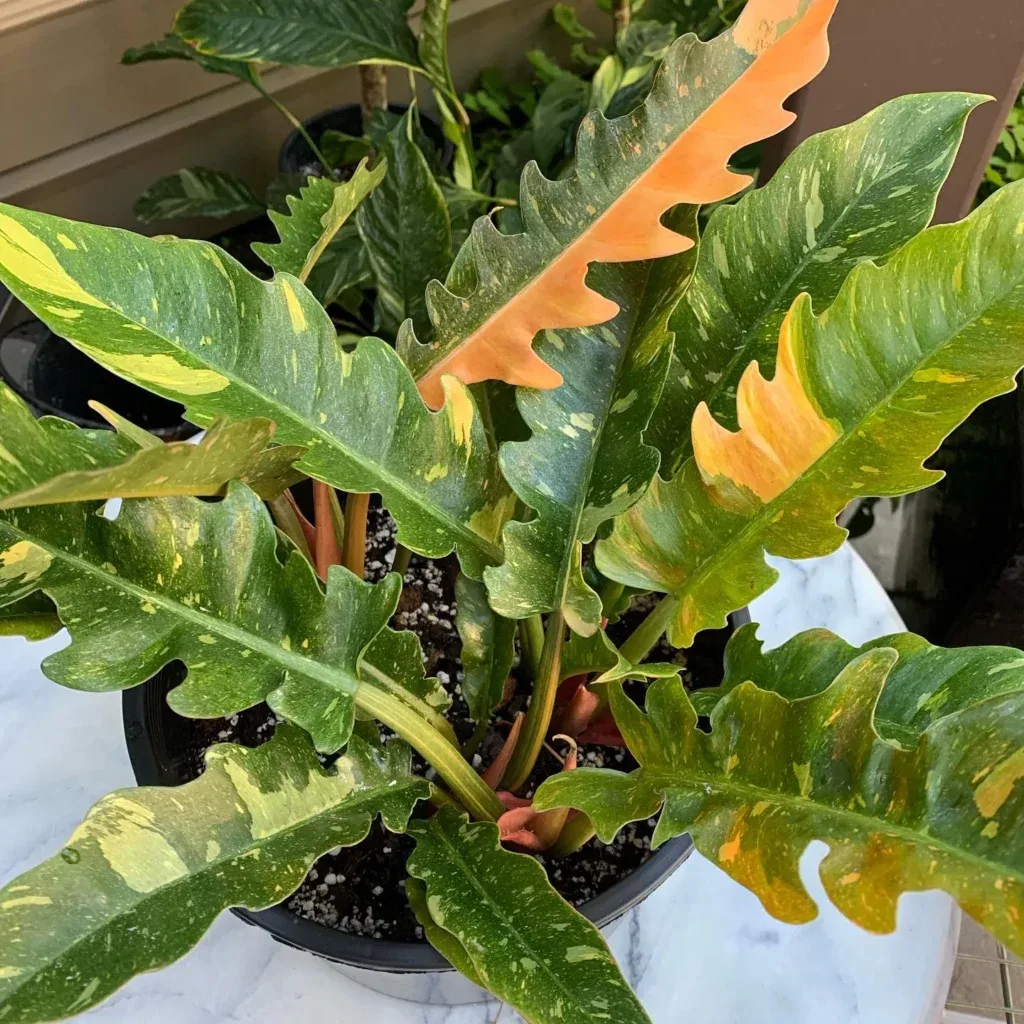
Philodendron 'Ring of Fire' is a striking houseplant with elongated, wavy-edged leaves. New foliage emerges in brilliant orange-red tones, maturing to dark green with irregular yellow to creamy white variegation. This compact, self-heading cultivar forms a dense rosette of leaves, making it an excellent choice for tabletops or shelves. Its vibrant coloration and easy-care nature make it a popular ornamental.
Scientific classification
- Species
- Ring of Fire Philodendron (Philodendron 'Ring of Fire')
- Genus
- Information to be completed
- Family
- Araceae
- Toxic if ingested – contains calcium oxalate crystals which can cause oral irritation and digestive upset in humans and pets.
- Toxicity
- Houseplants · Foliage
- Plant type
- 0.6 - 0.9 metres
- Height
- 0.3 - 0.6 metres
- Spread
- Evergreen
- Foliage
- Upright · Bushy
- Habit
- Spring · Summer · Autumn
- Season of interest
- Bright indirect light
- Sunlight
- 18 – 27 °C
- Ideal temperature









Ring of Fire Philodendron pictures
Distribution of Ring of Fire Philodendron
Distribution map
Cultivated hybrid
Toxicity
Toxic if ingested – contains calcium oxalate crystals which can cause oral irritation and digestive upset in humans and pets.
Ring of Fire Philodendron care guide
- Keep soil evenly moist
- Watering
- Bright indirect light
- Sunlight
- 18 – 27 °C
- Ideal temperature

Watering
Keep soil evenly moist
Fertilizing
 Fertilizing
Every 4 weeks during growing season
Pruning
 Pruning
Remove dead or yellowing leaves as needed. Trim leggy stems in spring to maintain a compact shape.
Propagation
 Propagation
Propagate by stem cuttings in spring or early summer. Take a cutting with at least one node and a leaf, insert into moist perlite or sphagnum moss, and keep in warm (20-25°C), high humidity conditions until roots develop.
Growing
 Growing
Grow in bright, indirect light; avoid direct sun to prevent leaf burn. Use a well-draining peat-based potting mix and keep the soil evenly moist during the growing season. Reduce watering in winter, allowing the top layer to dry slightly. Fertilize monthly with a balanced liquid fertilizer from spring to autumn. Maintain temperatures above 15°C (59°F) and provide high humidity by misting or using a pebble tray.
Common pests and diseases
Diseases
Susceptible to root rot if overwatered; ensure good drainage. Leaf spot diseases may occur in poor air circulation.
Pests
Common pests include spider mites, mealybugs, and scale insects. Inspect regularly and treat with insecticidal soap if needed.
Explore the plant health library →




