
Watermelon Peperomia
Also known as: Watermelon Peperomia, Watermelon Begonia, Peperomia argyreia (syn.)
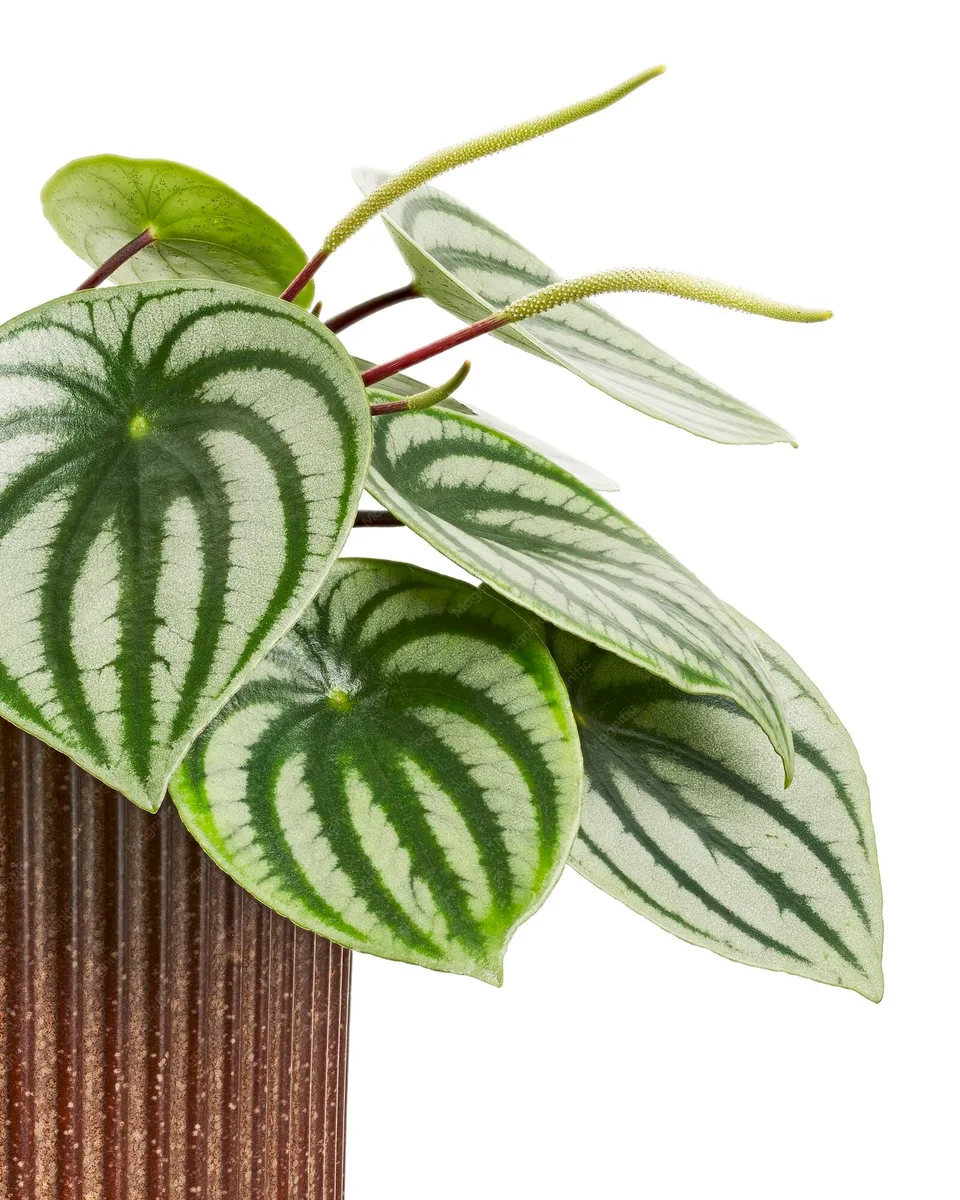
Peperomia sandersii, commonly known as Watermelon Peperomia, is a compact evergreen perennial with thick, fleshy leaves that display striking silver-green stripes resembling watermelon rind. The leaves are rounded, heart-shaped, and held on red-tinted stems. It produces tiny, unremarkable greenish-white flower spikes (spadices) on thin stalks. This slow-growing plant forms a neat clump and is prized for its distinctive foliage pattern, making it a popular choice for indoor decoration.
Scientific classification
- Species
- Watermelon Peperomia (Peperomia sandersii)
- Genus
- Information to be completed
- Family
- Piperaceae
- Non-toxic to humans and pets.
- Toxicity
- Foliage · Houseplants · Perennial
- Plant type
- 0.15 - 0.3 metres
- Height
- 0.15 - 0.3 metres
- Spread
- Evergreen
- Foliage
- Clump forming
- Habit
- Spring · Summer
- Season of interest
- Bright indirect light
- Sunlight
- 18 – 27 °C
- Ideal temperature









Watermelon Peperomia pictures
Distribution of Watermelon Peperomia
Distribution map
- Native
- Introduced
- Cultivated
Source:WCVP v16 · Royal Botanic Gardens, Kew · CC BY 3.0 · Boundaries:WGSRPD / TDWG
Toxicity
Non-toxic to humans and pets.
Watermelon Peperomia care guide
- Keep soil lightly moist, allow top inch to dry between waterings
- Watering
- Bright indirect light
- Sunlight
- 18 – 27 °C
- Ideal temperature

Watering
Keep soil lightly moist, allow top inch to dry between waterings
Fertilizing
 Fertilizing
Every 2-4 weeks during growing season
Pruning
 Pruning
Remove yellow or dead leaves as needed to maintain tidiness. Occasional pinching of leggy stems can encourage bushier growth. Prune in spring if necessary.
Propagation
 Propagation
Propagate by leaf cuttings or stem cuttings in spring. Take a healthy leaf with its petiole (or a stem tip with 2-3 leaves) and insert into moist cutting compost. Cover with a clear plastic bag to maintain humidity and place in bright indirect light at 20-25°C. Roots will form within 2-4 weeks. Also can be propagated by division of mature clumps.
Growing
 Growing
Grow in bright, indirect light; avoid direct sunlight which can scorch the leaves. Plant in a well-draining potting mix, such as a peat-based compost with perlite or sand. Water thoroughly when the top inch of soil feels dry, allowing the pot to drain fully. Reduce watering in winter, keeping the soil just slightly moist. Maintain temperatures between 15-25°C; do not expose to temperatures below 10°C. Fertilize every 2-4 weeks during the growing season with a balanced liquid fertilizer diluted to half strength. Repot every 2-3 years in spring if rootbound.
Common pests and diseases
Diseases
Susceptible to root rot and stem rot if overwatered or kept in poor drainage. Fungal leaf spot may occur in high humidity with poor air circulation. Ensure good drainage and avoid wetting foliage to prevent disease.
Pests
Common pests include mealybugs, spider mites, and aphids. Regularly inspect leaves and stems; treat infestations with insecticidal soap or neem oil.
Explore the plant health library →




