
Dwarf Alberta Spruce
Also known as: Alberta Spruce, Dwarf White Spruce
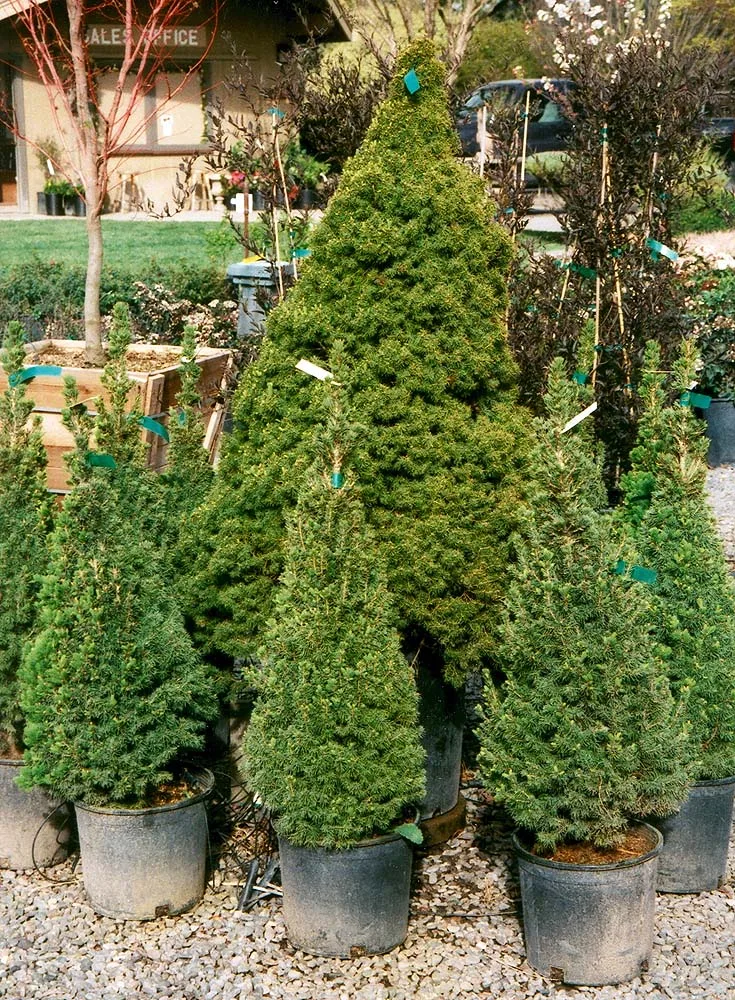
Picea glauca 'Conica' is a compact, conical evergreen conifer with dense, short, soft needles that are light green when young, maturing to a bluish-green. It forms a neat, symmetrical pyramid, typically reaching 1.5-2 meters in height and 0.6-1 meter in spread over 10-20 years. Its slow growth and neat habit make it an excellent choice for small gardens, rockeries, or container planting. The foliage remains attractive year-round, providing winter interest in cold climates.
Scientific classification
- Species
- Dwarf Alberta Spruce (Picea glauca 'Conica')
- Genus
- Information to be completed
- Family
- Pinaceae
- Non-toxic
- Toxicity
- Conifers
- Plant type
- 1.5 - 2 metres
- Height
- 0.6 - 1 metre
- Spread
- Evergreen
- Foliage
- Columnar upright
- Habit
- Spring · Summer · Winter
- Season of interest
- Full sun
- Sunlight
- 15 – 22 °C
- Ideal temperature









Dwarf Alberta Spruce pictures
Distribution of Dwarf Alberta Spruce
Distribution map
- Native
- Introduced
- Cultivated
Source:WCVP v16 · Royal Botanic Gardens, Kew · CC BY 3.0 · Boundaries:WGSRPD / TDWG
Toxicity
Non-toxic
Dwarf Alberta Spruce care guide
- Keep soil moist but not waterlogged
- Watering
- Full sun
- Sunlight
- 15 – 22 °C
- Ideal temperature

Watering
Keep soil moist but not waterlogged
Fertilizing
 Fertilizing
Once in early spring with a slow-release fertilizer
Pruning
 Pruning
Minimal pruning required; remove any dead or damaged branches in early spring. Do not shear into shape as it may ruin the natural conical form.
Propagation
 Propagation
Take semi-ripe cuttings from side shoots in late summer. Insert into a moist, free-draining rooting medium and maintain high humidity. Alternatively, layering can be done in early spring, though rooting may take up to a year.
Growing
 Growing
Grow in full sun or partial shade in moist but well-drained, acidic to neutral soil. Tolerates cold winters but avoid waterlogged conditions. Water regularly during dry spells, especially in the first few years. Apply a slow-release fertilizer in early spring. Mulch around the base to retain moisture and protect roots from frost. Shelter from strong, drying winds to prevent needle browning.
Common pests and diseases
Diseases
Susceptible to needle cast diseases (e.g., Rhizosphaera) and root rot in poorly drained soils. Good air circulation and well-drained soil reduce risk.
Pests
May be attacked by spruce aphids, spider mites, and scale insects. Regular inspection and treatment with insecticidal soap or horticultural oil can control infestations.
Explore the plant health library →




