
Trout Leaf Begonia
Also known as: Trout Leaf Begonia, Spotted Begonia, Angel Wing Begonia (misapplied)
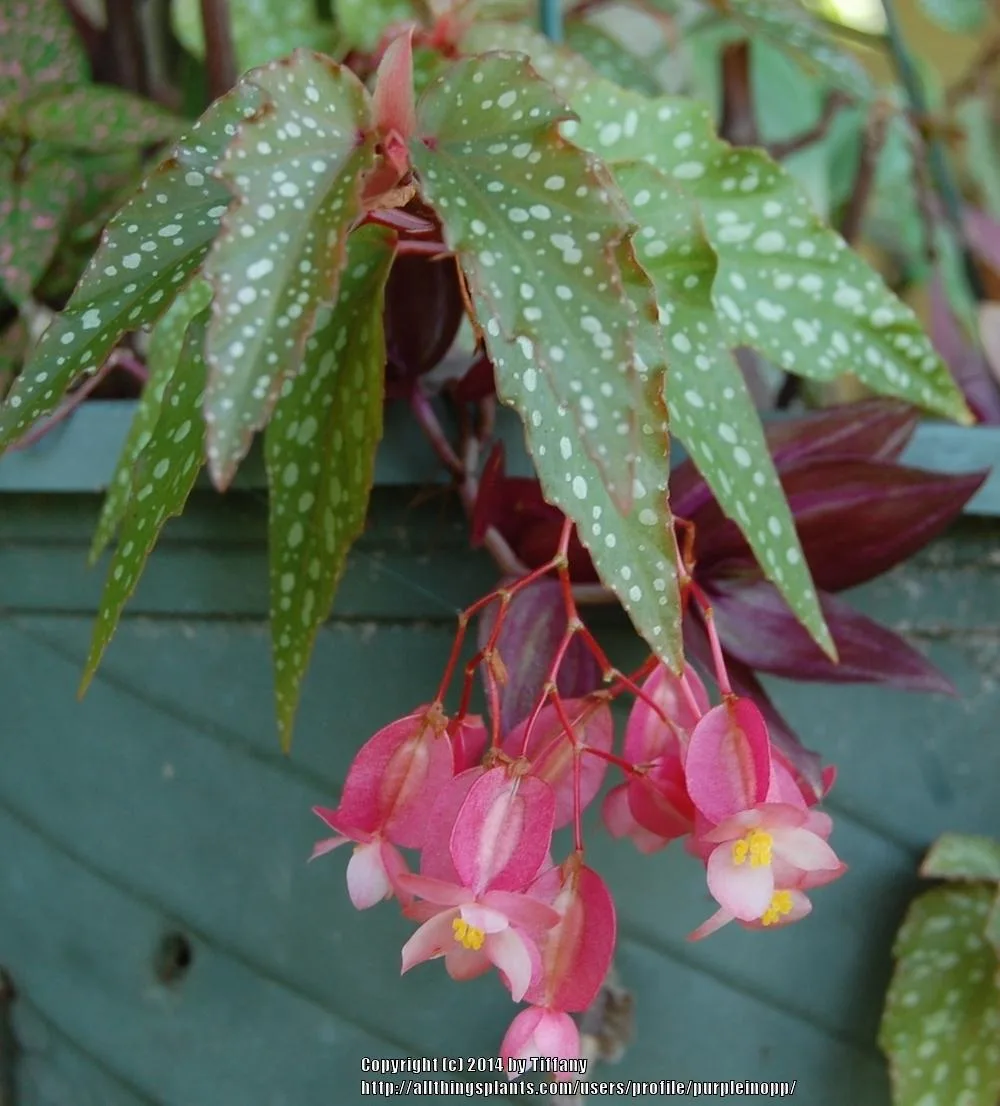
Begonia 'Trout Leaf' is a compact, bushy perennial with striking olive-green leaves covered in silvery-white spots resembling a trout's markings. The undersides of the leaves are deep burgundy, adding contrast. It produces small, pale pink or white flowers in clusters during the growing season, but its primary ornamental value lies in the unique foliage. This houseplant typically reaches 30-60 cm in height and spread, making it ideal for tabletops or shelves.
Scientific classification
- Species
- Trout Leaf Begonia (Begonia 'Trout Leaf')
- Genus
- Information to be completed
- Family
- Begoniaceae
- Toxic to pets and humans if ingested; keep out of reach of children and animals.
- Toxicity
- Herbaceous Perennial · Foliage · Houseplants
- Plant type
- 0.3 - 0.6 metres
- Height
- 0.3 - 0.6 metres
- Spread
- Evergreen
- Foliage
- Upright · Clump forming
- Habit
- Spring · Summer · Autumn
- Season of interest
- Bright indirect light
- Sunlight
- Information to be completed
- Ideal temperature









Trout Leaf Begonia pictures
Distribution of Trout Leaf Begonia
Distribution map
Hybrid origin; parent species from tropical regions of South America and Asia.
Toxicity
Toxic to pets and humans if ingested; keep out of reach of children and animals.
Trout Leaf Begonia care guide
- Water when the top inch of soil is dry; avoid letting the pot sit in water.
- Watering
- Bright indirect light
- Sunlight

Watering
Water when the top inch of soil is dry; avoid letting the pot sit in water.
Fertilizing
 Fertilizing
Every 2-3 weeks during active growth (spring to early autumn).
Pruning
 Pruning
Remove spent flowers and yellowed leaves regularly. In early spring, trim back leggy stems to maintain a compact shape.
Propagation
 Propagation
Propagate by stem or leaf cuttings in spring or early summer. Take a 10 cm stem cutting with at least two nodes, remove lower leaves, and insert into moist perlite or peat mix. Keep in bright indirect light at 20-25°C until roots develop (3-4 weeks). Leaf cuttings can also be taken by cutting a leaf with petiole and placing it on moist medium.
Growing
 Growing
Grow in bright, indirect light to maintain vivid leaf markings; avoid direct sunlight which can scorch the leaves. Use a well-draining peat-based potting mix and keep the soil consistently moist but never waterlogged. Water when the top inch of soil feels dry, and reduce watering in winter. Fertilize every 2-3 weeks during the growing season with a balanced liquid fertilizer diluted to half strength. Maintain temperatures above 10°C; protect from cold drafts. Repot annually in spring to refresh the soil.
Common pests and diseases
Diseases
Susceptible to powdery mildew and Botrytis in poor air circulation. Ensure good ventilation and avoid overhead watering.
Pests
Common pests include aphids, mealybugs, and spider mites. Inspect regularly and treat with insecticidal soap if needed.
Explore the plant health library →




