
Variegated Button Fern
Also known as: Variegated Button Fern, Variegated Cliff Brake
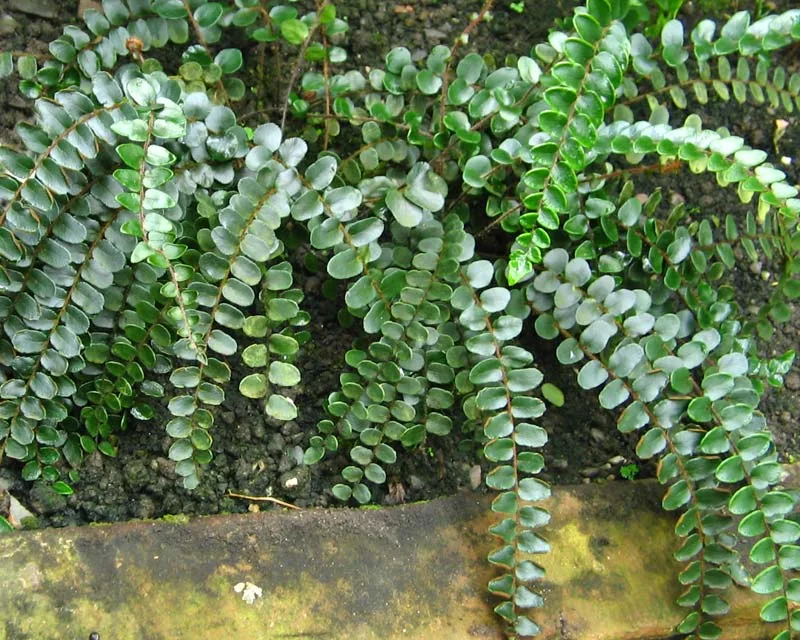
Pellaea rotundifolia 'Variegata' is a compact, clump-forming evergreen fern with circular to oval fronds. Its deep green leaves are irregularly variegated with creamy white or yellow markings, giving it a striking appearance. The plant is low-growing, typically reaching 20–30 cm in height, making it ideal as a houseplant or for shady borders. The variegation sets it apart from typical ferns, offering high ornamental value.
Scientific classification
- Species
- Variegated Button Fern (Pellaea rotundifolia 'Variegata')
- Genus
- Information to be completed
- Family
- Pteridaceae
- Non-toxic
- Toxicity
- Ferns · Houseplants
- Plant type
- 0.2 - 0.4 metres
- Height
- 0.3 - 0.6 metres
- Spread
- Evergreen
- Foliage
- Clump forming
- Habit
- Spring · Summer · Autumn
- Season of interest
- Partial shade
- Sunlight
- Information to be completed
- Ideal temperature









Variegated Button Fern pictures
Distribution of Variegated Button Fern
Distribution map
- Native
- Introduced
- Cultivated
Source:WCVP v16 · Royal Botanic Gardens, Kew · CC BY 3.0 · Boundaries:WGSRPD / TDWG
Toxicity
Non-toxic
Variegated Button Fern care guide
- Keep soil evenly moist, avoid waterlogging
- Watering
- Partial shade
- Sunlight

Watering
Keep soil evenly moist, avoid waterlogging
Fertilizing
 Fertilizing
Once a month during growing season
Pruning
 Pruning
Remove any dead or damaged fronds to maintain a tidy appearance.
Propagation
 Propagation
 is mainly by division in spring. Carefully separate the clump into sections, each with 3–5 fronds and a portion of roots, and pot them in moist, well-drained medium. Place in a warm (18–22 °C), shaded spot and keep the soil consistently damp. Spore propagation is possible but slower and less commonly practised.
Growing
 Growing
Grow in bright, indirect light or partial shade; avoid direct sunlight which can scorch the variegated leaves. Use a well-drained, humus-rich potting mix, such as a blend of peat, perlite, and leaf mould. Water regularly to keep the soil evenly moist during the growing season, allowing the top layer to dry slightly between waterings in winter. Fertilise monthly with a diluted liquid fertiliser from spring to autumn. Maintain a minimum temperature of 10 °C and increase humidity by misting the fronds frequently.
Common pests and diseases
Diseases
Susceptible to root rot and leaf spot if overwatered or air circulation is poor.
Pests
May be infested by scale insects, spider mites, and aphids.
Explore the plant health library →




