
Garden Strawberry
Also known as: Garden strawberry, Strawberry
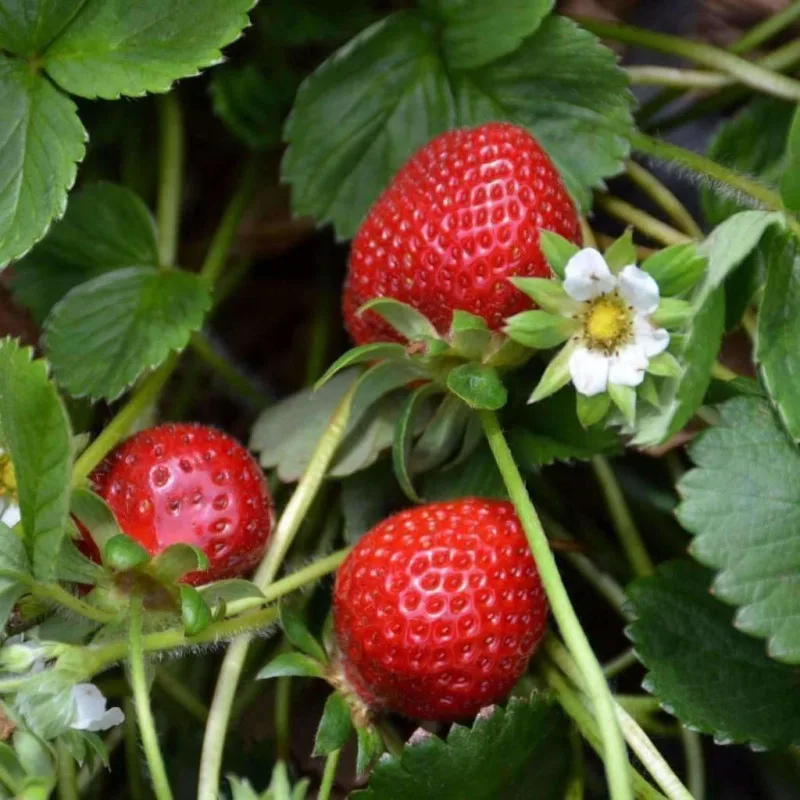
The garden strawberry is a perennial herbaceous plant, typically 10-30 cm tall, with trifoliate leaves that are dark green and serrated. Its white, five-petaled flowers are borne in cymes. The fruit is an aggregate accessory fruit, red, juicy, and sweet. It spreads by stolons, forming dense mats. It is primarily valued for its delicious fruit and spring blossoms.
Scientific classification
- Species
- Garden Strawberry (Fragaria ananassa)
- Genus
- Information to be completed
- Family
- Rosaceae
- Non-toxic to humans and pets.
- Toxicity
- Perennial · Fruit Edible
- Plant type
- 0.1 - 0.3 metres
- Height
- 0.5 - 1 metres
- Spread
- Semi evergreen
- Foliage
- Spreading · Matforming
- Habit
- Spring · Summer
- Season of interest
- Full sun
- Sunlight
- 15 – 25 °C
- Ideal temperature









Garden Strawberry pictures
Distribution of Garden Strawberry
Distribution map
Europe, Asia, North America; cultivated worldwide
Toxicity
Non-toxic to humans and pets.
Garden Strawberry care guide
- Keep soil consistently moist, avoid waterlogging
- Watering
- Full sun
- Sunlight
- 15 – 25 °C
- Ideal temperature

Watering
Keep soil consistently moist, avoid waterlogging
Fertilizing
 Fertilizing
Apply a balanced fertilizer every 4-6 weeks during growing season; switch to high-potash feed when fruiting
Pruning
 Pruning
Remove old leaves and runners regularly to improve air circulation and direct energy to fruit production. Cut back foliage after harvest.
Propagation
 Propagation
Propagate by runners (stolons) in late summer. Peg down plantlets into pots of compost until rooted, then sever. Also possible from seed, but cultivars may not come true.
Growing
 Growing
Prefers full sun and well-drained, fertile soil. Keep soil moist during growth but avoid waterlogging. Apply a high-potash fertilizer in spring to promote fruiting. In cold regions, provide winter mulch protection. Regularly remove old leaves and runners to improve air circulation.
Common pests and diseases
Diseases
Susceptible to powdery mildew, grey mould (Botrytis), and red core (Phytophthora). Choose resistant cultivars and ensure good drainage.
Pests
Common pests include aphids, slugs, snails, and strawberry mites.
Explore the plant health library →




