
Red Laceleaf Japanese Maple
Also known as: Red Laceleaf Maple, Cutleaf Japanese Maple, Threadleaf Japanese Maple
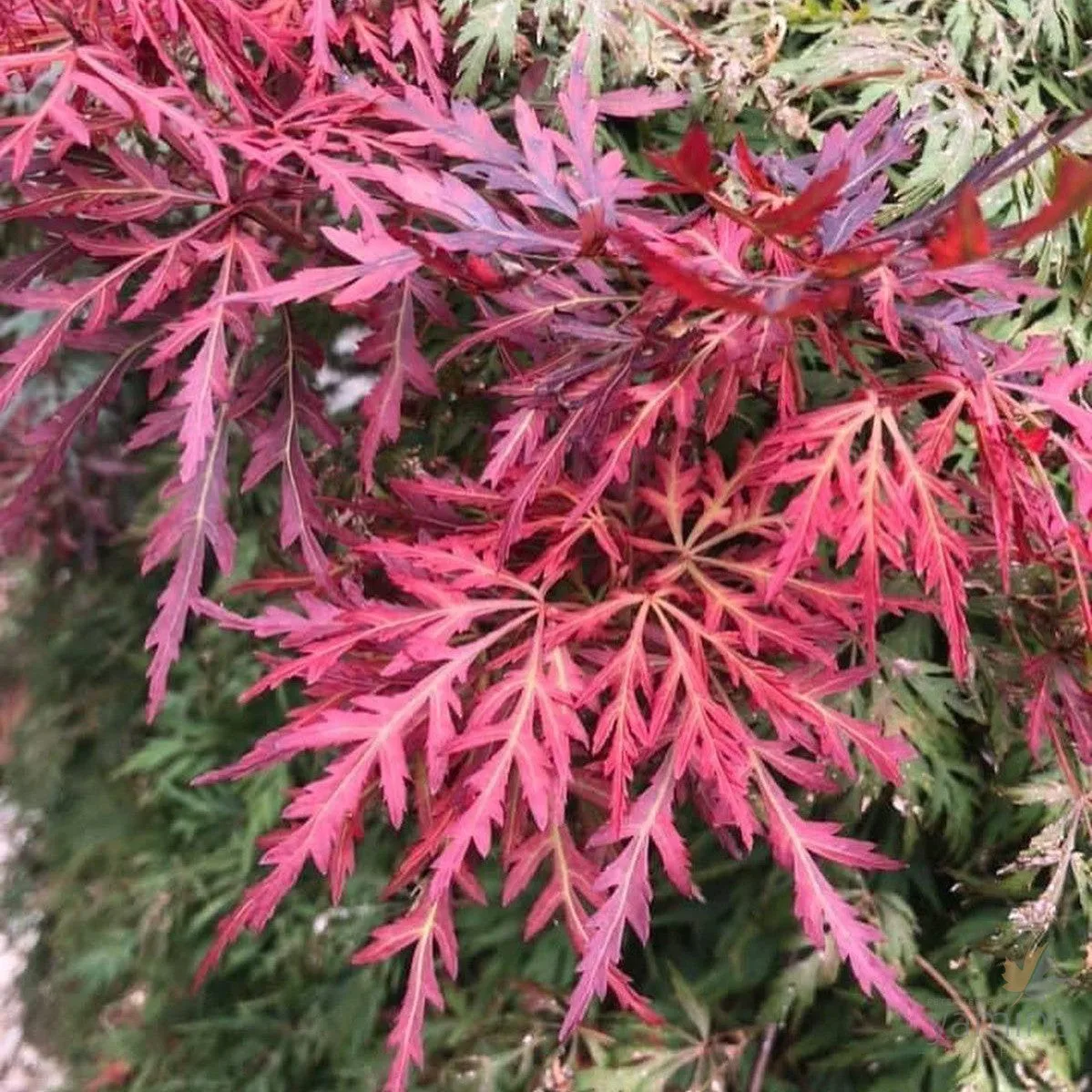
Acer palmatum dissectum 'Red Laceleaf' is a small, slow-growing deciduous tree or shrub with a mounding, spreading habit. Its deeply dissected, lace-like leaves emerge bright crimson in spring, mature to deep burgundy-red in summer, and turn brilliant scarlet in autumn. The delicate foliage and graceful branching make it a standout specimen in any garden, especially prized for container planting and small spaces.
Scientific classification
- Species
- Red Laceleaf Japanese Maple (Acer palmatum dissectum)
- Genus
- Information to be completed
- Family
- Sapindaceae
- Non-toxic to humans and pets.
- Toxicity
- Tree · Foliage
- Plant type
- 1.5 - 3 metres
- Height
- 2 - 4 metres
- Spread
- Deciduous
- Foliage
- Spreading
- Habit
- Spring · Summer · Autumn
- Season of interest
- Partial shade
- Sunlight
- Information to be completed
- Ideal temperature









Red Laceleaf Japanese Maple pictures
Distribution of Red Laceleaf Japanese Maple
Distribution map
Japan, China, Korea
Toxicity
Non-toxic to humans and pets.
Red Laceleaf Japanese Maple care guide
- Keep soil consistently moist, especially during hot weather, but avoid waterlogging.
- Watering
- Partial shade
- Sunlight

Watering
Keep soil consistently moist, especially during hot weather, but avoid waterlogging.
Fertilizing
 Fertilizing
Apply a balanced slow-release fertilizer once in early spring.
Pruning
 Pruning
Prune in late winter or early spring before new growth begins. Remove dead, diseased, or crossing branches to maintain an open, balanced framework. Avoid heavy pruning as Japanese maples bleed sap heavily.
Propagation
 Propagation
 is best done by grafting onto Acer palmatum rootstock in late winter, using whip-and-tongue or side-veneer grafts. Softwood cuttings can also be taken in early summer with bottom heat and mist, but success rate is lower. Seeds will not come true to the cultivar.
Growing
 Growing
Plant in moist, well-drained, acidic soil in a sheltered position with partial shade, especially protecting from strong afternoon sun and drying winds. Water regularly during dry periods to keep the soil consistently moist but not waterlogged. Apply a balanced slow-release fertilizer in early spring. Mulch annually with leaf mould or compost to retain moisture and keep roots cool. Provide winter protection in exposed sites or cold regions as young plants may be susceptible to frost damage.
Common pests and diseases
Diseases
Moderately susceptible to verticillium wilt, powdery mildew, and leaf spot diseases. Good air circulation and proper watering reduce risks.
Pests
Can be affected by aphids, scale insects, and red spider mites. Monitor regularly and treat with horticultural oil if necessary.
Explore the plant health library →




