
Daylily
Also known as: Daylily, Tawny daylily, Ditch lily
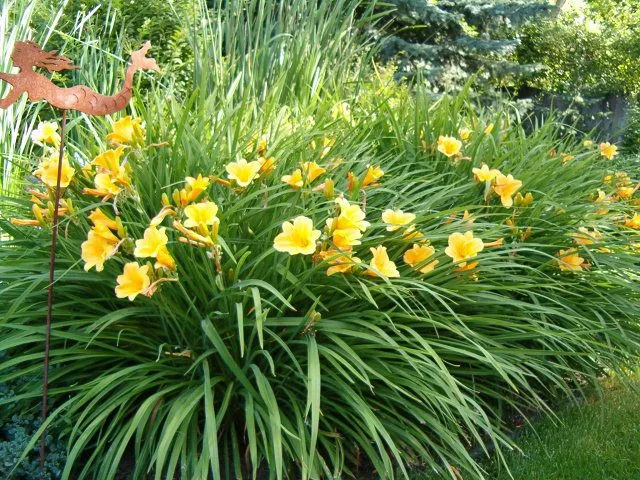
Hemerocallis, commonly known as daylilies, are clump-forming herbaceous perennials with arching, strap-shaped leaves. They produce showy, funnel-shaped flowers in a wide range of colors, typically borne on tall scapes above the foliage. Each flower lasts only one day, but plants produce successive blooms over several weeks. The genus offers excellent ornamental value for borders and mass plantings.
Scientific classification
- Species
- Daylily (Hemerocallis spp.)
- Genus
- Information to be completed
- Family
- Asphodelaceae
- All parts are toxic to cats if ingested; may cause vomiting and kidney failure. Non-toxic to humans and dogs in small amounts.
- Toxicity
- Herbaceous Perennial
- Plant type
- 0.3 - 1.2 metres
- Height
- 0.3 - 0.6 metres
- Spread
- Deciduous
- Foliage
- Clump forming
- Habit
- Summer
- Season of interest
- Full sun · Partial shade
- Sunlight
- 15 – 25 °C
- Ideal temperature









Daylily pictures
Distribution of Daylily
Distribution map
Eastern Asia (China, Japan, Korea, Russia)
Information to be completed
Culture
Information to be completed
Toxicity
All parts are toxic to cats if ingested; may cause vomiting and kidney failure. Non-toxic to humans and dogs in small amounts.
Quick identification of Daylily
Information to be completed
Daylily care guide
- Keep soil evenly moist during active growth, reduce watering in winter.
- Watering
- Full sun · Partial shade
- Sunlight
- 15 – 25 °C
- Ideal temperature

Watering
Keep soil evenly moist during active growth, reduce watering in winter.
Fertilizing
 Fertilizing
Apply a balanced liquid fertilizer every 4-6 weeks during the growing season.
Pruning
 Pruning
Remove spent flower stalks after blooming to encourage reblooming. Cut back dead foliage in late autumn or early spring.
Propagation
 Propagation
Divide clumps in early spring or after flowering in autumn. Each division should have at least two to three fans of leaves and healthy roots. Replant at the same depth and water well. Seeds can be sown in spring, but cultivars may not come true.
Growing
 Growing
Cultivate daylilies in full sun to partial shade in moist but well-drained soil. They tolerate a wide range of soil types and pH levels. Water regularly during dry spells, especially in the first growing season. Apply a balanced fertilizer in early spring and again after flowering. Mulch in autumn to protect roots in cold climates. Divide clumps every 3-5 years to maintain vigor.
People also ask
Information to be completed
Common pests and diseases
Diseases
Susceptible to rust, leaf streak, and crown rot. Ensure good air circulation and avoid overhead watering to minimize risk.
Pests
Can be affected by aphids, spider mites, and slugs. Monitor regularly and treat as needed.
Explore the plant health library →




